Cagliari Beaches: Poetto, Calamosca And More
Cagliari is one of the few Mediterranean capitals where a full city beach sits inside the town, and where the sand, the flamingo lagoon and a protected headland all line up along one rideable stretch of coast.
Short answer
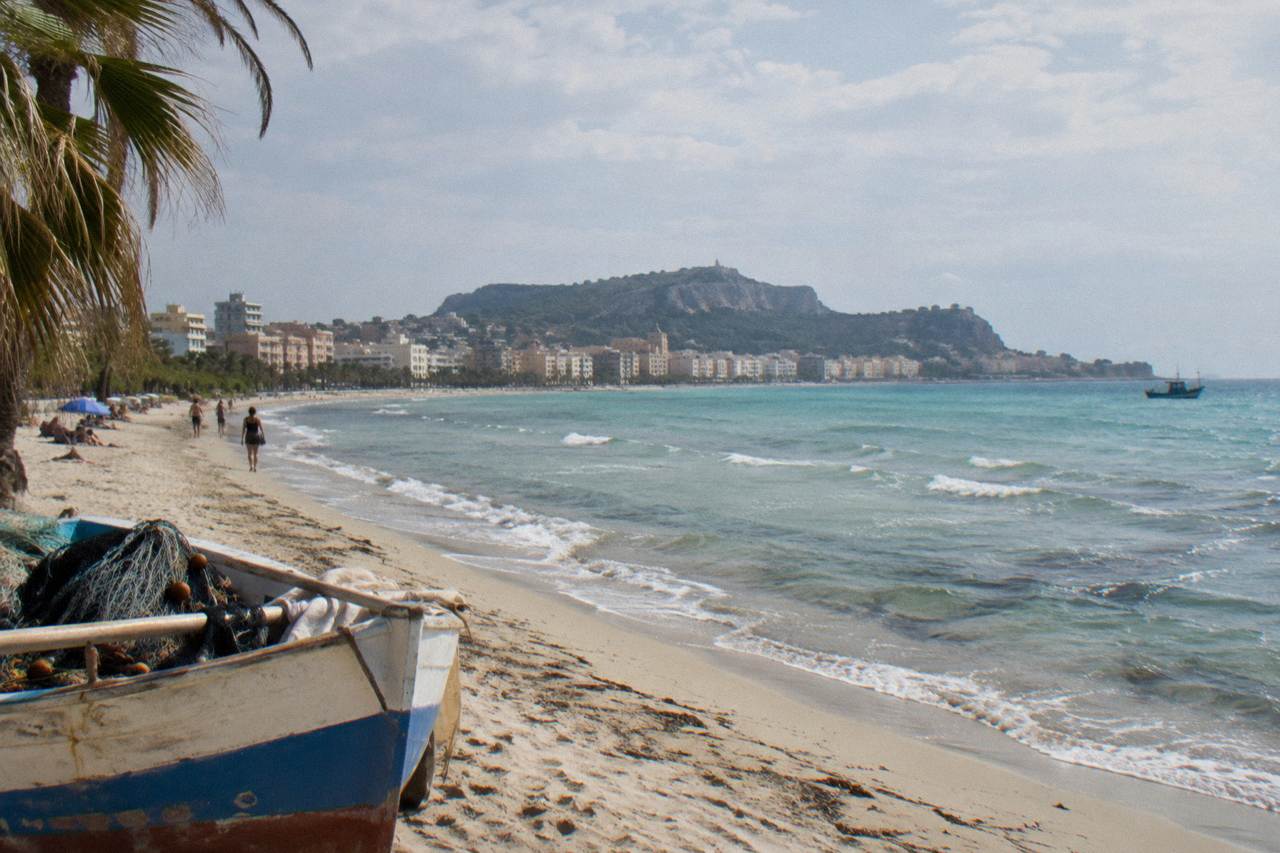
Poetto is the main beach, with 8 km of sand from the Sella del Diavolo headland toward Quartu Sant'Elena, plus a cycle and pedestrian promenade beside it. Calamosca and Cala Fighera are smaller coves under the same headland. Sun loungers with umbrellas at licensed beach clubs vary, so check the current daily rate before you go.
Cagliari keeps its sand close. The city wraps around the eastern edge of the Golfo degli Angeli, and the beach begins where the streets end, so a beach day here does not have to be a separate expedition. The same stretch of coast also holds the Molentargius-Saline lagoon, where flamingos feed in sight of the water tanks and apartment blocks, and the Sella del Diavolo headland, whose trails are closed to bikes but open to walkers. That combination, sand, lagoon and hill in one arc, is what makes the coast around Cagliari riding territory rather than just a sunbathing destination.
This guide walks through the beaches themselves, the cycling that connects them, the rules that shape a visit, and the seasons. Where a detail such as a group size or a helmet policy is not stated, check the booking page rather than assuming.
What Are The Best Beaches In Cagliari?
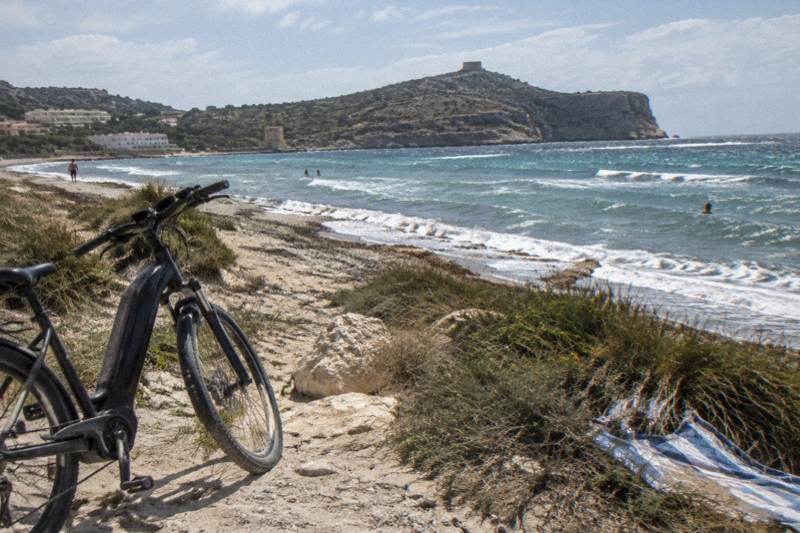
The honest answer is that Cagliari has one big beach and two small ones, and each suits a different day. Poetto is the workhorse, with 8 km of sand and a promenade beside it. Calamosca sits under the Sella del Diavolo headland. The trails up the promontory start from here on foot, as bikes are not allowed on them, tucked closest to the headland's western side. If clarity matters more to you than size, the guide to Cagliari's clearest beach water explains how wind and the time of year shift the answer between these spots.
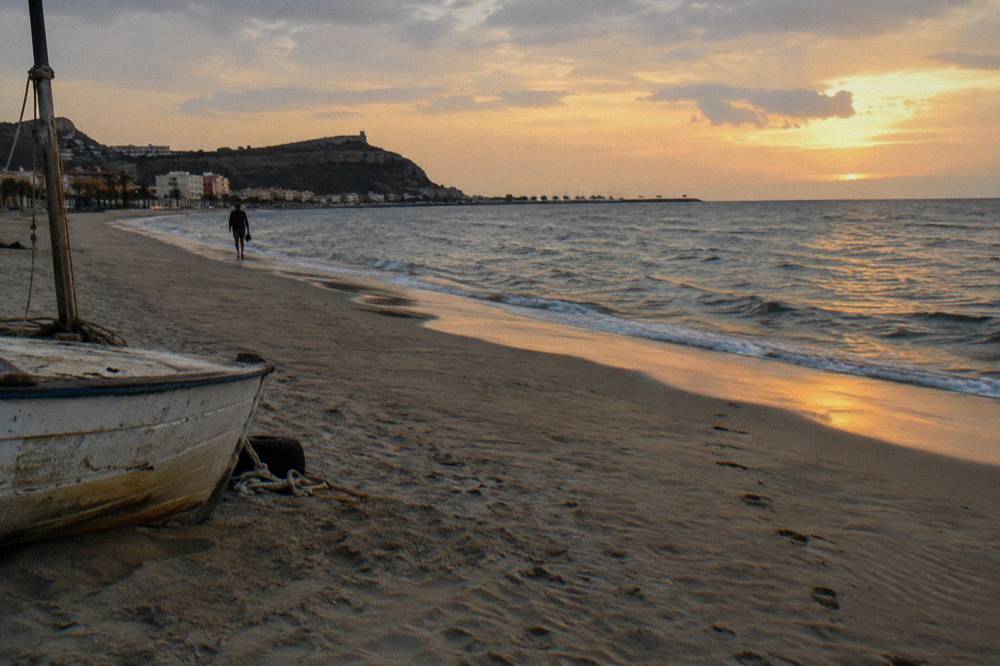
Poetto is the beach most visitors mean when they say "the beach in Cagliari". It runs from the Sella del Diavolo and Marina Piccola end toward Quartu Sant'Elena, and its 8 km of sand are backed by beach bars, restaurants and the licensed stabilimenti that rent loungers and umbrellas, typically EUR 10 to 15 per day for the pair. The promenade along the sand is a cycle and pedestrian route, mostly asphalt, with some shared sections where riders yield to people on foot.
Calamosca is the sheltered cove at the foot of the headland. It is the natural swimming spot if you are based near the Poetto end and want calmer, deeper water than the long beach offers, and it doubles as the starting point for the walking trails up the Sella del Diavolo. Cala Fighera is smaller again, a narrow inlet near the base of the promontory on the Calamosca side, reached on foot from the road above. Neither cove has the facilities strip Poetto has, which is precisely why some locals prefer them.
| Beach | Size and setting | Best for | Access by bike |
|---|---|---|---|
| Poetto | 8 km of sand from Sella del Diavolo toward Quartu Sant'Elena | Long rides, beach bars, loungers at licensed clubs | Promenade is a cycle and pedestrian route |
| Calamosca | Sheltered cove below the Sella del Diavolo | Calmer swimming, trailhead for the headland walk | Ride to the cove, then continue on foot |
| Cala Fighera | Small inlet near the headland's base | Quiet, a short stop rather than a base | Ride to the Calamosca area, then walk |
For a fuller rundown of the flat coastal riding, the Poetto cycle path guide covers the promenade in detail, and the overview of Cagliari bike routes helps match a route to your fitness and time.
Is Poetto Beach Worth Visiting And Can You Cycle It?
Yes on both counts. Poetto is the city's beach and locals use it year round, walking, running and cycling the promenade that runs the length of the sand. The cycle and pedestrian path is mostly asphalt with some shared sections, so it is rideable on any bike, not only an e-bike, and it links the Sella del Diavolo end toward Quartu Sant'Elena.
The question visitors usually mean is whether Poetto is worth it compared with the coves of the southern coast, and the answer depends on what the day is for. If the plan is a full beach day with facilities, food and a long waterfront to move along, Poetto wins outright. The 8 km of sand mean it rarely feels packed end to end even on cruise days, and the beach bars, though many reduce their hours from roughly October to April, give the sand a spine of services the small coves lack. If the plan is a quiet swim with a book, Calamosca or Cala Fighera will suit better.
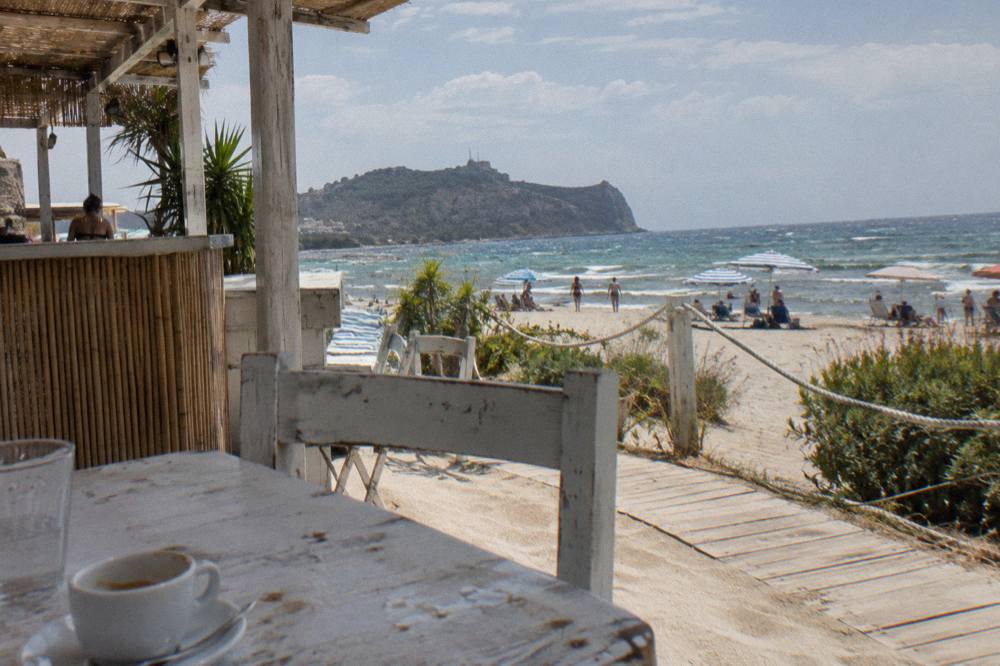
Cycling the promenade is the fastest way to see the whole beach and understand its scale. A pedal-assist bike makes the return leg, often into the wind, considerably easier. The maestrale, the northwest wind that dominates Cagliari's weather, blows most frequently and strongly from May to September, and an afternoon ride back along the exposed sand into that wind is the moment an e-bike earns its rental fee.
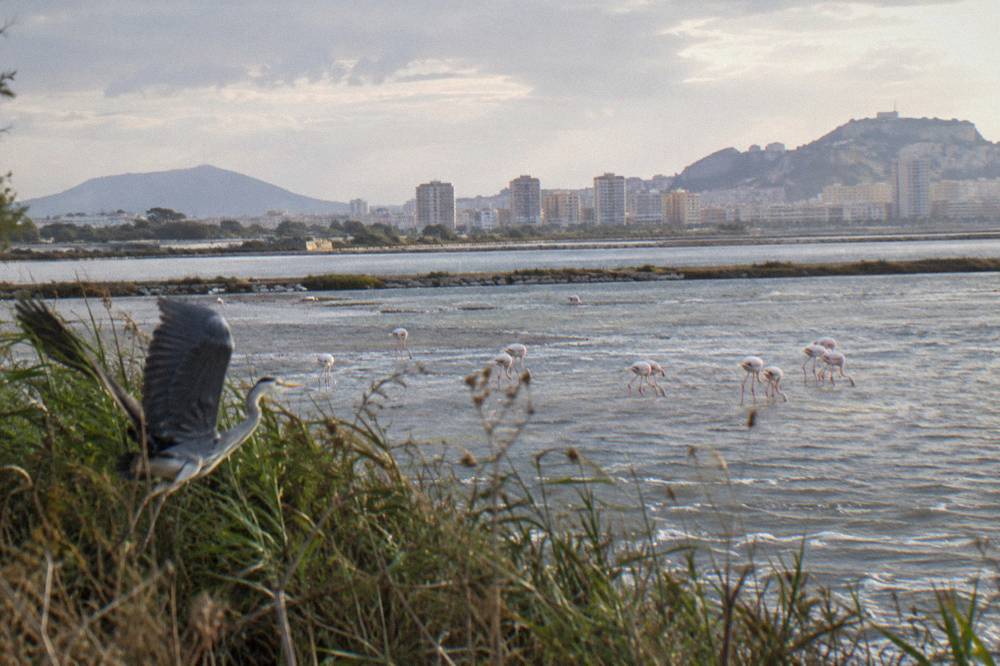
The beach also connects directly to the flamingo lagoon at its back. The Molentargius-Saline park sits immediately inland of Poetto, and the canal paths between the two are where guided rides spot flamingos against the skyline of the city. That combination, sand on one side, lagoon birds on the other, is the single most distinctive beach experience Cagliari offers, and several guided options cover it.
Where Do The Flamingos Fit Into A Cagliari Beach Day?
Molentargius-Saline Regional Park sits directly behind Poetto, and flamingos are present there year round, with the colonies largest between April and September. The park's green areas are open daily, 06:30 to 21:00 from March to mid October and 07:00 to 18:00 the rest of the year, and cycling inside them is limited to non-motorised bikes on the marked routes. If you want to fit Molentargius and Poetto into a wider riding plan, the guide to cycling holidays across Sardinia explains why Cagliari makes such a convenient base.
That last point matters and is widely misunderstood. The park's own rules allow cycling in its green areas only with non-motorised means, so an e-bike is not covered by the park's wording for the managed paths inside. Guided flamingo rides therefore use the canals, the public paths and the Poetto side of the lagoon, which is where the birds are visible anyway, often in shallow water close to the cycle path along Via la Palma. The park states its hours and its cycling rules on its official services page.
For beach planning, the flamingo lagoon turns a normal beach day into a loop. Ride the promenade, cut inland along the canals, watch the colony, and return along the sand. The Flamingo Oasis Bike Tour is the two-hour way to see this side of Cagliari: about two hours, from $56 per person, rated 4.6 across 158 reviews, meeting at NewWaySardinia, with bike and helmet rental included. The bike type is not stated on the booking page, so check it there if that matters to you.
The longest option that pairs the lagoon with the open beach is the Poetto and Flamingos E-Bike Tour, about four hours, from $80 per person, rated 4.8 across 85 reviews, with the group capped at 8 and helmets, bikes, bottled water and a local guide included. It meets at Easycletta in the Marina district. Check availability if that loop is the shape of day you want, and see also the dedicated Molentargius flamingo bike tour guide for the full picture of sightings by season.
Can You Bike To Sella Del Diavolo And Calamosca?
You can bike to Calamosca and the foot of the Sella del Diavolo, but not onto the headland itself. The promontory is a protected Natura 2000 site and bicycles are prohibited on its trails, so the correct plan is to ride to the Calamosca or Poetto end and hike to the top on foot, which is exactly how the guided Bike and Hike tour runs it.
This is the one firm rule on the whole coast, and it is enforced rather than theoretical. Local press reported in late October 2026 that mountain bikers riding the headland trails had drawn a formal complaint to the Corpo Forestale and the municipal police, so the ban is actively policed. The reward for respecting it is genuine: the walk up gives the best view down over Poetto, Calamosca and the whole gulf, and it takes nothing away from the ride to get there.
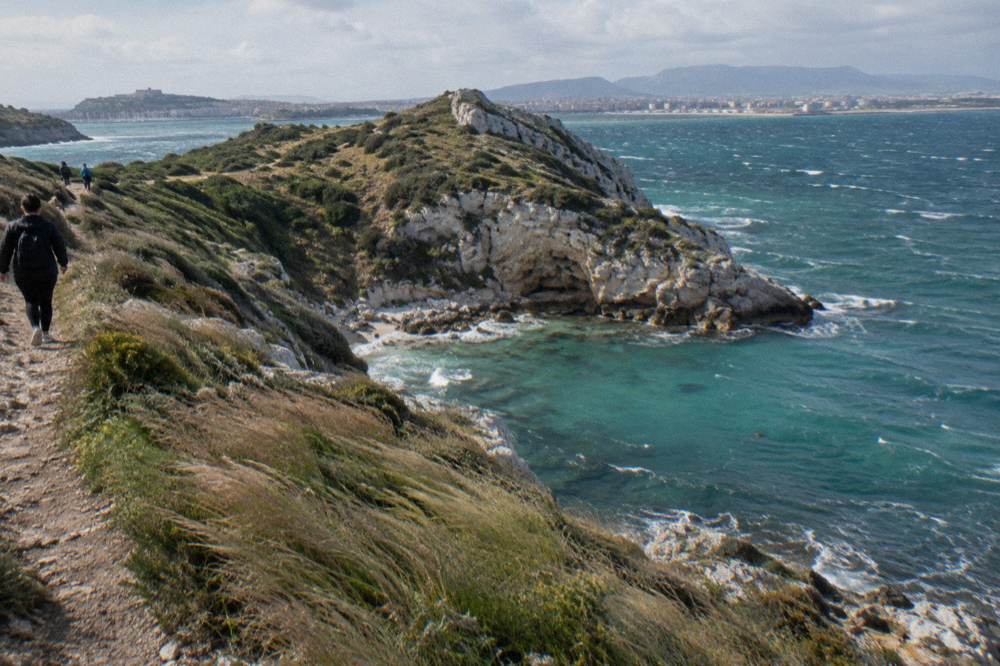
The guided version stitches the whole coast together. The Bike and Hike to Devil's Saddle runs about four hours from $78 per person, meeting at Easycletta in the Marina district, and the listing describes e-bikes through the Molentargius area and along Poetto before the on-foot climb to the Sella del Diavolo viewpoint. It has 10 reviews, too few for a rating claim, but the shape of the day, lagoon, sand, summit, is the complete Cagliari coast in one outing. Helmets, bikes, water and an expert local guide are included; check the booking page for stated minimum height and weight.
For riders planning their own version, the practical notes are simple. Ride the promenade or the canal paths to the Calamosca end, lock or leave the bike, and walk. Do not plan an ascent by bike of any kind. The full Sella del Diavolo walking and riding guide covers the trail options and the access points in detail.
When Is The Best Time Of Year For Cagliari Beaches?
For swimming and beach weather, July and August are hottest, with average highs around 32 degrees and very little rain, but the maestrale wind blows hardest then too. May, June, September and October give milder highs with fewer crowds, and flamingos are present year round with colonies largest from April to September. October still works for beach days, with warmer sea and quieter sand.
The climate normals tell the shape of the year. August averages a high of 32 degrees and a low of 20.4, with about 10 mm of rain across the whole month, and July is close behind at a 31.6 high with just 3 mm. The shoulder months, March to May and September to October, run milder, roughly 17 to 28 degree highs, with more rain days but far fewer people. The maestrale deserves respect in summer: it is the dominant wind here, strongest from May to September, and afternoons along the exposed Poetto front can be gusty enough to matter on a bike.
| Period | Typical conditions | Beach verdict | Flamingos at Molentargius |
|---|---|---|---|
| March to May | Milder, more rain days | Good for riding, swimming is brisk | Colonies growing toward peak |
| June | Warm, dry, windiest stretch begins | Excellent, sea warming | Peak nesting, first weeks notable |
| July to August | Highs around 32, minimal rain, strong maestrale | Full beach weather, busiest | Large colonies, heat midday |
| September to October | Milder highs, quieter sand | Very good, warm sea lingers | Present, colonies easing |
| November to February | Cool, shorter days | Walking and riding weather | Present year round |
Two calendar notes shape specific weeks. The Sant'Efisio procession runs 1 to 4 May 2027 and closes central streets including parts of Stampace and Via Roma, which affects rides through the old town more than the beach itself. And the cruise season peaks into early November: the port logged a quadruple ship call on 28 October 2026 with more than 11,000 passengers, and the 2026 season projects 181 calls and over 600,000 passengers in total. On heavy cruise days, the far ends of Poetto stay calmer than the Marina-side stretches.

Riders who want to go deeper on timing will find month by month detail in the best time to cycle in Cagliari guide.
How Much Does A Cagliari Beach Day Cost?
The sand itself is free and so is the promenade. The variable costs are loungers, typically EUR 10 to 15 per day at the licensed beach clubs on Poetto, and transport. Guided rides that combine the beach with the flamingo lagoon run from $56 to $80 per person depending on length, and a delivered rental bike starts from $28 per person for the day. If you're weighing whether those prices add up to a good day out, our honest verdict on Poetto Beach looks closely at the sand, the swimming, and the best months to go.
That price range is not a spread of quality, it is a spread of shape. The two hour lagoon rides and the two and a half hour old town and lagoon combos sit at the from $56 mark, while the four hour e-bike tour that covers the gulf, the canals and the beach sits at from $80 with a smaller group cap. At the other end, the delivered rental, a city or mountain bike, not electric, brought to your location for about seven hours, is the budget option for riders happy to find their own way along the promenade.
| Option | Length | Price | Rating | Notes |
|---|---|---|---|---|
| Bike Rental Delivered to You | ~7 hours | from $28 per person | 9 reviews, no rating claim | City or mountain bike, not electric, delivered to you |
| Flamingo Oasis Bike Tour | ~2 hours | from $56 per person | 4.6 across 158 reviews | Bike and helmet included |
| Old Town and Flamingos Combo | ~2.5 hours | from $56 per person | 4.7 across 126 reviews | E-bike and helmet included |
| Bike and Hike to Devil's Saddle | ~4 hours | from $78 per person | 10 reviews, no rating claim | E-bike, helmet, water, guide |
| Poetto and Flamingos E-Bike Tour | ~4 hours | from $80 per person | 4.8 across 85 reviews | Group max 8 |
All five options carry free cancellation on their booking pages. What is included varies by tour, so treat the table's inclusions column as the summary and the booking page as the contract: where a detail like pickup or a meal is not stated there, do not assume it.
A middle path is the Old Town and Flamingos Combo, about two and a half hours from $56 per person, rated 4.7 across 126 reviews, meeting at NewWaySardinia with e-bike and helmet included. It splits the ride between the four historic districts and the lagoon side, which suits a day when you want sand time in the afternoon and sightseeing in the morning.
What Should You Know Before Riding To The Beach?
Bicycles and compliant e-bikes may enter and park in all of Cagliari's limited traffic zones, including Castello, Marina, Stampace and Villanova, without a pass, which is what makes an old town to beach ride practical. Riders must be 14 to use an e-bike on public roads, and helmets are mandatory only under 18, though every guided tour on this coast provides one anyway.
The e-bike rules come from the Italian highway code. A pedal-assist bike counts as a bicycle only if the motor is rated at 250 W or less and the assistance fades out by 25 km/h, which describes every e-bike the guided tours here use. The comune's own limited traffic zone page confirms bikes ride through the ZTLs freely, a small legal fact that quietly makes Cagliari one of the easier Italian cities for a bike-based beach day.
Beyond the rules, three practical points. Plan the wind, not just the sun: ride the promenade with the maestrale at your back if you can and let the motor or your legs handle the return. Keep the Sella del Diavolo walk in the plan as a walk, since the trails are closed to bikes and actively defended. And if you are assembling the day yourself rather than joining a guide, the metropolitan cycle network is growing: the Biciplan approved in February 2026 takes the network to 366 km across Cagliari and 17 neighbouring municipalities, per local reporting on the plan, with about 12 km of new lanes under construction on more than 30 streets.
Common Questions About Cagliari Beaches
Is Poetto Beach Worth Visiting?
Yes, if you want a full service city beach with 8 km of sand, beach bars and a cycle promenade beside the water. For a quiet swim, Calamosca or Cala Fighera under the Sella del Diavolo are calmer and smaller.
Can You Cycle Along Poetto Beach?
Yes. The promenade is a cycle and pedestrian route, mostly asphalt with some shared sections, running the length of the sand. Any bike works, and an e-bike helps on the windy return leg in summer.
Can You See Flamingos From The Beach Side?
Often, yes. Molentargius-Saline sits directly behind Poetto, flamingos are present year round, and the canal paths and the cycle path along Via la Palma are known viewing spots. Sightings vary with weather and season, so no operator can promise them.
Can You Ride A Bike Up The Sella Del Diavolo?
No. The headland is a protected Natura 2000 site and bikes are banned from its trails, a ban actively enforced. Ride to Calamosca or the Poetto end, then hike to the viewpoint on foot.
How Much Do Loungers Cost At Poetto?
A sun lounger with an umbrella at the licensed beach clubs usually runs EUR 10 to 15 per day. Check with the individual stabilimento for current pricing, since rates are set by each operator.
When Is The Best Month For A Cagliari Beach And Bike Trip?
May, June, September and early October balance warmth, lighter crowds and good riding conditions. July and August are hottest and driest but also the windiest and busiest. Flamingos are present every month.