Which Cagliari Beach Has The Clearest Water?
A practical answer to which Cagliari beach has the clearest water, comparing Poetto and the Calamosca coves, with wind, season and cycling access explained.
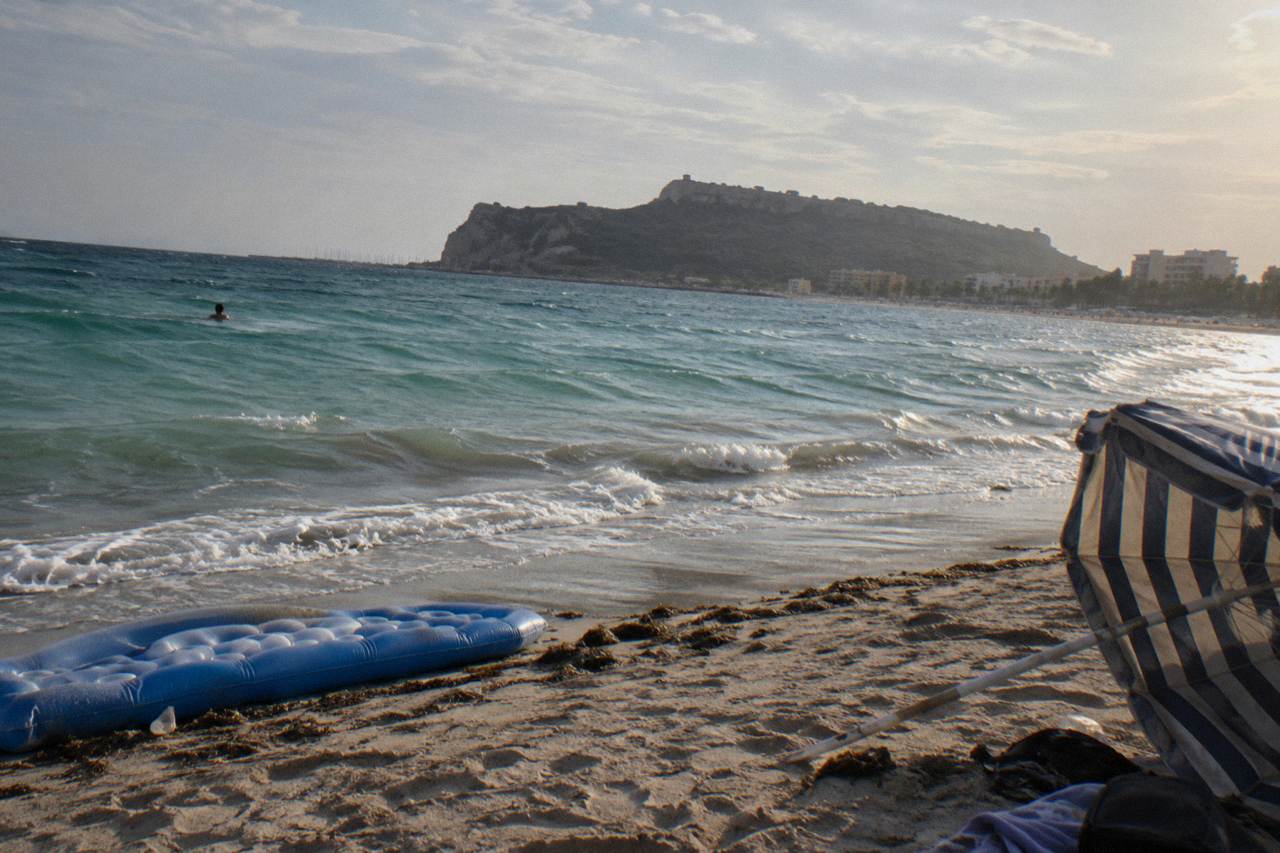
Cagliari keeps its swimmable coastline closer than most cities. From the top of the Bastione di Saint Remy you can see the whole arc: the salt lagoon where flamingos feed, the eight kilometre ribbon of Poetto sand, and the limestone headland of the Sella del Diavolo sheltering the small coves at Calamosca. The question visitors actually ask is narrower, and fair: of those, which one has the clearest water?
The honest answer has two parts, the beach itself and the day you swim on it, and the second part matters more than most guides admit. Before the detail, the short version sits in the first section below. The rest of this page compares the strands, explains the wind that stirs them up, and shows how a bike, electric or otherwise, is the fastest way to check both on the same afternoon. Cagliari Bike Tours covers the coast in depth elsewhere; this page sticks to the water.
The clearest water inside Cagliari is generally found in the sheltered coves at Calamosca, tucked under the protected Sella del Diavolo headland, where the rocky seabed and the low footfall keep visibility high. Poetto, the eight kilometre sandy strand facing the gulf, offers beautiful clear water on calm days too, but its open sandy bottom stirs up quickly when the wind rises, so on any given afternoon the sheltered side wins more often than not.
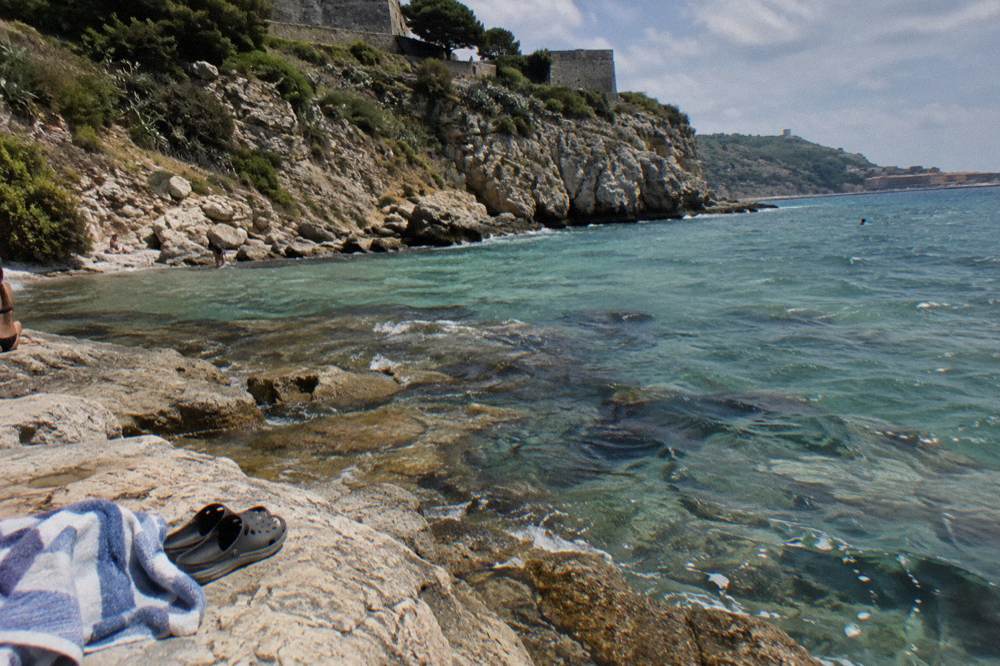
That is the geography in one breath. Calamosca sits in a small bay at the foot of the Capo Sant'Elia promontory, a protected Natura 2000 site where the seabed is rock and posidonia rather than loose sand, and where the headland itself blocks the prevailing northwesterly wind. Fewer people, less sand in suspension, and a cove that faces away from the open gulf: those three things together are why locals who want transparent water head there rather than to the main beach.
Poetto should not be written off. On a June morning before the wind fills in, the water along its eight kilometres of sand can be as inviting as anything on the island, shallow and warm and blue. It is simply a different animal: an open urban strand that shares its water with the gulf, so its clarity tracks the weather hour by hour. If you are staying near the centre and want a quick swim plus a long seaside pedal, Poetto is unbeatable for convenience. If clear water is the single deciding factor, the coves win.
One planning note that surprises first time visitors: the two are neighbours, not rivals. The Calamosca coves sit at the southeastern end of the same coastline as Poetto, below the Sella del Diavolo ridge that closes the beach off from the open sea. A cyclist can look at both in the same ride, which is exactly what several guided loops do. The Poetto and Flamingos E-Bike Tour covers the lagoon canals, the seafront and the Calamosca end of the coast in one roughly four hour loop, rated 4.8 across 85 reviews and priced from $80 per person; you can read more on the Poetto and flamingos e-bike tour page.
For readers planning a whole coast day rather than one swim, the longer rundown of strands, facilities and access is in the Cagliari beaches guide. This page stays on the water itself.
Why Does Wind Matter So Much For Water Clarity?
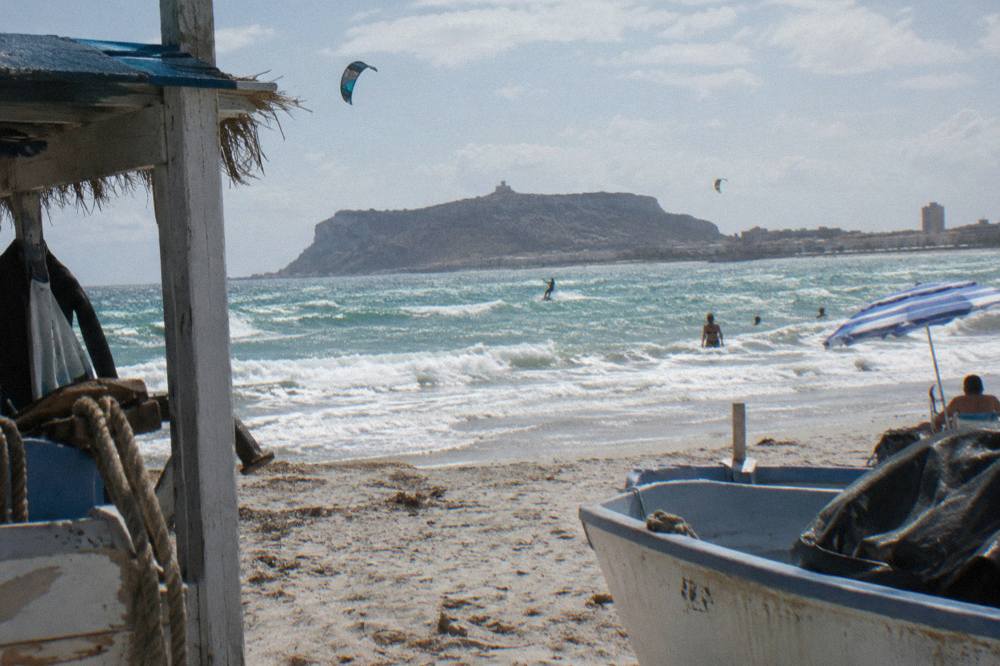
Wind matters because Cagliari's dominant maestrale, a northwesterly that blows hardest from May to September with summer gusts above 50 km/h, stirs up the sandy seabed along Poetto, turning glassy water milky within hours whenever it or any strong onshore breeze is running; once the sea calms, that same water clears remarkably fast, and the sheltered rock-bottomed coves cloud far less.
The maestrale deserves respect from swimmers and cyclists alike. It is Sardinia's signature wind, strongest in the warm months, and it funnels down the Gulf of Cagliari with real force on some afternoons. For the beach it means two things. First, clarity drops along the open strand as the water column fills with fine sand. Second, and more pleasant, the same wind scrubs the air and leaves the light extraordinary, which is why windy-day Poetto photographs so well even when the water is stirred up.
The practical read is simple. Swim early. Summer mornings in Cagliari average calm conditions before the wind builds through the afternoon, and climate normals put July and August highs at 31.6 and 32 degrees with almost no rain, 3 and 10 millimetres respectively, so the sea is warm and the main variable really is the breeze. Locals judge the day by the flag and the waterline: if the shallows look like milk glass, they walk to the rocky side or wait for evening.
| Condition | Effect on Poetto | Effect on the Calamosca coves | Best move |
|---|---|---|---|
| Calm morning | Clear, warm shallows | Very clear, calm | Swim anywhere |
| Strong maestrale | Cloudy water, chop | Some shelter, clearer | Head for the coves |
| Day after a storm | Sand in suspension | Clears faster on rock | Wait half a day |
| Calm shoulder season | Good clarity, cooler | Excellent clarity | Coves, with a wetsuit if early |
Shoulder months, March to May and September to October, bring milder air and more changeable days, and they are the quiet season for the water too. October in particular can serve up calm, transparent days along the whole coast with a fraction of the summer crowd, though the sea is cooling. The seasonal detail, including sea swimming into autumn, is covered in when to plan cycling around Cagliari weather.
Is Poetto Worth Visiting If You Want Clear Water?
Yes, with a timing caveat. Poetto's eight kilometres of sand running from the Sella del Diavolo headland toward Quartu Sant'Elena serve genuinely clear water on calm days, especially in the morning, and no other Cagliari beach matches it for ease: a pedestrian and cycle promenade runs the entire length, and a city bus reaches it in about twenty minutes from the centre. On windy afternoons the water clouds, so time your swim rather than writing the beach off.
The beach is the city's front garden. Eight kilometres of sand is a lot of strand, and water quality and clarity vary along it simply because the exposures vary: the end nearest the headland sits in partial shelter, while the long middle stretch faces the open gulf. Regulars pick their stretch accordingly and move with the wind. Beach facilities are run by licensed stabilimenti along the front, where a sun lounger plus umbrella usually runs 10 to 15 euros a day in season; check the current rate at the stand, since prices are set per operator.
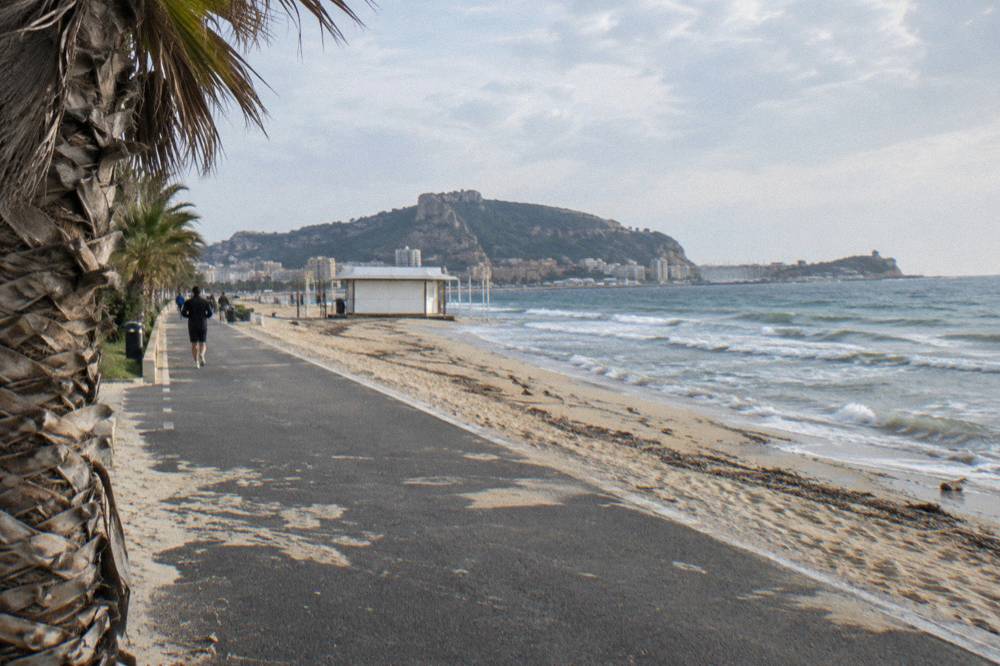
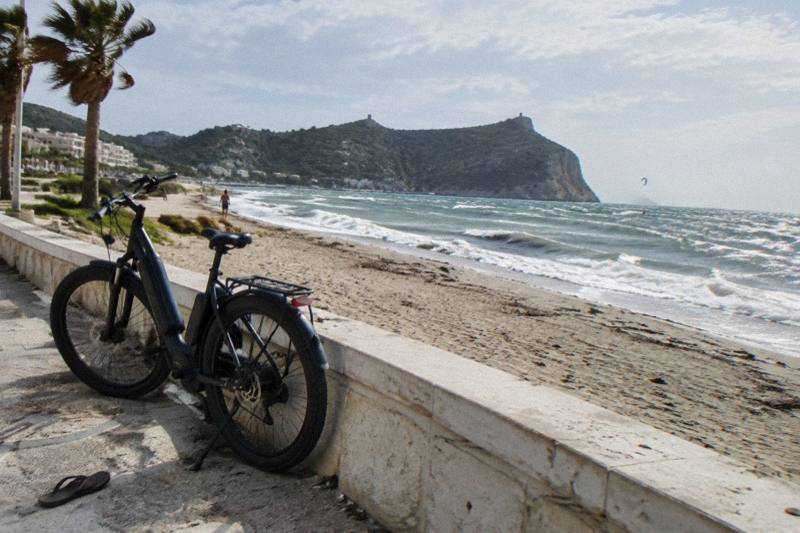
What makes Poetto special for this site's readers is the riding. The seafront carries a dedicated pedestrian and cycle path, mostly asphalt with some shared sections, running the full length of the beach, so you can pedal the whole strand, eyeball the water as you go, and stop where it looks best. That is a luxury no taxi or bus ride offers. A visitor's guide to the path itself, including access points, is in the Poetto bike path guide.
One detail that belongs here rather than in a footnote: the Via la Palma cycle path along the shore is also one of the better flamingo viewing spots in the city, because the Molentargius lagoon sits directly behind the beach. The birds are present at Molentargius year round, with colonies largest from April to September, so a calm evening ride along Poetto regularly doubles as a wildlife outing. Never count on a sighting, the birds move on their own schedule, but the odds along this stretch are better than almost anywhere else in town.
Why Is The Water Clearer At Calamosca?
Calamosca's water runs clearer because the cove sits in the wind shadow of the Sella del Diavolo, a protected limestone headland registered as a Natura 2000 site, and because its seabed is rock and seagrass rather than the loose sand that clouds Poetto. Less suspended sand plus less wave action equals steadier visibility, which is why this small bay is the local shorthand answer for clear water inside the city.
The headland does the heavy lifting. Capo Sant'Elia juts out between the gulf and the open sea, and the little bay at Calamosca nestles on its southern flank, protected from the northwesterly maestrale that pushes down the gulf. The same protection that keeps the water calm also keeps the marine life close: rock, seagrass meadows and the sort of snorkelling visitors do not expect from a city beach. The bay is small and gets busy on summer weekends, so the clear-water advantage comes with a space premium.
There is a rule every cyclist needs before pedalling here. Bicycles are not allowed on the Sella del Diavolo's trails; the headland is a protected site and the local press has reported enforcement complaints about exactly this. The correct plan, and the one the guided products use, is to ride to the Calamosca or Poetto end and hike the top on foot. The full route breakdown, including what the hike involves, is in Sella del Diavolo by bike and on foot.
The tour that connects this whole coastline honestly is the Bike and Hike to Devil's Saddle: roughly four hours, from $78 per person, e-bike and helmet included with a local guide, riding the Molentargius side and the Poetto front before the on-foot climb to the viewpoint. It has too few reviews yet to quote a rating, so judge it on the itinerary rather than a score. Its structure, ride the flat, walk the ridge, swim if time allows, is the most efficient clear-water circuit a visitor can do in half a day.
What About The Flamingo Lagoon Between The City And The Sea?
Between central Cagliari and Poetto lies the Molentargius-Saline Regional Natural Park, a working salt lagoon where pink flamingos feed year round. The lagoon is not a swimming spot, its water is shallow salt pans, but it sits directly on the cycling route to the beach, and the park's green areas are open daily from 06:30 to 21:00 from March to mid October and 07:00 to 18:00 the rest of the year.
The park's own rules matter here. Its green areas admit non-motorised bikes only, per the official park pages at parcomolentargius.it. That wording, non-motorised, does not cover a pedal-assist e-bike for the managed green areas, so guided e-bike rides flank the lagoon on the surrounding canals, public paths and the Poetto side rather than crossing the park interior. A small but useful detail when you are planning a flamingo ride.
The flamingos are why this stretch earns a place in a beach article. The colony has nested steadily near Cagliari since 1993, part of the population stays all twelve months of the year, and the largest gatherings fall between April and September, with the first weeks of June the most photogenic. Riding out to the beach with the lagoon on one side and the sea on the other is the single best value loop in the city, and several operators run exactly it. The Flamingo Oasis Bike Tour, about two hours from $56 per person with bike and helmet included, rated 4.6 across 158 reviews, is the short version from the NewWaySardinia base.
Can You Check Both Beaches In One Afternoon By Bike?
Yes, you can, and a bike is the sensible way to do it: the coastline from the Marina district to the Calamosca coves is rideable on mixed paths and calm streets in a single outing, and a loop covering the Molentargius canals, the full Poetto promenade and the Calamosca end is the same route the longer guided e-bike tours run, a decent hint that it fits comfortably inside a half day.
You do not have to join a tour to ride it. Cagliari's limited traffic zone rules vary by street and by hour, so before setting out it is worth checking the Comune di Cagliari's ZTL page at comune.cagliari.it for the streets on your route. Beyond the centre, the metropolitan cycle network, expanded to 366 kilometres of routes by the Biciplan approved in February 2026, keeps improving the links between town and sea. For riders weighing electric versus pedal power over this exact terrain, the comparison in e-bike versus city bike in Cagliari covers the gradients.
Two Italian e-bike rules shape who can ride that loop. The minimum age for a compliant pedal-assist e-bike on public roads is 14, and helmets are mandatory only for riders under 18, though every guided tour listed here that states a helmet policy includes one. Operators may add their own minimum height or weight limits; the Old Town rides that state one set minimum height at 150 centimetres, and where a listing is silent the safe move is to check the booking page before reserving.
A self-guided note for the tide of questions this always raises: a plain rental delivered to your door, from $28 per person for a city or mountain bike, not electric, covers the flat Poetto run nicely. No product on this coast rents an e-bike alone, so riders wanting electric assist join guided rides. The tradeoffs between renting and riding with a guide are laid out in bike rental versus guided tour.
| Option | Time | From | What it covers | Water you end up beside |
|---|---|---|---|---|
| Flamingo Oasis Bike Tour | ~2 hours | $56 per person | Lagoon oasis loop, bike and helmet included | Lagoon, short seafront reach |
| Poetto and Flamingos E-Bike Tour | ~4 hours | $80 per person | Canals, lagoon, full seafront, Calamosca end | Poetto and the Calamosca coves |
| Bike and Hike to Devil's Saddle | ~4 hours | $78 per person | Ride the coast, hike the headland on foot | Calamosca coves from above and below |
| Delivered rental, city or mountain bike | ~7 hours | $28 per person | Self-guided, delivered to you | Wherever you pedal |
Where Does The Water Get Even Clearer Outside The City?
Outside Cagliari itself, the water tends to be clearer still along the coast toward Villasimius and the Capo Carbonara area southeast of the city, a stretch of shoreline known for its coves and sea views. These are not city beaches. They lie beyond Poetto and Quartu Sant'Elena, so reaching them is a day trip by bike, bus or car rather than an afternoon loop.
This is worth saying plainly because the question this page answers is about Cagliari, and the honest ranking is: the sheltered city coves beat the open city strand on most days, and the famous coves down the coast beat both, at the cost of travel time. Cyclists planning that bigger day should read the train and bike logistics in day trips from Cagliari by bike and train. Trains in Sardinia take one bike or e-bike per traveller for a 3.50 euro daily supplement, which extends how far a clear-water hunt can reach.
Timing the wider coast follows the same wind logic as the city. The maestrale is strongest May to September, the height of summer is hot and near rainless, and the shoulder months trade a few degrees of warmth for emptier sand and often glassy morning water. Whatever the forecast promises, treat clarity as a condition, not a guarantee; the sea keeps its own schedule. The beaches and facilities rundown, including what stays open through the cooler months, continues in the Cagliari beaches guide.
If the plan is one afternoon rather than one week, the standing advice holds: ride the lagoon and the seafront early, look at the water as you go, and let your own eyes pick between the sandy open strand and the rocky sheltered coves. The four hour e-bike loop that does all of it, from the old town canals to the Calamosca end, is the Poetto and Flamingos E-Bike Tour, free cancellation included, and a calm morning departure gives it the best water of the day.
Common Questions About Cagliari Beach Water
Which Cagliari Beach Has The Clearest Water?
On most days the sheltered coves at Calamosca, under the protected Sella del Diavolo headland, hold the clearest water inside the city thanks to a rocky seabed and wind shelter. Poetto's eight kilometre sandy strand is beautifully clear on calm mornings but clouds when wind stirs the sand.
Is Poetto Good For Swimming?
Yes. The water is shallow, warm through summer and clear on calm days, and a cycle and pedestrian promenade runs the full length. Time your swim for the morning before the wind builds, and expect the water to cloud on windy afternoons.
Can You Bike From Cagliari To The Beach?
Yes, and it is one of the city's best rides. The route runs from the centre past the Molentargius canals onto the Poetto seafront path, which carries bikes its full length. For the limited traffic zones in the old quarters, rules vary by street and by hour, so check the Comune di Cagliari ZTL page before you go.
Are There Flamingos Near The Beach?
Often, yes. Flamingos are present at the Molentargius lagoon year round, with the largest colonies April to September, and the lagoon sits directly behind Poetto. Sightings are never guaranteed, but the Via la Palma stretch is a well known viewing point.
When Is The Sea Warmest In Cagliari?
Late August and September. Air temperatures peak in July and August, but the sea lags behind and holds summer heat, so the water stays swimmable right through October. The seasonal guides on this site cover the detail month by month.