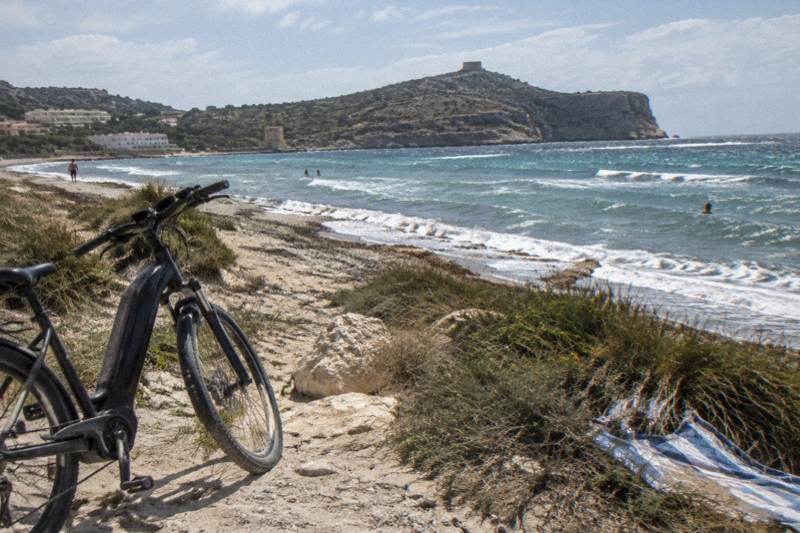
Cycling In Sardinia: Where Cagliari Fits
Sardinia is a big island with serious cycling, and most visitors never bring a bike. Cagliari is the one base where seafront paths, a flamingo lagoon and rail links into the wider island sit within a single day.
Short answer
Cagliari gives you 8 km of Poetto seafront, the Molentargius flamingo park on the edge of town, and Trenitalia regional trains that carry a bike for a EUR 3.50 daily supplement. Guided rides run from $50 to $80 per person, and a delivered rental starts at $28 per person. It is the simplest place in Sardinia to ride without a car.
Sardinia earns its cycling reputation on empty interior roads and the long climb toward the island's eastern granite coast, but a holiday here does not have to start with a support van and a week-long itinerary. The island's capital is the one place where a bike replaces a car from the moment you land. An 8 km seafront promenade runs from the Sella del Diavolo headland toward Quartu Sant'Elena, a regional park with year-round flamingos sits beside it, and the railway fans out to the rest of the island. This guide sets out what cycling in Sardinia looks like from a Cagliari base: the rides you can do without leaving town, the guided options that show you the island's signature landscapes, the seasons, the rules and the costs. If you are still weighing Sardinia against other regions, our guide to Italy's best cycling destinations compares the Dolomites, Puglia and the coast around Cagliari side by side.
Why Is Cagliari The Best Base For Cycling In Sardinia?
Most cycling trips in Sardinia fail on logistics, not terrain, and Cagliari solves the logistics better than anywhere else on the island. The city is compact, its metropolitan cycle network grew to 366 km in February 2026, bikes and e-bikes may enter every limited-traffic zone in the centre without a pass, and regional trains take a bike for a EUR 3.50 daily supplement. Flat coastal riding plus trains inland, a combination the northern towns cannot match.
The case starts with geography. Cagliari sits at the south of the island, where the riding is at its flattest and the distances between the city, the Poetto beach and the Molentargius lagoon are short enough that a two-hour ride covers all three. Head inland from the northern towns and the terrain changes fast; head east from Cagliari and the coastal plain gives a beginner or a family a full morning of riding without a serious climb. The southern capital is where a cycling day in Sardinia is easiest to assemble, and the tours collected here take full advantage.
The second argument is infrastructure. The metropolitan Biciplan, approved on 16 February 2026, expanded the planned cycle network across Cagliari and 17 neighbouring municipalities from 243 km to 366 km, and roughly 12 km of new or upgraded lanes were under construction on more than 30 city streets in mid-2026. A visitor will not ride all of that, but it shows the direction the city has taken. There is also a municipal bike-share, CaBuBi, with 60 bicycles at 10 one-way stations: 50 classic bikes, 6 pedal-assist, 3 tandems and 1 cargo bike, with a free-flow expansion announced. That covers the spontaneous evening ride when a full rental would be overkill.
The third argument is legal and practical. The comune confirms that bicycles, e-bikes included, may access and park in all of the city's limited-traffic zones, Castello, Marina, Stampace and Villanova among them, without any pass. The old town's medieval lanes, hostile to cars, are open to you. For everything beyond the city, the railway does the carrying: Trenitalia regional trains in Sardinia take one bicycle or e-bike per traveller, up to 2 m in length, for a EUR 3.50 daily supplement or the price of a second-class single for the same journey. That is how a Cagliari base reaches the rest of Sardinia without a car.
For riders weighing up machine types before anything else, the e-bike versus city bike question has its own guide; the short version is that the southern plain rewards either, and the interior climbs argue for pedal assist.
What Can You Ride Straight From Cagliari?
Three rides start within the city itself: the 8 km Poetto seafront promenade, the canal-side paths around the Molentargius lagoon where flamingos are present all twelve months of the year, and the old town's four historic districts, Stampace, Castello, Villanova and Marina, all reachable by bike without any pass or permit. None of these needs transport, a car or more than half a day.
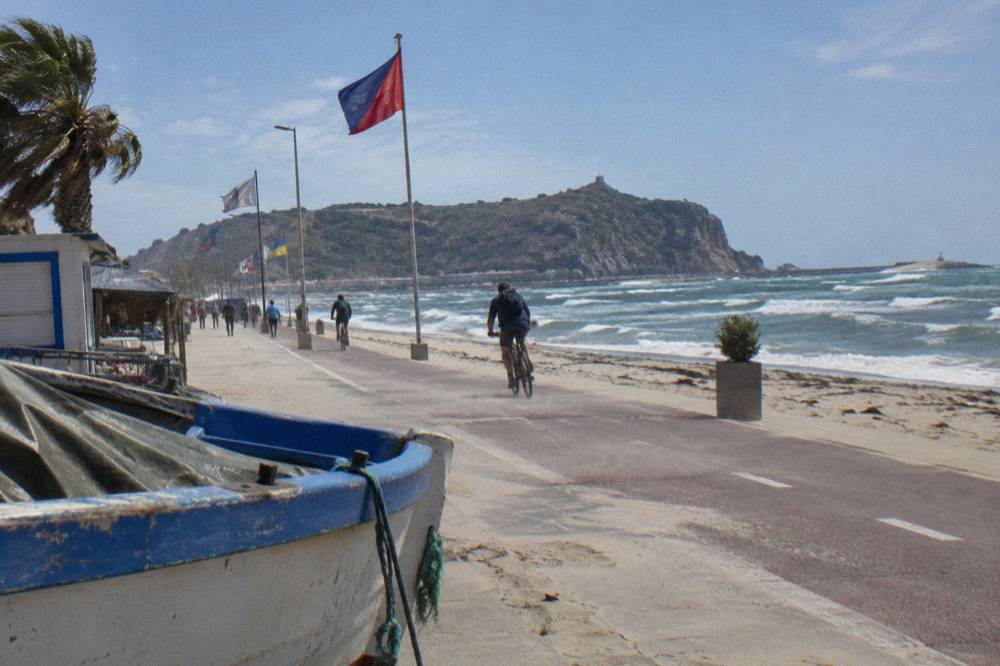
The Poetto is the anchor. Eight kilometres of sand run from the Sella del Diavolo headland toward Quartu Sant'Elena, with a promenade that locals walk, run and cycle, mostly asphalt with some shared sections where pedestrians, runners and cyclists mix. It is the closest thing Sardinia has to a seafront cycleway you can ride end to end without a junction, and the Poetto bike path guide covers it in detail, including the stretch along Via la Palma that doubles as a flamingo viewing point.
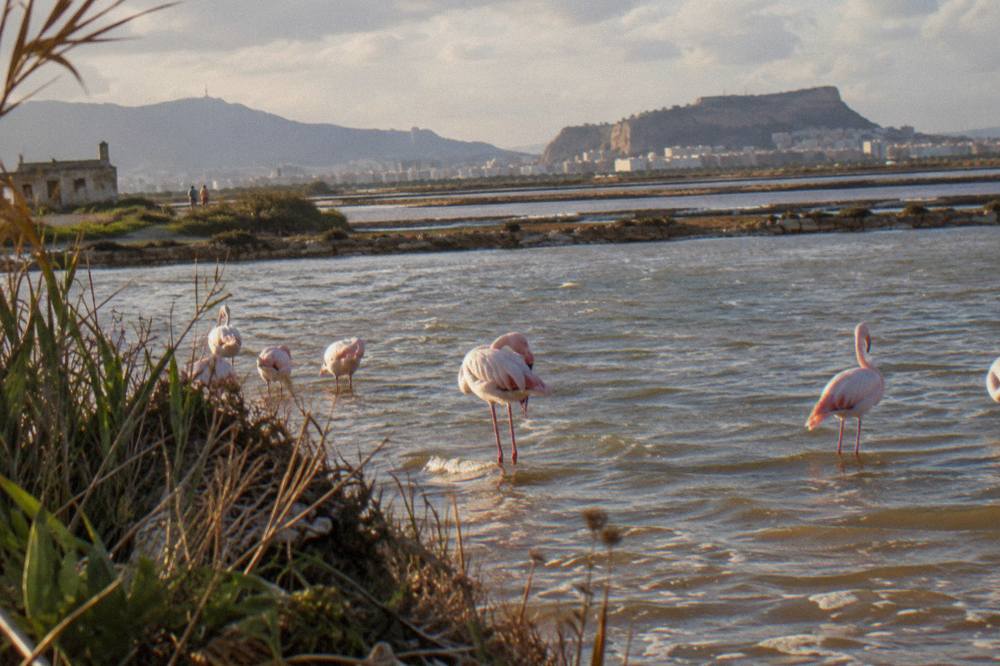
Molentargius-Saline Regional Natural Park sits immediately behind the beach, and its green areas are open every day: 1 March to 15 October from 06:30 to 21:00, and 16 October to 28 February from 07:00 to 18:00. One rule matters here and is often misunderstood: the park's own wording permits cycling with your own non-motorised means on its designated paths. A rented or own e-bike is not covered by that wording, so guided e-bike tours ride the surrounding canals, public paths and the Poetto side rather than the park's managed green areas, and the listing for each tour describes flamingo spotting along those routes. Flamingos themselves are reliable in the sense that a settled population lives near Cagliari all year, with the colonies at their largest between April and September; sightings still depend on the day, the light and the birds.
The old town loop is the third city ride. The listing for the Old Town Guided E-Bike Ride, rated 4.9 across 325 reviews, names Stampace, Castello, Villanova and Marina as its districts, which is the full set of historic quarters, and its meeting point is Via Santa Margherita 22, close to the port and the centre. A listing for a separate two-hour ride with a coffee stop names the Basilica of Our Lady of Bonaria and the Cathedral among its stops. Riding these lanes independently is legal and pleasant; riding them with a guide turns four names into four stories.
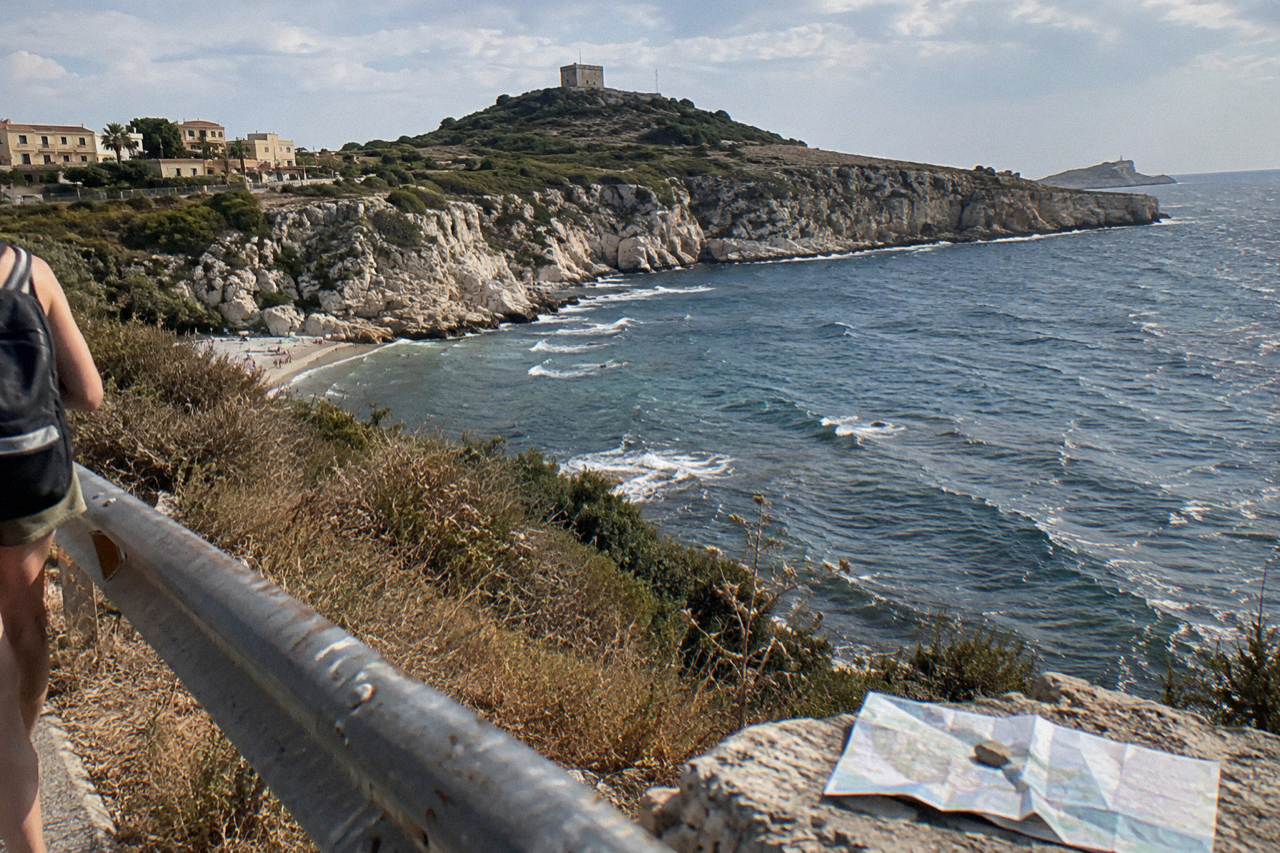
Sella del Diavolo needs its own honest paragraph. The promontory is a protected Natura 2000 site and bicycles are prohibited on its trails, a prohibition local press reported as recently enforced in October 2026. The correct frame is the one the Sella del Diavolo by bike and on foot guide uses: ride to the Calamosca or Poetto end, then hike to the top. A guided product does exactly that, the Bike and Hike to Devil's Saddle, roughly 4 hours, from $78 per person, with e-bike and helmet use, a local guide and a bottle of water included, though it has only 10 reviews so far, too few for a rating claim.
For a first taste of the island's cycling without committing to a full day, three options bracket the range: a salt-flats sunset ride, a delivered rental and a flamingo-and-canals e-bike tour.
Which Guided Tours Show You Sardinia At Its Best?
The guided rides cluster into three families: old town e-bike tours from $50 to $56 per person lasting about two to three hours, flamingo and lagoon rides from $56 to $80 per person, and one sunset salt-flats ride at $66 per person on Sant'Antioco, an island off the Sardinian southwest coast that takes the scenery far beyond the city.
The old town family is the biggest. The Two-Hour E-Bike Tour With Coffee, from $50 per person and rated 4.7 across 281 reviews, includes a local guide, bike rental and one coffee, meeting at NewWaySardinia. The Three-Hour Old Town E-Bike Tour, from $56 per person, rated 4.7 across 18 reviews, adds a helmet and a bottle of water and meets at Easycletta. The Old Town E-Bike With Coffee Stop, from $53 per person, rated 4.9 across 369 reviews, caps its group at 9 and meets at Via Santa Margherita 22. Three operators, one idea, small price spread: pick on schedule and meeting point rather than price.
The lagoon family splits by vehicle and by bike type. The Poetto and Flamingos E-Bike Tour, roughly 4 hours at from $80 per person and rated 4.8 across 85 reviews, includes local guide, bicycle, helmet and bottled water, with a group cap of 8 and no hotel pickup. The Flamingo Oasis Bike Tour, roughly 2 hours at from $56 per person, rated 4.6 across 158 reviews, includes bike and helmet rental; the listing does not state the bike type, so check the booking page if the machine matters to you. The Old Town and Flamingos Combo, roughly 2.5 hours at from $56 per person, rated 4.7 across 126 reviews, stitches the two worlds together with e-bike and helmet included.
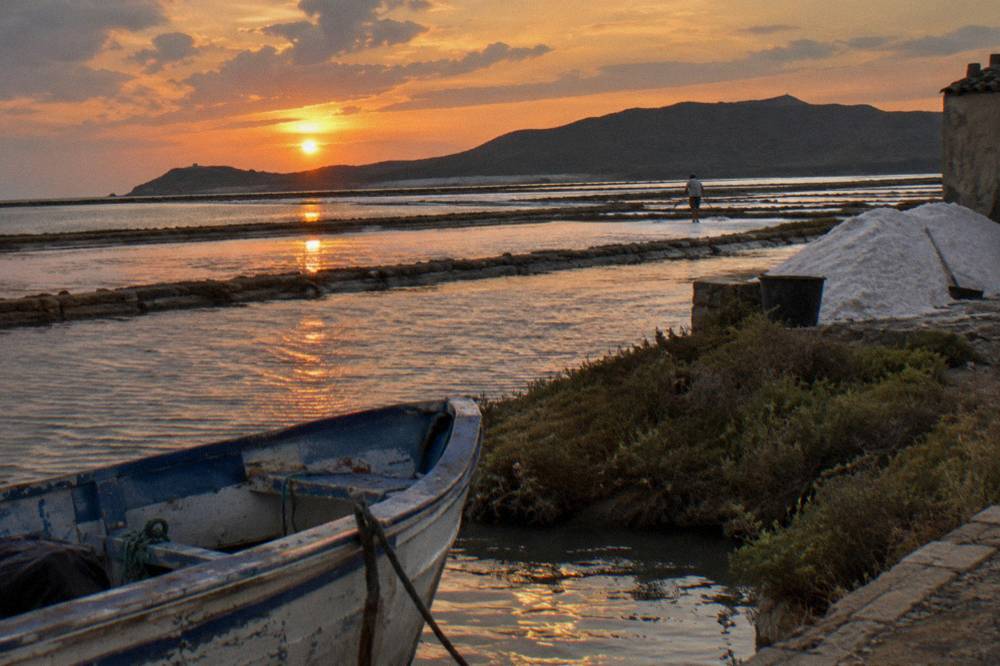
Then there is the ride that leaves Cagliari behind entirely. The Sant'Antioco Salt Flats Sunset E-Bike, roughly 2 hours at from $66 per person and rated 4.9 across 20 reviews, meets at the Ziru Tour cabin at Porto Ponte Romano on Sant'Antioco, includes bicycle, helmet and a storage bag, caps its group at 6 and runs without drinks or a meal. It is the one guided product here that shows the island's other face: saltpans, sunset light and the far southwest, rather than city streets. Sant'Antioco itself is reachable by car or bus from Cagliari; check the operator's booking page for how riders typically get to the meeting point.
One further family exists in the market but not on this site's pages: the park's own authorised EcoSafari electric minibus reaches the restricted nesting zones inside Molentargius, which no bike tour can do. If seeing flamingos at close range from inside the reserve is the priority rather than the riding, that minibus is the honest answer; if the riding is the point, the canal and Poetto tours are the way to see the lagoon.
Choosing between a guided ride and independent rental has its own comparison in the rental versus guided tour guide; the honest summary is that a guide earns their fee in the old town's stories and the lagoon's hidden corners, while the seafront is easy enough to ride alone.
Where Does Sardinia Cycling Go Beyond Cagliari?
Trenitalia regional trains carry one bike or e-bike per traveller for a EUR 3.50 daily supplement, which puts the southern and central island within a day trip: the coast toward Villasimius is a popular cycling direction, the Santa Gilla lagoon connects by flat routes, and further afield the hills roughly 18 km from Cagliari host wineries reachable by bike in about an hour of riding, per the operators that run tasting visits there.
The train is the mechanism. The supplement buys 24 hours of bike carriage on regional services, with the bike limited to 2 m in length, which covers any standard city bike, mountain bike or e-bike on this site's tours. Intercity services work differently, with six bike hooks in carriage 3 and two e-bike charging points, and a bike service price shown as EUR 12 on the operator's page. One caution on buses: city and regional bus bike rules vary by operator and vehicle, and the details are not uniformly published, so check with the operator before planning a bus-plus-bike leg rather than assuming carriage.
The directions worth naming, from the route research: coastal riding toward Villasimius, with views over the Capo Carbonara area, is the classic southern road ride and is well covered by route-planning services; the Santa Gilla lagoon west of the city connects to the Molentargius and Poetto networks through flat paths being linked into the metropolitan plan; and the wine hills inland, featuring Cannonau, Vermentino and Carignano tastings, sit close enough that a winery visit by bike is a realistic half day, as the food and wine by bike guide lays out. The day trips by bike and train guide covers the practical mechanics of each line.
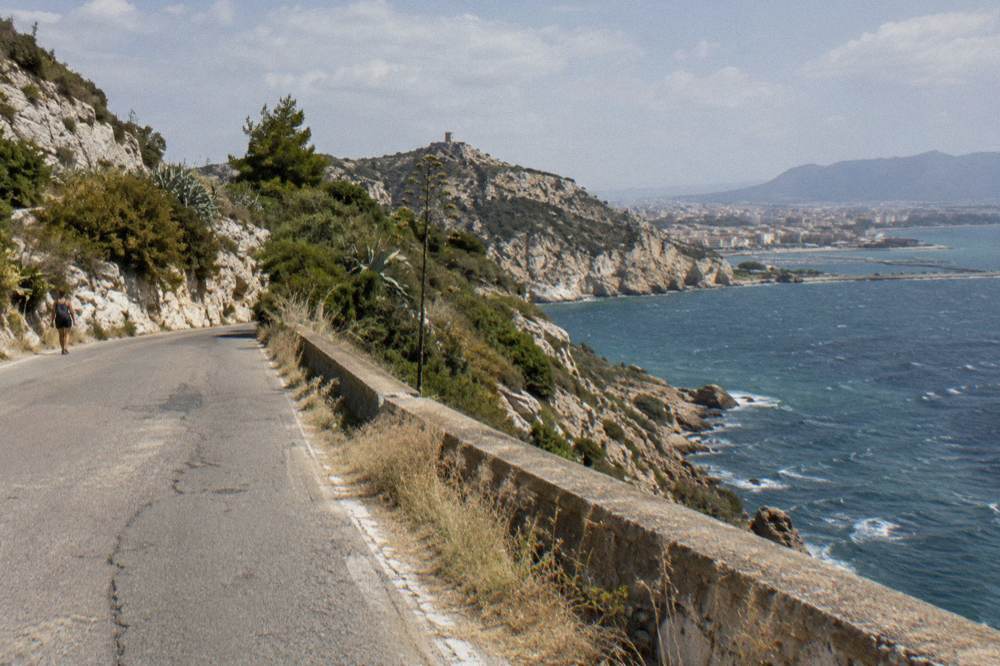
The delivered rental deserves a mention here because it is the product that makes independent island riding cheapest. Bike Rental Delivered to You, from $28 per person for about 7 hours, brings a city or mountain bike, not electric, to your location, with free delivery; it has 9 reviews so far, too few for a rating claim. That is the tool for a self-guided Poetto day or a train-and-ride itinerary, and the cheapest rental options are compared in a separate post.
For riders dreaming bigger than a day, the honest note is that point-to-point touring across the whole island is a different discipline: it needs luggage movement, booked accommodation and a tolerance for the interior's summer heat and traffic-free but shoulderless roads in places. Cagliari is the right first chapter, not the whole book.
When Is The Best Season For Cycling In Sardinia?
Spring and autumn are the best cycling months: March to May and September to October bring milder highs of 17 to 28 C, while July and August average highs of 31.6 C and 32 C with as little as 3 mm of rain, heat that pushes serious riders to dawn starts. One more factor shapes every coastal ride: the maestrale, the northwest wind that dominates year-round and blows hardest from May to September.
The climate normals for 1991 to 2020 put July at an average high of 31.6 C and August at 32 C, with overnight lows around 20 C and monthly rainfall of 3 mm and 10 mm respectively. That is beach weather, and it is also why the summer pattern on any guided ride skews early. Shoulder months trade some of that certainty for comfortable pedalling temperatures and a few more rain days. October, as this is written, still carries the tail of the cruise season, which matters less for cyclists than for the old town's footpaths, but it does mean meeting points near the port are busy on call days.
The maestrale deserves respect rather than fear. It is the dominant wind on the island, most frequent and strongest from May to September, when gusts can exceed 50 km/h on exposed coast. Practical reading: on a Poetto out-and-back, one direction will feel hard and the other will feel like a gift, and an e-bike flattens both. No tour can promise the wind will behave; operators describe their routes and start times, and the booking page shows what a given departure includes.
Flamingo timing overlays all of this. The birds are present at Molentargius in every month, part of the population settled year-round, with the colony having nested steadily since 1993. The largest gatherings and the nesting activity fall between April and September, with the first weeks of June the most active. A spring or early-summer ride therefore buys the best odds on bird numbers, though never a guarantee.
One calendar event to plan around rather than towards: the Sant'Efisio procession runs 1 to 4 May 2027 through Stampace and along Via Roma, closing central routes on those days. Riding the old town that week means checking what is open; riding the Poetto is unaffected. The seasonal question is covered more fully in the best time to cycle guide.
The table below condenses the year into a planning view.
| Period | Average high | Cycling conditions | Notes |
|---|---|---|---|
| March to May | 17 to 28 C range | Comfortable, a few rain days | Flamingo colonies build toward June; Sant'Efisio closes central streets 1 to 4 May |
| June | Within the summer climb | Warm, good light | First weeks peak flamingo activity at Molentargius |
| July | 31.6 C | Hot; ride early | Rainfall around 3 mm; maestrale strongest |
| August | 32 C | Hottest; dawn starts | Rainfall around 10 mm; peak wind gusts possible |
| September to October | Milder than summer | Comfortable, cruise-season crowds near the port | Flamingo numbers still strong early, easing after September |
What Rules Apply To Bikes And E-Bikes In Sardinia?
Italian law treats a compliant e-bike, motor capped at 250 W with assistance cutting out at 25 km/h, exactly as a bicycle: no licence, plate or insurance, minimum age 14, helmet compulsory only under 18, and access to cycle paths and limited-traffic zones. The catch in Cagliari is terrain-specific: Molentargius park permits only non-motorised bikes in its green areas, and bikes are prohibited outright on the Sella del Diavolo trails.
The e-bike rules come from the Italian highway code. To count as a bicycle, the motor's continuous rated power must not exceed 250 W, assistance must cut out progressively at 25 km/h, and the motor must work only while you pedal. Meet those limits and you need no licence, plate or insurance; a faster speed pedelec, assisting to 45 km/h, is treated as a moped with plate, insurance, helmet and an AM licence, and it may not use cycle paths. Helmet is compulsory for riders under 18 and strongly recommended for everyone else. The minimum age on public roads and cycle paths is 14, and an adult may carry one child up to 8 years in an approved seat, a detail the cycling with kids guide builds on. Operators may add their own minimums: one old town listing sets minimum rider height at 150 cm, and the sunset and flamingo listings state their own limits, so check the booking page for the ride you want.
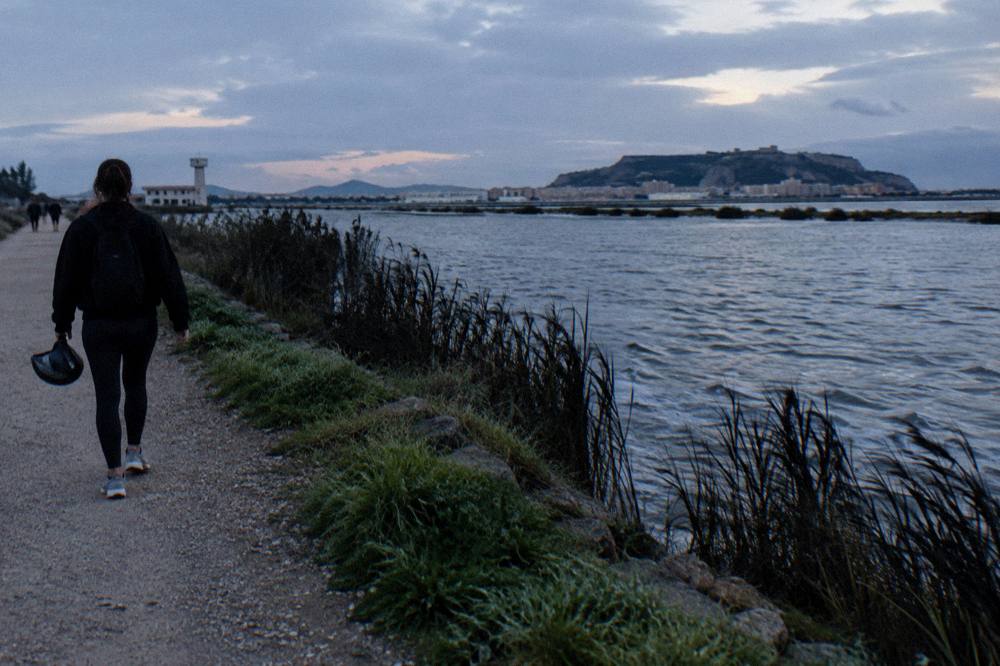
Locally, the two restrictions repeat because they matter. First, Molentargius-Saline: designated paths and cycle-pedestrian routes are open to non-motorised bikes, riders stay on marked itineraries and yield to pedestrians; e-bike tours therefore ride the canals and public paths around the park. Second, Sella del Diavolo: no bicycles on the Natura 2000 trails, period. The park's infopoint keeps hours of 08:30 to 18:30 from October to March and 08:30 to 20:30 from April to September if you want maps or confirmation on the day.

How Much Does A Day Of Cycling In Sardinia Cost?
A guided e-bike ride costs from $50 to $80 per person depending on length and route, a delivered city or mountain bike rental is from $28 per person for about seven hours, and the practical extras are small: the EUR 3.50 train bike supplement for inland days and EUR 10 to 15 per day for a lounger and umbrella at Poetto's licensed beach clubs if the afternoon turns into a beach afternoon.
The table below names the tours behind each price, all firm figures per person. Note what the low and high ends actually are: the cheapest product is the delivered rental at $28, not a guided ride, and the most expensive guided option is the four-hour Poetto and Flamingos e-bike tour at $80.
| Tour | Duration | Price | Rating |
|---|---|---|---|
| Bike Rental Delivered to You | ~7 hours | from $28 per person | 9 reviews, too few to rate |
| Two-Hour E-Bike Tour With Coffee | ~2 hours | from $50 per person | 4.7 across 281 reviews |
| Old Town E-Bike With Coffee Stop | ~2 hours | from $53 per person | 4.9 across 369 reviews |
| Old Town Guided E-Bike Ride | ~2 hours | from $56 per person | 4.9 across 325 reviews |
| Three-Hour Old Town E-Bike Tour | ~3 hours | from $56 per person | 4.7 across 18 reviews |
| Flamingo Oasis Bike Tour | ~2 hours | from $56 per person | 4.6 across 158 reviews |
| Sant'Antioco Salt Flats Sunset E-Bike | ~2 hours | from $66 per person | 4.9 across 20 reviews |
| Bike and Hike to Devil's Saddle | ~4 hours | from $78 per person | 10 reviews, too few to rate |
| Poetto and Flamingos E-Bike Tour | ~4 hours | from $80 per person | 4.8 across 85 reviews |
Inclusions vary by tour, so read the flags rather than assuming. Of the guided rides, the listed ones that include a helmet are the Three-Hour Old Town tour, the Old Town and Flamingos Combo, the Poetto and Flamingos tour, the Flamingo Oasis tour, the Bike and Hike and the Sant'Antioco sunset ride; for the others the listing is silent, so check the booking page. Drinks are included on the Old Town Guided E-Bike Ride, the Two-Hour tour's coffee, the Three-Hour tour's water, the Old Town E-Bike With Coffee Stop and the Poetto and Flamingos tour. Hotel pickup isn't stated on two listings, so check before you book, and group caps exist only where stated: 9 on the Old Town E-Bike With Coffee Stop, 8 on the Poetto and Flamingos tour, 6 on the Sant'Antioco sunset ride. Free cancellation applies across every tour listed here.
The second table puts the non-tour spend in one place.
| Item | Typical cost | Notes |
|---|---|---|
| Trenitalia bike supplement | EUR 3.50 per day | One bike or e-bike per traveller, max 2 m |
| Intercity bike service | EUR 12 | Six hooks, carriage 3, two e-bike charge points |
| Poetto lounger and umbrella | EUR 10 to 15 per day | Licensed stabilimenti; hours reduce October to April |
| Municipal bike-share ride | Check current tariff | CaBuBi, 60 bikes at 10 stations |
A realistic full day therefore runs from $28 per person with a rental, plus the €3.50 bike ticket on the train, up to $80 per person for the longest guided tour, before lunch. The bike tour prices breakdown goes deeper on what drives the differences.
By this point the shape of a Sardinia cycling holiday should be clear: pick one or two guided rides to anchor the week, add a delivered rental for the loose days, and let the train carry the bike when the island beyond the south calls.
Common Questions About Cycling In Sardinia
Is Cagliari Good For Cycling?
Yes, for day riding. The city combines an 8 km seafront promenade, canal paths beside a flamingo lagoon, bike access to every central limited-traffic zone, a 366 km metropolitan cycle network plan and regional trains that carry bikes. It is not a mountain-bike destination; the signature rides are coastal and urban.
Can You Cycle Around Sardinia Without A Car?
Partly. Cagliari itself is fully rideable, and regional trains take a bike for a EUR 3.50 daily supplement, which opens the south and centre. Whole-island touring is possible but needs planning, booked stops and luggage logistics; a Cagliari base with train day trips is the simpler first visit.
Do I Need An E-Bike For Cycling In Sardinia?
Not in the south. The Cagliari plain and the Poetto seafront are flat, and the cheapest product here, a delivered city or mountain bike from $28 per person, is not electric. Pedal assist earns its price on the longer lagoon rides, roughly 4 hours, and on any inland climbing.
Are E-Bikes Allowed In Molentargius Park?
The park's green areas permit cycling only with your own non-motorised means, so e-bikes are not covered by the park's wording. Guided e-bike tours ride the surrounding canals, public paths and the Poetto side, where the listings describe flamingo sightings along the route.
When Is The Worst Time To Cycle In Sardinia?
July and August afternoons, when average highs reach 31.6 C and 32 C and the maestrale wind can gust hard on the coast. Rides still run; the pattern shifts to early starts. Sant'Efisio processions on 1 to 4 May 2027 also close central streets for those days.
How Much Does A Guided Bike Tour Cost In Sardinia?
Guided rides from Cagliari run from $50 to $80 per person for roughly two to four hours, and the Sant'Antioco sunset ride is $66. A delivered bike rental without a guide starts at $28 per person. Every tour listed here offers free cancellation.