Poetto Bike Path: Length, Surface And Best Time To Ride
The Poetto bike path runs the full 8 km of Cagliari's city beach on a mostly asphalt promenade, and it connects directly to the flat canal paths around the Molentargius flamingo lagoon.
Short answer
The Poetto bike path is an 8 km cycle and pedestrian promenade from the Sella del Diavolo headland at Marina Piccola toward Quartu Sant'Elena. The surface is mostly asphalt with some shared pedestrian sections. It is flat, free of traffic, and links to the Molentargius canal paths, making it Cagliari's easiest worthwhile ride.
Cagliari's beach is not a detour from the city, it is the city stretched along the Gulf of the Angels. The Poetto promenade covers 8 km of sand from the Sella del Diavolo headland at Marina Piccola toward Quartu Sant'Elena, and locals treat it as their running track, passeggiata and cycle route in one. For a visitor with a bike, it is the single most rewarding easy ride in the metropolitan area: flat, traffic-free, and connected at its inland edge to the canal paths of the Molentargius lagoon, where flamingos feed year-round. If you're still weighing whether the beach itself justifies a full day, our honest take on whether Poetto Beach is worth visiting covers the sand, the water quality, the flamingo lagoon and the best months to go.
This guide walks the path end to end: where it starts and finishes, what the surface and shade are like, when to ride it, what is open along the beachfront through the year, and how the seafront stitches into the lagoon network. Where a detail is genuinely not documented, the guide says so rather than guessing.
Where Does The Poetto Bike Path Start And End?
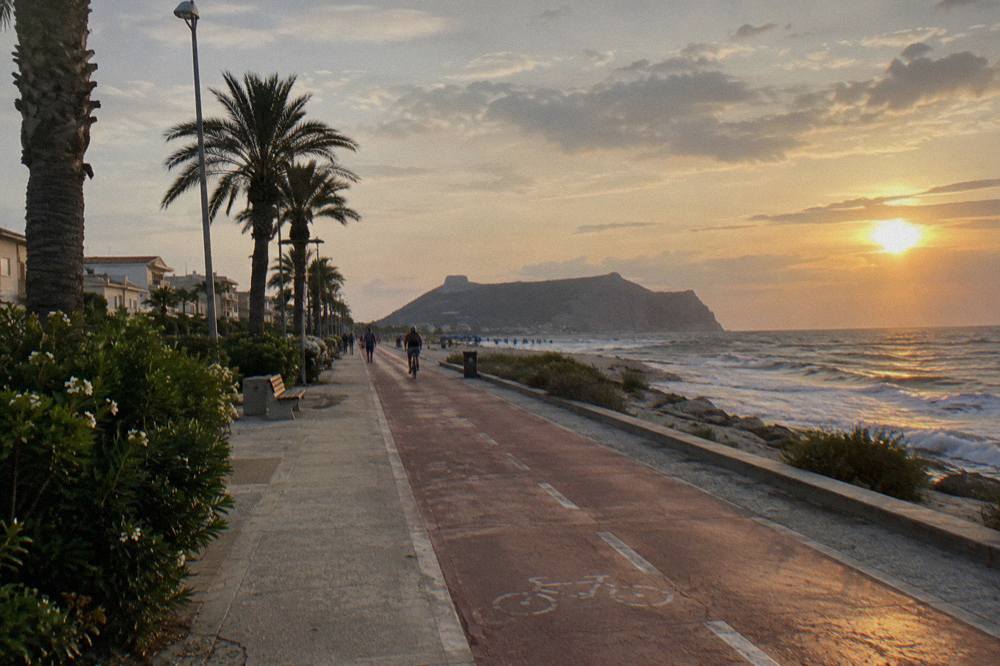
The path runs 8 km along the Poetto seafront, beginning at the Sella del Diavolo headland and the small harbour of Marina Piccola on the Cagliari side and running the full length of the beach toward Quartu Sant'Elena to the southeast. The promenade is a combined cycle and pedestrian route, so the same promenade carries the whole ride, running the length of the beach from the Sella del Diavolo end toward Quartu Sant'Elena. At the city end you sit directly under the limestone cliffs of the Sella del Diavolo promontory, with the marina and the Calamosca access road behind you. At the far end the sand simply runs out toward Quartu Sant'Elena, and the promenade with it. Once you've ridden the full stretch, a swim is the natural reward, and our guide to which Cagliari beach has the clearest water compares Poetto with the sheltered Calamosca coves so you can pick the better spot for a dip.
Getting to the start from the centre is straightforward. The CTM bus runs from the city centre to the Poetto seafront in about 20 minutes, and if you are staying centrally you can also ride down through the Marina district toward the harbor. Riders planning a full loop often pair the seafront with the inland return through the Molentargius area, which the Poetto and flamingo route guide covers in detail. The big picture matters here: this is not an isolated strip of asphalt but one spoke of a metropolitan network that reached 366 km of planned cycle routes when the Biciplan was approved in February 2026, growing from a previous 243 km.
One orientation note saves confusion. Locals use numbered stabilimenti, the beach establishments along the sand, as landmarks rather than street names. If someone places a beach bar by number, they mean one of the numbered stops along the 8 km promenade running from the Sella del Diavolo end toward Quartu Sant'Elena, so the lower numbers sit closest to Marina Piccola.
The key facts for planning are compact enough to hold in one view:
| Fact | Detail |
|---|---|
| Total length | 8 km of sand and promenade, Sella del Diavolo to Quartu Sant'Elena |
| Surface | Mostly asphalt, combined cycle and pedestrian use |
| Gradient | Flat along the entire length |
| City-end landmark | Marina Piccola harbour under the Sella del Diavolo headland |
| Inland link | Flat canal paths toward the Molentargius lagoon |
| Bus from the centre | CTM service, about 20 minutes |
What Is The Path Surface Actually Like?
The promenade is mostly asphalt and dedicated to cyclists and pedestrians together, with some shared sections where runners, walkers and riders mix, so the surface stays smooth and quick under any bike but the route is never a segregated racing lane, and in peak season the shared stretches set the pace more than the surface does. The asphalt makes it comfortable on any bike, from a heavy city rental to a pedal-assist e-bike. The shared-use character is the thing to actually plan around: on summer evenings and weekend mornings the pedestrian traffic is dense, and a rider treating the promenade as a time-trial course will meet a wall of strollers within the first kilometre.
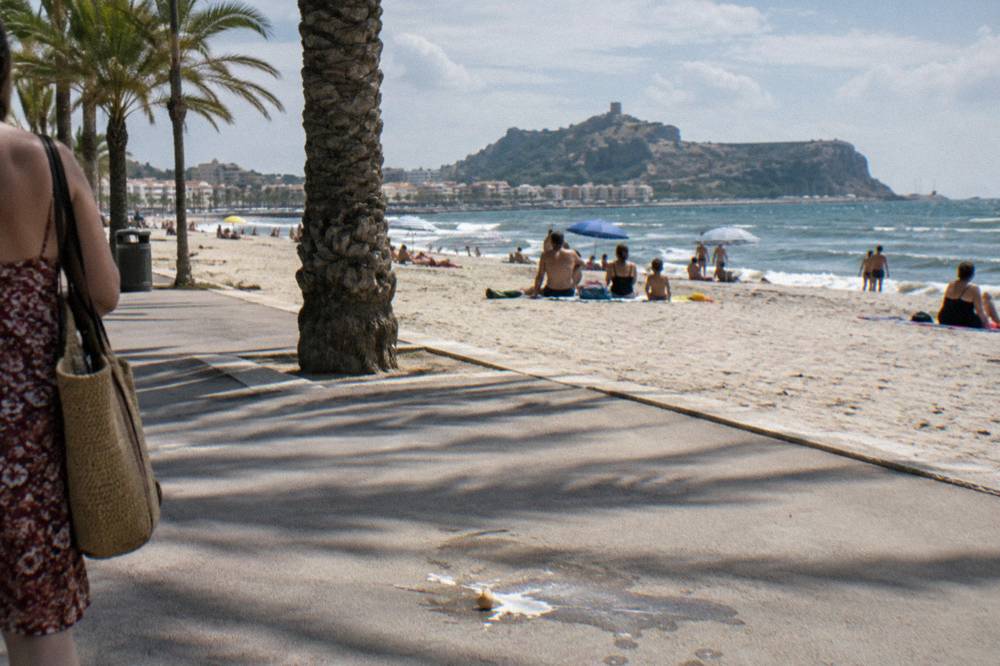
Shade is the honest weakness of the route. The beachfront is open to the sea for almost its entire length, with only the occasional line of palms and the beach establishments offering relief. In July and August, when average highs sit at 31.6 and 32 degrees, the midday stretch of the path is genuinely hot work. There is no clever workaround, only timing: ride before late morning or after five in the afternoon in high summer, and use the shoulder seasons, March to May and September to October, when highs of roughly 17 to 28 degrees make any hour of the day pleasant.
If you would rather have the route, the bike and the flamingo detour handled for you, the options below cover this coastline:
The first of those, the Poetto and Flamingos E-Bike Tour from Easycletta, runs about 4 hours from $80 per person, is rated 4.8 across 85 reviews, includes the e-bike, helmet and bottled water, and caps groups at 8. It is described in more detail further down, alongside the alternatives.
How Hard Is The Ride And Who Is It Suitable For?
The Poetto path is flat along its entire 8 km with no meaningful climbing, which makes it suitable for casual riders, families with teenagers and anyone on a pedal-assist bike, though riders must be at least 14 to use an e-bike on public roads in Italy. The flatness is not an exaggeration or a marketing line: the promenade sits a few metres above the sand for its whole length, and the inland connections toward the lagoon are equally level. There is no hill anywhere on the standard loop.
Suitability comes down to two practical questions. The first is age and legal status: Italian rules treat a compliant e-bike as a bicycle provided the motor is capped at 250 W and the assistance fades out at 25 km/h, and the minimum age to ride one on public roads and cycle paths is 14. Helmets are mandatory only for riders under 18 and strongly recommended for everyone else. Several tours on this coast supply helmets as part of the package, so check the inclusions on the booking page of whichever ride you choose. The second question is traffic tolerance: the path itself has no cars, but the shared pedestrian sections demand patience in peak season.
For riders who want the seafront plus the old town in one outing, the Old Town and Flamingos Combo is a 2.5 hour e-bike tour from $56 per person, rated 4.7 across 126 reviews, meeting at the NewWaySardinia point with the e-bike and helmet included.
How Does The Path Join The Molentargius Flamingo Paths?
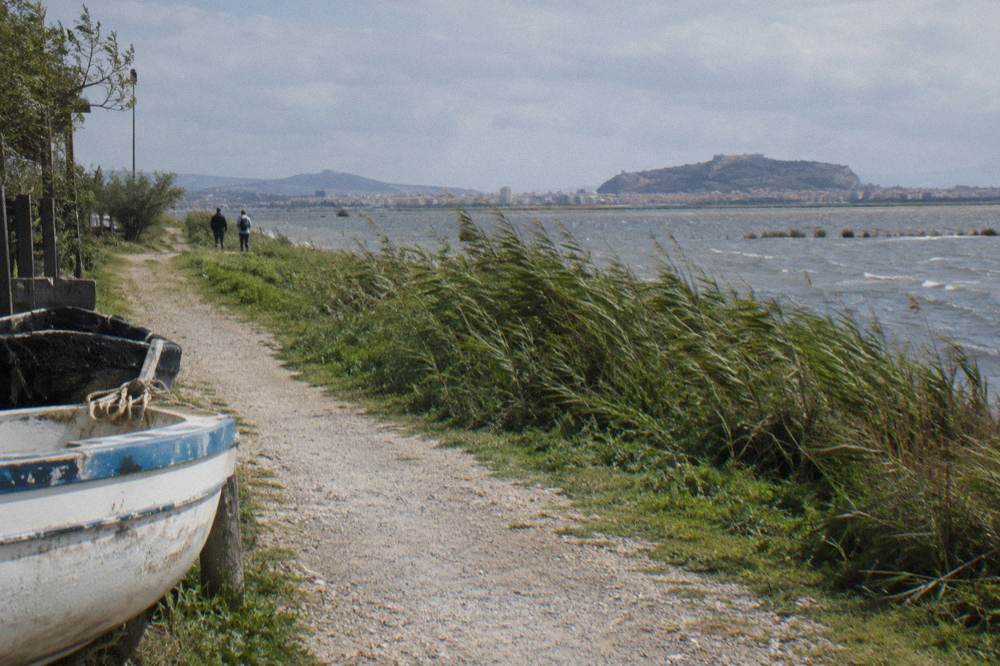
The Poetto promenade meets the Molentargius lagoon network along its inland edge, where flat canal paths and public roads let you loop from the seafront to the flamingo areas and back without repeating ground, and one recognised flamingo viewpoint sits on the cycle path along Via la Palma. The lagoon and the beach are separated by only a narrow strip of land, so a full circuit, seafront one way and canals the other, is the classic Cagliari ride. Guided tours use exactly this geography: the Gulf, Canals and Flamingos at Molentargius listing describes the gulf, the canals and the flamingo area in a single route, and several guided products on this site pair both elements.
Two honest rules frame the lagoon side. First, the Molentargius-Saline park's own rules allow cycling in its green areas only with non-motorised means, so the pedal-assist tours ride the surrounding canals, public paths and the Poetto side rather than the park's managed interior, and the park asks riders to stay on marked routes and give way to pedestrians. The park's green areas keep seasonal hours: 1 March to 15 October they are open 06:30 to 21:00, and from 16 October to 28 February they close earlier, 07:00 to 18:00. Plan the lagoon leg inside those windows if you intend to enter.
Second, the flamingos. They are present at Molentargius twelve months of the year, with a settled population near the city, and the colonies are largest and most active between April and September, with the first weeks of June the peak. But this is wildlife, not an exhibit: operators report sightings, the listings mention flamingos, and no honest page can promise you will see them on a given morning. Early morning and the quieter canals give the best odds, and the Via la Palma cycle path is a known watching spot.
When Is The Best Time Of Year To Ride It?
The best riding windows are March to May and September to October, when highs run roughly 17 to 28 degrees and the path is quiet, while July and August bring 31 to 32 degree heat, dense beach crowds and the strongest afternoon wind. Rain is barely a factor in the height of summer: the climate normals for Cagliari show just 3 mm in July and 10 mm in August. The real summer constraints are heat on an unshaded path and the sheer number of people on it.
The wind deserves a mention because it shapes every coastal ride here. The maestrale, the northwest wind, dominates Cagliari's weather year-round and is most frequent and strongest from May through September, when gusts can be vigorous along exposed coastal stretches. On an out-and-back seafront ride that means you may have a headwind in one direction and a push home in the other; on a loop it means at least one leg will feel it. Riding early avoids both the strongest wind and the strongest sun. The full index of guides sits on Cagliari Bike Tours.
Late October is a genuinely good time, and not only for the weather. The cruise season, which runs into early November, puts large numbers of day visitors into the old town in the middle of the day, but the far end of the Poetto promenade absorbs none of that pressure. The seasonal detail that matters more here is the beachfront economy, covered below. If your trip falls in the first days of May, note that the Sant'Efisio procession on 1 to 4 May 2027 will crowd central streets like Via Roma including Stampace and Via Roma, which affects rides into the centre but leaves the seafront itself open.
The seasonal picture in numbers:
| Period | Average highs | Rain | Path conditions |
|---|---|---|---|
| March to May | Roughly 17 to 28 degrees | Occasional rain days | Quiet, mild, best overall window |
| June | Warming toward summer | Low | Flamingo colonies at peak early in the month |
| July to August | 31.6 to 32 degrees | 3 to 10 mm | Hot, crowded, strongest maestrale wind |
| September to October | Cooling through the 20s | Some rain days | Quieting down, warm sea, good window |
| November to February | Mild by northern standards | Wetter | Emptiest path, reduced beach services |
Can You Ride From Poetto To Sella Del Diavolo?
You can ride to the foot of the Sella del Diavolo at the Calamosca and Marina Piccola end of the beach, but the promontory itself is a protected Natura 2000 site where bicycles are not allowed on the trails, so the summit is reached on foot. This is a firm rule, not a soft etiquette point: local reporting in October 2026 described complaints to the forestale and municipal police about mountain bikers using the trails despite a well-known prohibition. The correct version of the trip is ride then hike, and one guided product is built exactly that way.
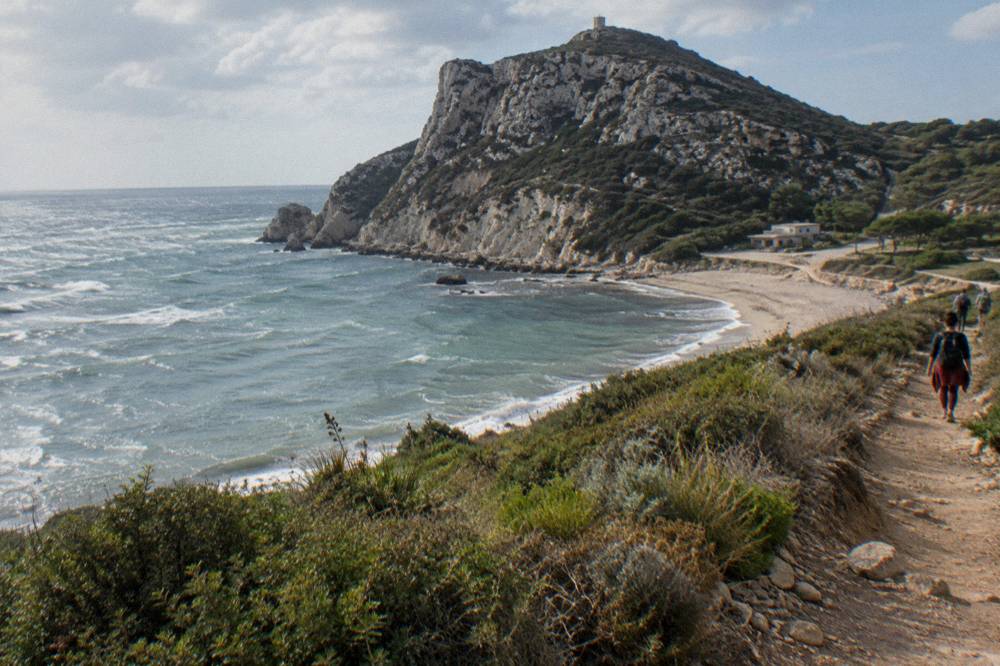
The Bike and Hike to Devil's Saddle tour from Easycletta runs about 4 hours from $78 per person with the e-bike, helmet, guide and bottled water included. The listing describes e-biking through the Molentargius area and along to Poetto, then hiking on foot to the Devil's Saddle viewpoint. It is a young product with 10 reviews, too few to support a rating claim, so judge it on its route rather than its stars. The same operator's shop in the Marina district is the meeting point.
For a shorter lagoon-first option, the 2 hour Flamingo Oasis Bike Tour from NewWaySardinia costs from $56 per person, is rated 4.6 across 158 reviews, and includes the bike and helmet rental. It suits riders who want the flamingo side without committing to a half-day loop of the whole gulf.
What Facilities Run Along The Beachfront?
The 8 km beachfront is lined with numbered stabilimenti, licensed beach establishments offering sun loungers and umbrellas at roughly EUR 10 to 15 per day, plus beach bars whose hours shrink sharply in the off-season, with most reducing service from around October to April. In summer the promenade behaves like a seaside resort: kiosks, bars and lifeguarded stretches appear along the whole length, and water and coffee are never far away. From autumn to spring the supply thins out, and a rider setting off for the far end in February should carry their own water and not count on an open bar at kilometre six.
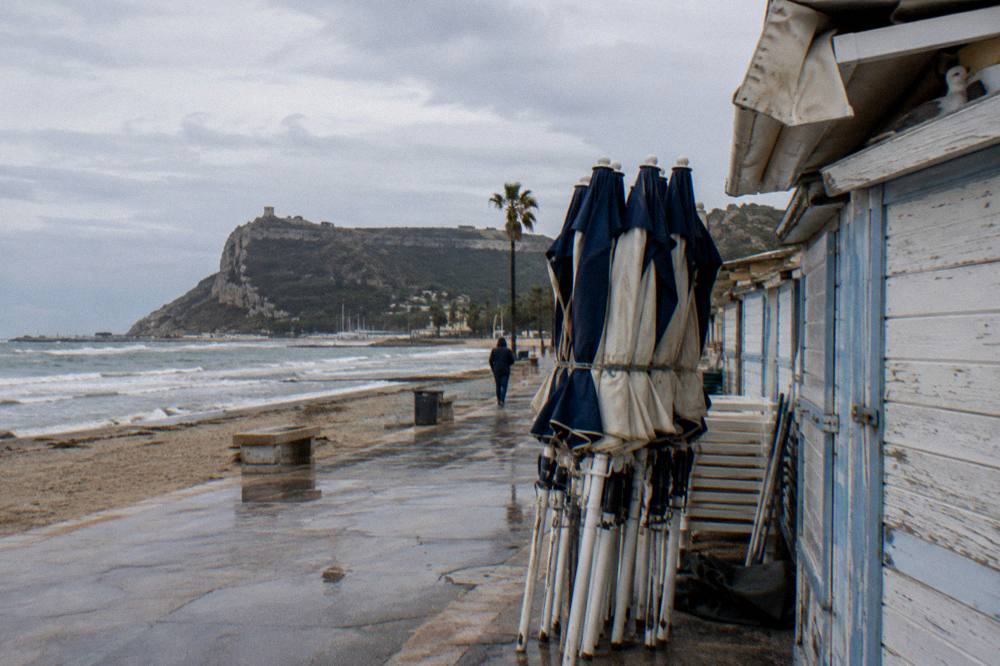
The off-season pattern is worth internalising because it inverts most visitors' assumptions. The path itself is at its best in the shoulder months, empty and mild, while the infrastructure is at its thinnest. The opposite holds in August: everything is open until late, but the promenade is crowded enough that a leisurely ride means walking pace through the busiest central sections.

Do You Need Your Own Bike To Ride The Path?
You do not need to own or haul a bike: guided e-bike tours cover the Poetto and Molentargius loop from meeting points in the centre, a delivered rental brings a city or mountain bike to your location from $28 per person, and the municipal CaBuBi sharing scheme offers 60 bikes at 10 stations. Each option suits a different rider, and the choice mostly comes down to whether you want a guide, a motor, or full independence.
The guided side of the ledger is strong. The Poetto and Flamingos E-Bike Tour described earlier is the natural fit for this page, because its route is essentially this guide rendered as a product. For a fuller comparison of the two approaches, see bike rental in Cagliari versus a guided tour. On the rental side, the delivered option brings a conventional city or mountain bike, not an electric one, to your accommodation or chosen point, with free delivery included, which pairs well with a self-guided promenade outing. Families weighing sizes and ages should read the Cagliari bike tour with kids guide before booking. And if you are planning to string the seafront together with train rides further afield, note that Trenitalia regional trains in Sardinia carry one bike or e-bike per traveller for a EUR 3.50 daily supplement, with folding bikes within size limits travelling free.
The guided rides that include this coastline, side by side:
| Tour | Duration | Price | Rating | Group cap |
|---|---|---|---|---|
| Poetto and Flamingos E-Bike Tour | ~4 hours | from $80 per person | 4.8 across 85 reviews | 8 |
| Old Town and Flamingos Combo | ~2.5 hours | from $56 per person | 4.7 across 126 reviews | Not stated |
| Flamingo Oasis Bike Tour | ~2 hours | from $56 per person | 4.6 across 158 reviews | Not stated |
| Bike and Hike to Devil's Saddle | ~4 hours | from $78 per person | 10 reviews, too few for a rating | Not stated |
| Bike Rental Delivered to You | ~7 hours | from $28 per person | 9 reviews, too few for a rating | Not stated |
A practical legal note closes the loop. Bicycles and compliant e-bikes may enter and park in all of Cagliari's limited-traffic zones, including Castello, Marina, Stampace and Villanova, without any pass, so riding from the old town down to the Poetto start involves no permit headaches. Riders who want the full picture on traffic and safety can read is cycling in Cagliari safe. The park's own cycling rules for the Molentargius side are published on its official site at parcomolentargius.it, the ZTL bicycle access is set out by the comune of Cagliari, and the growing metropolitan network behind the seafront ride is documented in the 366 km Biciplan coverage.
If a guided loop still appeals after all that, three guided rides cover this coast and its flamingo ponds.
Common Questions About The Poetto Bike Path
How Long Is The Poetto Bike Path?
The promenade covers 8 km from the Sella del Diavolo headland at Marina Piccola toward Quartu Sant'Elena, running the full length of the beach as a combined cycle and pedestrian route.
Can You Cycle From Cagliari City Centre To Poetto?
Yes. Bicycles and compliant e-bikes may enter and park in all of the city's limited-traffic zones without a pass, so you can ride from the old town down to the seafront start at Marina Piccola, and the CTM bus also covers the trip in about 20 minutes.
Can You Ride A Bike Inside The Molentargius Park?
The park's own rules allow cycling in its green areas only with non-motorised means, so guided e-bike tours ride the surrounding canals, public paths and the Poetto side. The park's green areas are open 06:30 to 21:00 from 1 March to 15 October and 07:00 to 18:00 the rest of the year.
Are There Flamingos At Molentargius All Year?
Flamingos are present twelve months of the year near Cagliari, with colonies largest and nesting from April to September and the first weeks of June the peak. Sightings are never guaranteed; they are wild birds and their position changes with feeding and disturbance.
Can You Bike Up Sella Del Diavolo?
No. The promontory is a protected Natura 2000 site and bicycles are not allowed on its trails. Ride to the Calamosca or Marina Piccola end, then hike to the viewpoint on foot, which is exactly how the guided Bike and Hike tour structures it.
When Do The Poetto Beach Bars Close For Winter?
Most beach bars and stabilimenti reduce their hours from roughly October to April and run full service through the summer. In the off-season carry your own water, especially for the quieter stretches toward the far end of the beach.