Where Is The Best Place To Cycle In Italy?
Italy has dozens of world-class cycling regions. This guide compares the best places to cycle in Italy, from the Dolomites to Puglia, and makes the case for coastal Sardinia around Cagliari.
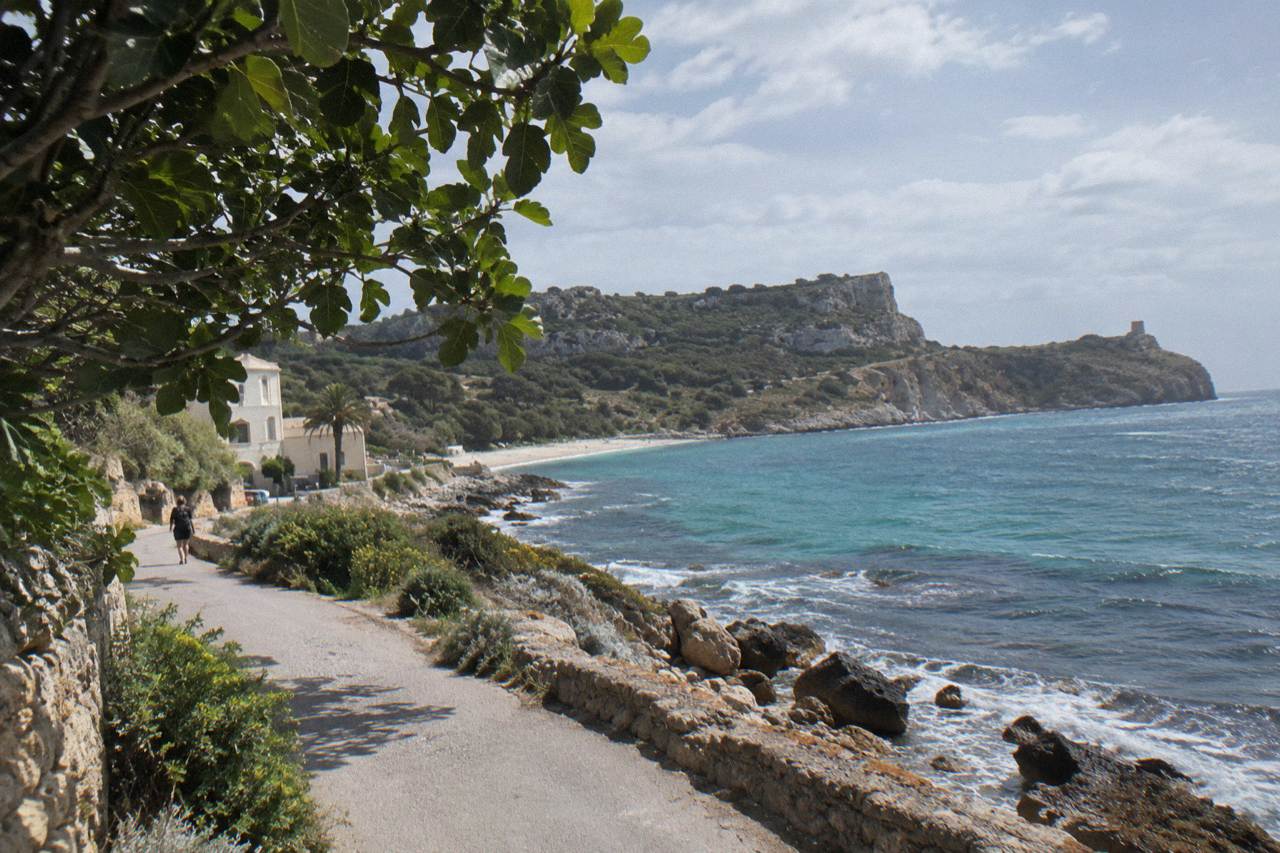
Italy is arguably the most complete cycling country in Europe: Alpine passes in the north, flat agricultural lanes in the south, two long coastlines, and a road culture shaped by a century of professional racing. The honest answer to which single place is best depends on what you want from a ride. Climbers gravitate to the Dolomites and the great northern passes. Riders who want flat, sunny, traffic-light routes point to Puglia. And a growing number of travellers discover that coastal Sardinia, anchored by Cagliari and its 8 km Poetto beach promenade, delivers sea, city, wildlife and wine country within one compact, largely flat area.
This article works through the main contenders region by region, weighs them honestly, and then explains why the area around Cagliari keeps winning converts: a regional park with year-round flamingos, a car-free beachfront path, old town hills tamed by e-bikes, and a salt marsh sunset further down the coast. Where a detail is not fixed, the live booking page of whichever ride catches your eye has the final word.
The best place to cycle in Italy depends on your riding style: the Dolomites for mountain climbs, Puglia for flat rural lanes, the northern lakes for scenery, and coastal Sardinia for a compact mix of city, beach, lagoon and wildlife. For most visitors who want variety without long transfers, the Cagliari coast of southern Sardinia is the strongest all-round choice.
That claim needs unpacking, because "best" changes with the rider. A trained road cyclist planning a week of bucket-list climbs will not be satisfied anywhere flat, and for that person the Dolomites around Bolzano or the Stelvio's approach roads are the answer. A family with teenagers wants the opposite: flat, separated paths, ice cream at the end, minimal interaction with cars.
What makes a region genuinely good for cycling is a cluster of things: route density (many options from one base), surface quality, driver behaviour, scenery that changes within an hour's ride, and logistical ease, meaning bike hire, trains that accept bikes, and short transfers. Few Italian areas score well on all five. The Po Valley is flat and easy but monotonous. The Amalfi Coast is spectacular but narrow and busy. Sardinia's southern coast, by contrast, scores unusually well across the board, which is why cycling route platforms keep updating their Cagliari route collections with coastal rides toward the Capo Carbonara area.
The table below is the short version of the national picture. Each region is genuinely excellent for the rider type named in the middle column, and genuinely wrong for the others.
| Region | Best for | Terrain | Main drawback |
|---|---|---|---|
| Dolomites and South Tyrol | Climbers, e-mountain riders | Steep passes, paved climbs | Cold half the year, hard for beginners |
| Puglia | Flat-terrain riders, families | Low, rolling farm lanes | Long distances between highlights, hot summers |
| Northern lakes | Scenery riders | Lakeside lanes with climbs | Busy roads in peak summer |
| Veneto and Prosecco hills | Wine-country riders | Rolling vineyard hills | Wine and riding do not mix |
| Southern Sardinia, Cagliari base | All-round visitors | Flat coast, gentle old-town hills | Maestrale wind on exposed stretches |
Where Is The Best Place To Bike In Italy If You Want Variety?
If you want the widest variety of riding from a single base, southern Sardinia around Cagliari is the best place to bike in Italy. Within one urban area you get four historic districts, a lagoon park with flamingos present year-round, an 8 km beachfront cycle path, and salt marsh sunsets, all reachable without a long drive.
Start with the city itself. Cagliari's old town is built on hills, which historically made it a walking-and-sweating destination rather than a cycling one. E-bikes changed that arithmetic completely. The Old Town Guided E-Bike Ride runs about two hours from $56 per person, is rated 4.9 across 325 reviews, and its listing names the four historic districts: Stampace, Castello, Villanova and Marina. A local guide, bottled water and a coffee or soft drink are included, and the meeting point at Via Santa Margherita 22 sits a short walk from the cruise port. Because the motor assists up to 25 km/h under Italian rules, the hills stop being the obstacle they would be on a regular bike.
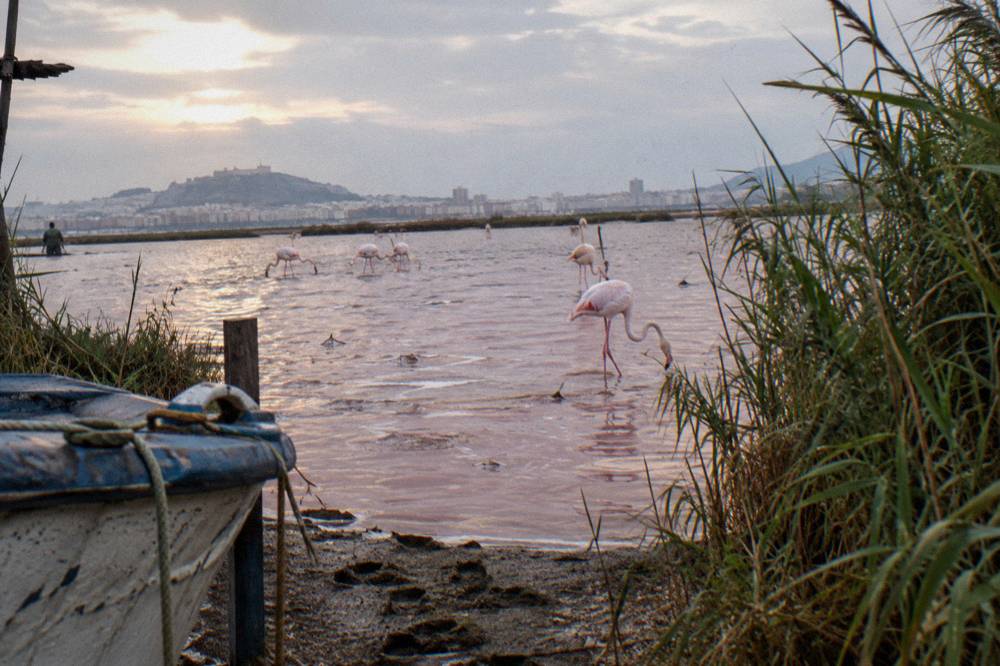
Then there is the water. The Molentargius-Saline Regional Natural Park sits between the city and the sea, and its lagoons hold pink flamingos twelve months of the year, with colonies largest from April to September. One point of honest fine print matters here: the park's own rules allow cycling in its green areas only with non-motorised bikes, so guided e-bike tours ride the canals, public paths and the Poetto side rather than inside the park's managed areas. Flamingo sightings are common but, as with any wildlife, no honest operator promises them. The Poetto and Flamingos E-Bike Tour covers both worlds in about four hours from $80 per person, rated 4.8 across 85 reviews, with helmet, bicycle and bottled water included and the group capped at eight.
What About The Classic Mainland Regions?
The mainland classics each earn their reputation: the Dolomites for the most dramatic paved climbs in Europe, Puglia for flat lanes through olive country, and the lakes for waterfront scenery. They are destination choices, best for riders whose whole trip is built around one type of riding, rather than for visitors who want cycling to be one part of a varied week.
The Dolomites need little introduction. Passes like the Pordoi and Sella are on every serious cyclist's list, and the region has the hut network and road quality to match. The catch is exclusivity of purpose: you go there to climb, in a narrow summer window, and everything else in the week orbits the bike. For riders with modest fitness or travelling companions who do not ride, that focus becomes a limitation.
Puglia is the mirror image. The Itria Valley's lanes between whitewashed towns are flat to gently rolling, spring and autumn are delicious, and the food stops are the point. What Puglia lacks is variety of landform and, near the coast in July and August, comfortable temperatures: Cagliari's climate normals show July average highs of 31.6°C with just 3 mm of rain, and Puglia runs similarly hot. The northern lakes offer water drama and mountain backdrops, but the lakeside roads that carry the scenery also carry the summer traffic, and the quiet alternatives involve real climbs.
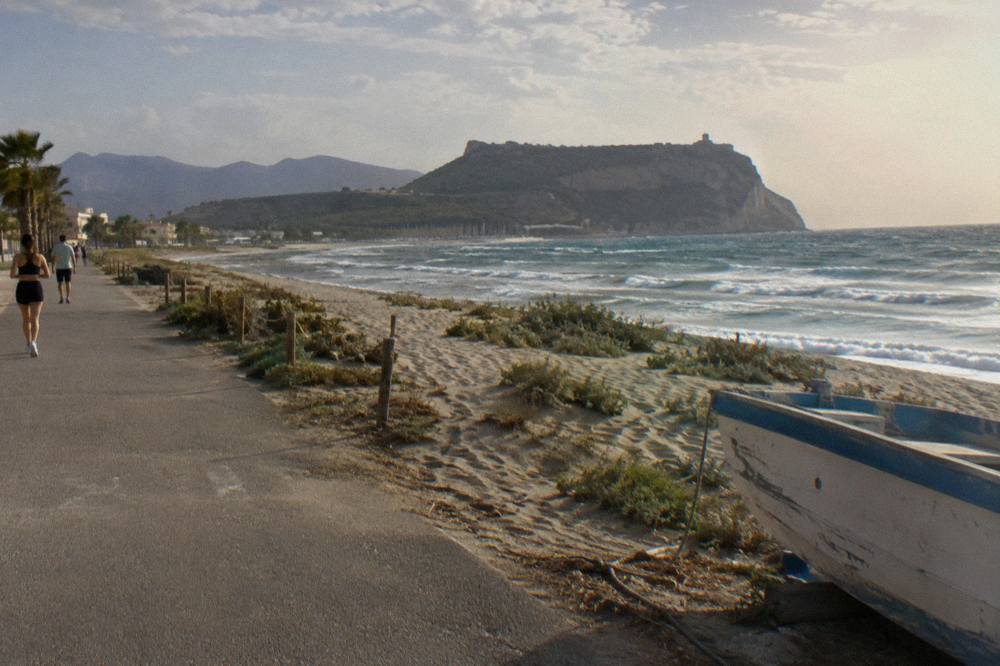
Against that backdrop, consider what a Cagliari base puts within reach of a single hotel. Four historic districts rideable in two hours on an e-bike. A lagoon with resident flamingos. An 8 km promenade along Poetto beach, described by local guides as a space where people walk, run and cycle the full length from the Sella del Diavolo headland toward Quartu Sant'Elena. Hill country with wineries reachable by bike. The metropolitan area's cycle network, expanded by a plan approved in February 2026, now totals 366 km of routes across Cagliari and 17 neighbouring municipalities, with roughly 12 km of new or upgraded lanes under construction on more than 30 streets. For depth on the beachfront itself, the Poetto bike path guide covers access, surfaces and the best flamingo viewpoints along Via la Palma.
Is Southern Sardinia Underrated For Cycling?
Yes, southern Sardinia is underrated, mostly because Italian cycling fame is concentrated in the north. The island's south offers flat coastal paths, a capital city with a rideable old town, wildlife wetlands on the city's doorstep, and quieter roads than the mainland's famous strips, at prices that start from $28 per person for a delivered rental bike.
Underrated does not mean unknown among people who measure these things. Sardinian coastal rides draw steady attention from touring cyclists, and the guided options around Cagliari draw consistent reviews. What the south lacks is the marketing gravity of the Dolomites or the Giro d'Italia's regular northern stages, so the roads, paths and beaches stay calmer. For a visitor, that calm is the product.
Two honest caveats keep the picture fair. First, the maestrale, the northwest wind that dominates Sardinian weather year-round and blows hardest from May through September, can turn an easy flat return leg along Poetto into a grind; experienced local riders plan routes so the wind is at their back on the way home. Second, the island's most photogenic headland, the Sella del Diavolo, is a protected Natura 2000 site where bicycles are prohibited on its trails. The right plan, and the one guided products follow, is to ride to the Calamosca or Poetto end and hike the promontory on foot. The Sella del Diavolo by bike and on foot page lays out how to combine the two without breaking the rules.
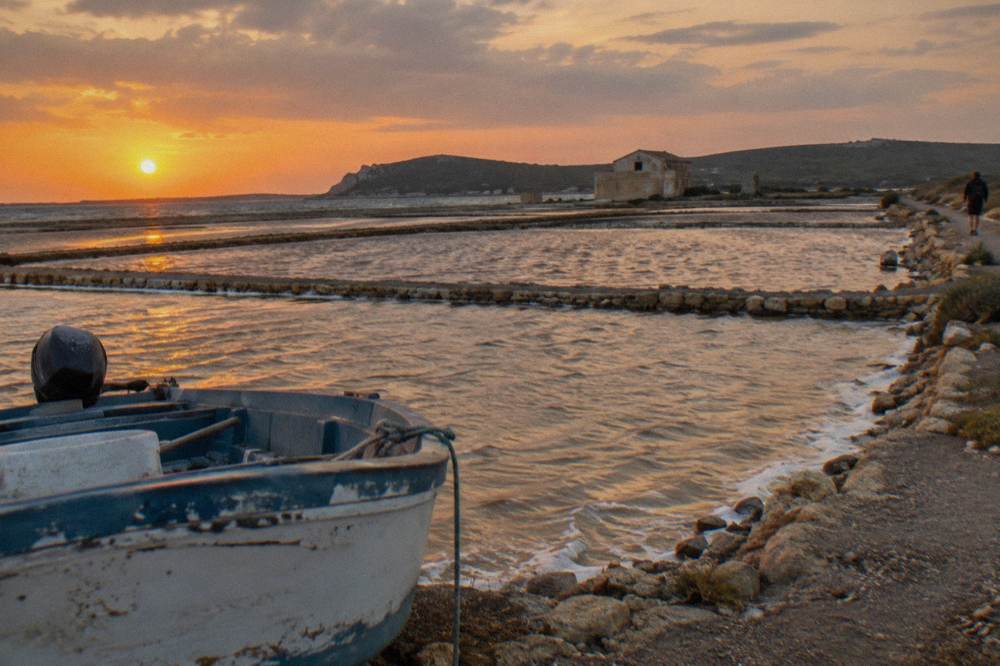
Beyond the city, the island opens up. About an hour down the coast, the Sant'Antioco salt flats offer one of the quietest sunset rides in Italy, on lanes between working saltpans where the light goes gold across the water. The Sant'Antioco Salt Flats Sunset E-Bike ride runs about two hours from $66 per person with a group capped at six, bicycle, helmet and a storage bag included, meeting at the Ziru Tour cabin at Porto Ponte Romano. Check availability if a calm evening ride fits your dates better than a city morning.
How Do You Choose Between A Guided Ride And Going Solo?
Choose a guided ride when hills, navigation or local context add real value: old town circuits, flamingo lagoons and sunset salt flats all reward a guide. Go solo with a rental bike when the route is flat, obvious and self-explanatory, which on a Cagliari base mostly means the Poetto promenade and the canal paths beside it.
The economics are closer than they look. A delivered rental bike, a city or mountain bike rather than an electric one, runs about seven hours from $28 per person with free cancellation and delivery to wherever you are staying. That is the budget option, and for the flat 8 km of beachfront it is genuinely all you need. The catch is that none of the rental options on this site include an e-bike alone, so the moment hills enter the picture, whether the old town's slopes or anything inland, a guided e-bike ride becomes the practical route rather than a luxury.
Guides also carry information. On the old town rides the guide is what turns four named districts into a story, and on the flamingo rides the operator knows which canal stretches the birds favour and at what hour, knowledge that takes visitors years to accumulate. The group caps help too: six riders on the Sant'Antioco sunset ride, eight on the Poetto and Flamingos circuit, nine on the Old Town E-Bike With Coffee Stop, all small enough to ask questions. If you are weighing the two approaches in more depth, the bike rental versus guided tour comparison breaks down cost, flexibility and what each format delivers.
When Should You Plan An Italian Cycling Trip?
For Cagliari, the best months for cycling are the shoulders, March to May and September to October, when days are milder, rain falls a little more often, and the riding feels easier. July and August are for early morning rides or coastal routes only, since average highs reach 31.6°C in July and 32°C in August, with as little as 3 mm of monthly rain.
Those figures come from the 1991 to 2020 climate normals for Cagliari, and the pattern repeats across the peninsula with local variation. The practical planning advice follows from them. In deep summer, ride at dawn, choose coastal paths where the sea breeze helps, and treat the afternoon as beach time; the same logic applies in Puglia and on the lakes. In the shoulder months, any time of day works, and this is when the flamingo colonies at Molentargius-Saline are at their largest, with the first weeks of June the most photogenic nesting window.
Events also shape the calendar. Cagliari's Sant'Efisio procession runs 1 to 4 May in 2027, closing and crowding central streets around Stampace and Via Roma, a spectacle worth seeing but a poor window for an old town ride. For riders rather than spectators, May to September is also maestrale season, so wind-aware routing matters most exactly when the weather is otherwise perfect. Our best time to cycle in Cagliari guide breaks the months down in more detail.
What Rules Apply To Cyclists In Italy?
Italian cycling rules are favourable: a compliant e-bike (250 W motor, assist cutting out at 25 km/h) is legally a bicycle, needing no licence, plate or insurance, with a minimum rider age of 14 and helmets mandatory only under 18. Limited-traffic zone rules in Cagliari vary by street and hour, so check the Comune di Cagliari ZTL page before riding into the centre.
Those train rules matter for planning beyond a single city. Trenitalia regional services in Sardinia take one bicycle, e-bike included, per traveller at up to 2 m length for the EUR 3.50 daily supplement or the equivalent second-class fare per the operator's bike travel conditions, which is what makes multi-base trips along the coast realistic. City buses are stricter: CTM city buses allow only folding bikes bagged per passenger, so plan on riding or training between towns rather than bussing with a bike.
Italian cities mark their old centres as limited-traffic zones, and what that means for a bike differs from place to place, sometimes street to street. Cagliari's historic quarters, Castello, Marina, Stampace and Villanova, are exactly where an old town ride wants to be, so it pays to know the terms before setting off. Rules can vary by street and by hour. Check the Cagliari comune's ZTL rules page for the current restrictions, and a spin through the centre stays pleasant rather than a guess.
Rental logistics round out the practical picture. If you would rather ride solo than join a guide, the Bike Rental Delivered To You option brings a city or mountain bike, not electric, to your location for about seven hours from $28 per person, free cancellation included. It is the cheapest way onto the Poetto path. E-bikes, by contrast, come attached to guided rides on this site, which suits the hills they exist to solve.
So, Which Should You Choose?
Choose the Dolomites if climbing is the whole trip, Puglia for flat lanes and food, the lakes for scenery, and southern Sardinia around Cagliari if you want the most variety per day from one base: old town, flamingo lagoon, 8 km beach path and salt-pan sunsets, with guided e-bike rides from $50 to $80 per person and delivered rentals from $28.
A useful way to decide is to ask what your non-cycling hours look like. If the answer is mountains and passes, the north wins by default. If the answer is sea, wildlife, city history and long flat waterfront rides, with the option to hand the navigation to a local guide, then Cagliari is the base that puts all of it within a single afternoon's radius. The rides linked through this site, and the wider coverage at Cagliari Bike Tours, cover that radius from coffee-stop city loops to four-hour lagoon circuits and the Sant'Antioco sunset run.
Whatever you choose, book the things that matter early in high season, and check the live booking page for any detail the listing leaves open, from helmet policy to meeting-point changes on festival days.
Common Questions About Cycling In Italy
Where Is The Best Place To Cycle In Italy?
It depends on riding style: the Dolomites for climbs, Puglia for flat rural lanes, the northern lakes for scenery. For variety from one base, coastal Sardinia around Cagliari is the strongest all-round answer, combining a rideable old town, a flamingo lagoon and an 8 km beachfront path.
Where Is The Best Place To Bike In Italy?
The best place to bike in Italy for most visitors balancing scenery, ease and variety is southern Sardinia: guided e-bike rides run from about $50 per person, delivered bike rentals from $28, and the terrain is flat to gently rolling along the coast.
Is Cagliari Good For Cycling?
Yes. The Poetto promenade runs the length of the beach, flamingo-filled lagoons sit beside the city, and guided e-bike tours handle the old town's hills. Limited-traffic zone rules vary by street and hour, so check the Comune di Cagliari ZTL page before riding in.
Can You Take A Bike On Italian Trains?
Yes. Trenitalia regional trains carry one bicycle, e-bike included, per traveller up to 2 m in length for a EUR 3.50 daily supplement or the equivalent second-class fare. City buses generally accept only folded bikes in a bag.
What Is The Minimum Age For An E-Bike In Italy?
Fourteen is the minimum age to ride a compliant pedal-assist e-bike on public roads and cycle paths. Helmets are mandatory for riders under 18 and strongly recommended for everyone else.
When Is Cycling Season In Italy?
April to June and September to October are the prime months, with highs roughly 17 to 28°C. July and August average above 31°C in Cagliari, so deep summer rides are best at dawn or on breezy coastal paths.