What To Bring On A Cagliari Bike Tour
Packing for a Cagliari bike tour is mostly about sun, water and shoes. Here is what to bring, what the tours already hand you, and what to leave at the hotel.
Short answer
Bring one litre of water or more, high-factor sunscreen, sunglasses, closed shoes, your passport or ID card, a phone, and a small bag that fits a bike basket. Helmets are included on some Cagliari tours and mandatory only for riders under 18. Tours from $50 to $80 per person usually include the bike, a guide and often a drink.
Cagliari sits at the sunny end of a sunny island, and a bike tour here is usually a warm-weather activity even in late October. The city's July and August normals run to average highs above 31 degrees Celsius with as little as 3 mm of rain in a month, and the guided rides spend most of their time outdoors, on seafront paths, canal roads and the steep little lanes of the four historic districts. What you carry matters more than what you wear off the bike.
The good news is that the tours do a lot of the work for you. The e-bike, the guide and usually a drink are part of the price on most options, from the two-hour Old Town rides at from $50 per person to the four-hour Poetto and Flamingos trip at from $80 per person. This guide covers the rest: water, sun protection, footwear, documents, the helmet question, and how summer heat changes the arithmetic. It also flags the one ride where the packing list is different, the Bike and Hike to Devil's Saddle, because half of that tour is on foot.
What Should You Pack For A Day Of Cycling?
The core list is small: a litre or more of water, sunscreen, sunglasses, closed flat shoes, your passport or ID card, a phone, some cash or a card, and a small day bag that fits a bike basket. Add a light layer for wind, and in summer a hat for stops when the helmet comes off. That core covers every guided ride in the city.
Everything on that list earns its place. Water and sun protection are about Sardinian heat rather than the effort: the e-bike does the climbing for you on the Old Town hills, but the sun does not switch off. Shoes matter because pedals and historic cobblestones both punish thin soles. Documents matter because the operator may check ID against the booking, and because the Italian highway code applies to anyone cycling on public roads.
The bag itself is part of the kit on Cagliari Bike Tours and everywhere else: something small, zipped and basket-sized, not a wheeled case. If you want a structured version of the whole checklist, the table below is the one to photograph before you leave the hotel.
| Item | Why | Season Notes |
|---|---|---|
| Water, 1 L or more | Heat exposure on open paths | 1.5 L or more from June to September |
| Sunscreen, high factor | Constant sun, no shade on seafront and canals | Reapply at the coffee stop |
| Sunglasses | Sun plus maestrale wind-borne grit on the coast | Year-round |
| Closed flat shoes | Cobblestones, pedals, light walking | Grip matters more than style |
| Passport or ID card | Booking check | Always |
| Phone plus card or cash | Photos, maps, operator contact, café stops | Charge before the ride |
| Light layer or windproof | Wind on the Poetto front, evening drops | Autumn and spring especially |
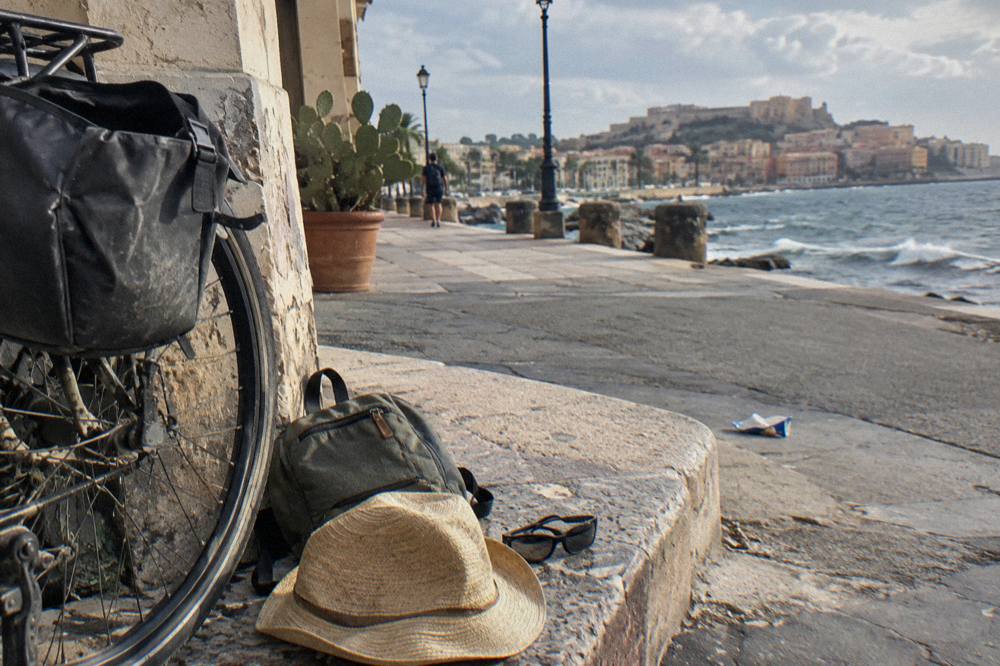
Two things do not need to go in your bag. First, the bicycle: every guided tour on this site includes it, so a rental is only a packing problem if you book the delivered Bike Rental Delivered To You option, which brings a city or mountain bike, not an electric one, to your location from $28 per person. Second, specialist clothing: nobody on a Cagliari city tour needs cycling kit. Normal comfortable clothes are what locals ride in.
If you want a deeper look at the machine you will be sitting on, the comparison in e-bike versus city bike in Cagliari explains the difference in practice. For a broader run through the practical questions, is cycling in Cagliari safe covers traffic, surfaces and the limited traffic zones.
How Much Water Do You Actually Need?
Plan on one litre for a two-hour ride and more for anything longer, drunk in small amounts before you feel thirsty rather than in one stop. Tours that include a drink, like the Old Town Guided E-Bike Ride with its bottled water and coffee or soft drink, still expect you to carry your own supply between stops. In July and August, when average highs pass 31 degrees, a two-hour ride without water is a bad plan.
The numbers behind that advice are plain. Cagliari's 1991 to 2020 climate normals show July averaging a high of 31.6 degrees with 3 mm of rain across the whole month, and August a high of 32 degrees with 10 mm. Sweat loss on a warm afternoon easily outpaces what a single café stop replaces, and the rides that head out along the Poetto front or the Molentargius canals spend long stretches with no shade at all.
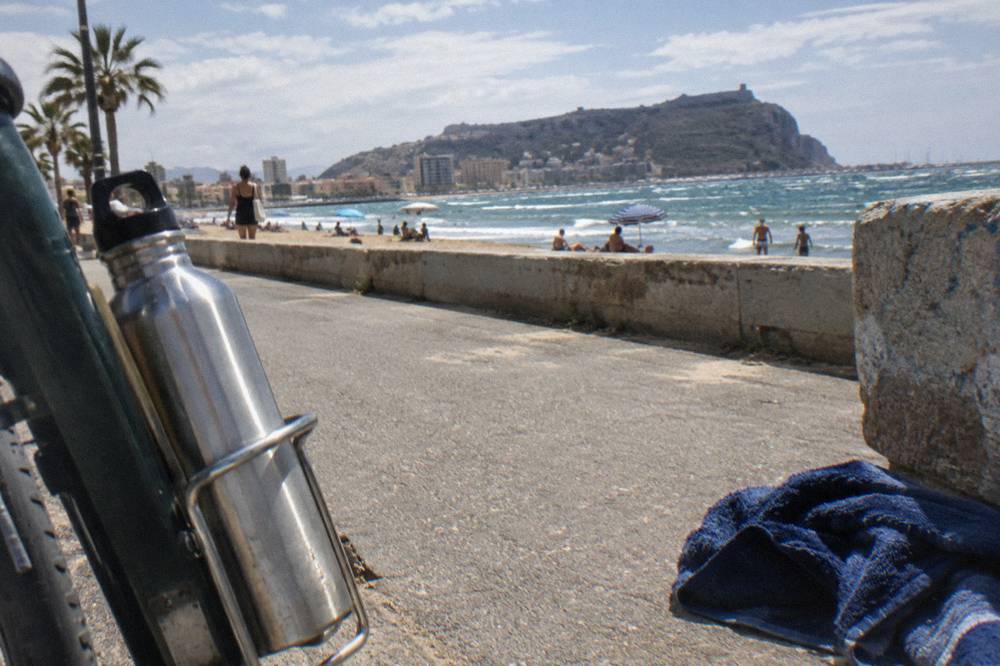
Bottle logistics are simpler than you might fear. What the bikes carry varies from tour to tour, so bring your own water and anything else you count on. A one-litre bottle per person, frozen halfway the night before in summer, is the cheap professional move: it melts slowly and stays cold for the first hour. For the four-hour options, the Poetto and Flamingos E-Bike Tour includes bottled water and the Bike and Hike includes a bottle too, yet riders on those longer routes should still start with more than the provided amount.
A note on where you can refill. The Poetto promenade, roughly 8 km of sand and seafront from the Sella del Diavolo headland toward Quartu Sant'Elena, has beach bars along much of its length, though most reduce their hours from around October to April. In the old town, cafés are everywhere, and several tours build a coffee stop into the route. Out on the canal roads near the park there is very little, so fill up before you leave the meeting point. The practical details of the seafront route itself are in the Poetto bike path guide.
Do You Need Sun Protection Even In October?
Yes. Sunscreen, sunglasses and something for your head belong on the list from April through October at minimum, and realistically year-round in Cagliari. The rides spend hours on open seafront and canal paths with no shade, the Sardinian sun is strong even at 22 degrees, and lip balm with SPF solves a small but very common complaint on longer tours. Reapply at the coffee stop.
The mistake visitors make is equating temperature with UV. A mild October morning on the Poetto front can still deliver a burn over four hours of open riding, because the exposure is constant. Sunglasses earn double duty here: Cagliari's dominant wind is the maestrale, a northwesterly that blows most often and hardest from May to September, and it puts grit and insects in unprotected eyes on the coastal stretches.
What to wear for sun, in order of usefulness: a high-factor sunscreen applied before the ride and carried in the bag for the midway stop, sunglasses with decent coverage, and a cap for the walking sections or the moment the helmet comes off at a viewpoint. On the Old Town rides the helmet is on your head most of the time, which is itself sun protection. On the tours that stop at the Bastione di Saint Remy or a seafront kiosk, that is your reapplication window.
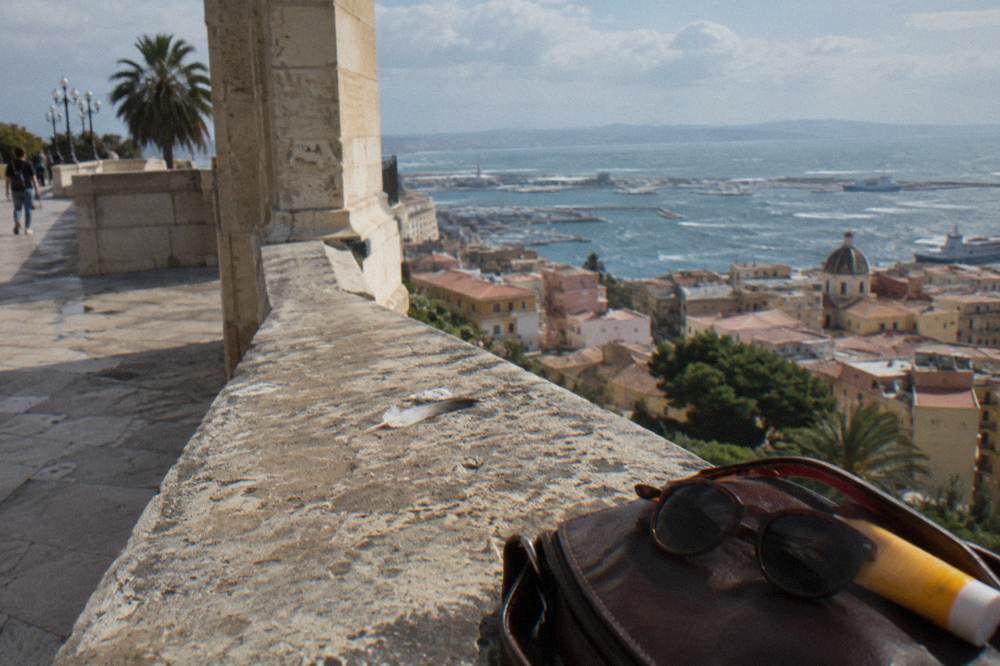
One Sardinia-specific item deserves a line: after-sun or a good moisturiser in your evening kit. It sounds fussy until the second day of a two-day stay, when yesterday's ride announces itself. The same logic applies to the season question generally, and the best time to cycle in Cagliari breaks the year down month by month if your dates are flexible.
What Shoes And Clothes Work Best On A Cagliari Ride?
Closed, flat shoes with a sole that grips are the single most useful clothing choice: trainers are ideal, flip-flops are not, because several tours clip out at traffic lights on cobbled lanes and the Bike and Hike walks a real trail. Beyond that, wear light, breathable clothes you can move in, and bring a light layer for wind on the coast, where afternoon gusts can turn a warm day cool on the Poetto front.
The cobblestone factor is real in Castello and Villanova. Old lanes there are stone, often worn smooth, and wet stone after a shower is slippery under a thin sole. A trainer with tread handles it; a sandal does not. Riders booked on the Bike and Hike to Devil's Saddle should treat footwear as the top packing priority, since the second half of that roughly four-hour tour is a hike to the viewpoint, on a Natura 2000 promontory where bikes are not permitted on the trails at all.
Clothing is simpler. In summer, shorts and a light top are standard on every tour; the e-bike flattens the Old Town climbs, so you will not arrive soaked. From October to April, layering is the answer: a base layer, something warm and a windproof outer, because the same maestrale that cools July also cuts through a jersey in January. Long trousers or tights should be tight at the ankle or rolled, so they stay clear of the chain.
| Condition | Feet | Body | Extra |
|---|---|---|---|
| July to August heat | Breathable trainers, thin socks | Light top, shorts | Cap, extra sunscreen, 1.5 L water |
| May, June, September | Trainers | T-shirt plus light layer | Windproof for coastal stretches |
| October to April | Trainers with grip | Layers, windproof jacket | Warm hat for stops, gloves if below 15 degrees |
A word about dresses and skirts: they work on an e-bike with a step-through frame, which most tour fleets use, but on any classic frame they are a fight. If in doubt, shorts or trousers win. And leave the valuables question until the documents section below, because it has a specific answer.
Does The Tour Provide A Helmet, Water And Locks?
Inclusions vary by tour, so read your specific booking page. Several rides include a helmet in the price, among them the Three-Hour Old Town E-Bike Tour, the Old Town and Flamingos Combo, the Poetto and Flamingos trip, the Bike and Hike and the Flamingo Oasis tour, while several two-hour Old Town rides do not state one. Bottled water is included on some rides, coffee on others, and hotel pickup is excluded where the details say so.
That spread is why a packing list cannot be generic. The Ebike Tour with Local Guide of Cagliari's Old Town, the most reviewed option here, rated 4.9 across 369 reviews, includes bicycle rental, a local guide, bottled water and a coffee or soft drink, meeting at Via Santa Margherita 22. The Two-Hour E-Bike Tour With Coffee, from $50 per person and rated 4.7 across 281 reviews, includes the bike, the guide and one coffee, with helmet not stated. Where a detail is silent, the booking page is the authority, and "not stated" never means "included".
| Tour | Duration | Price per person | Helmet | Drink included |
|---|---|---|---|---|
| Old Town Guided E-Bike Ride | ~2 hours | from $56 | Not stated | Bottled water, coffee or soft drink |
| Two-Hour E-Bike Tour With Coffee | ~2 hours | from $50 | Not stated | 1 coffee |
| Three-Hour Old Town E-Bike Tour | ~3 hours | from $56 | Included | Bottle of water |
| Old Town and Flamingos Combo | ~2.5 hours | from $56 | Included | Not stated |
| Poetto and Flamingos E-Bike Tour | ~4 hours | from $80 | Included | Bottled water |
| Flamingo Oasis Bike Tour | ~2 hours | from $56 | Included | Not stated |
| Bike and Hike to Devil's Saddle | ~4 hours | from $78 | Included | Bottle of water |
The helmet rule itself is national, not operator preference. Italian law treats a compliant e-bike, motor capped at 250 W with assistance cutting out at 25 km/h, as a bicycle, and helmets are mandatory only for riders under 18, though strongly recommended for everyone. Operators can set stricter house rules than the law, and several here include a helmet in the price anyway. Riders must be at least 14 to use an e-bike on public roads, a detail worth knowing if you are packing for teenagers. The full practical comparison of the two formats is in bike rental versus a guided tour in Cagliari.
If your tour is silent on helmets and you want your own, a packable helmet is a reasonable addition to the bag, though at that point the price of one exceeds the difference between tour tiers, so a tour that includes one is usually the better fix.
How Does Summer Heat Change The Packing List?
Between late June and early September the list stretches: carry 1.5 litres or more per person, add electrolyte tablets or sachets, bring more sunscreen than feels reasonable, and book morning departures where the option exists, because August averages a high of 32 degrees with just 10 mm of rain across the month. A cooling towel and a second water bottle stop being luxuries and become the difference between a good ride and a survivable one.
Heat on a Cagliari ride is dry rather than humid, which makes it deceptive: you sweat, it evaporates, and you notice thirst late. The tour fleet is electric, so effort is not the issue; exposure is, above all on the Molentargius canal roads and the Poetto front, where the paths are open to the sky for kilometres. The heat detail matters for timing as much as packing, and in summer, a morning or late-afternoon slot makes for a cooler, more comfortable ride.
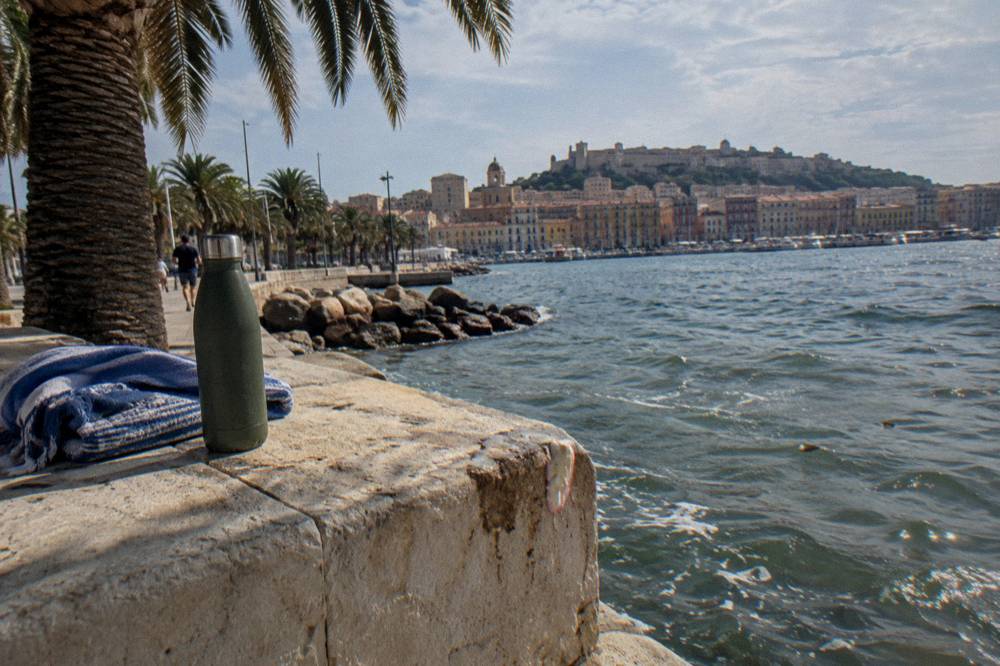
The counterweight is the wind. The maestrale blows hardest in the very months the heat peaks, and while a gust above 50 km/h on an exposed coastal stretch is unpleasant, the same wind can make a 30-degree afternoon feel manageable on the seafront. Operators watch forecasts and adjust; weather, wind and wildlife sightings always vary, so no honest packing list promises comfort, only preparation.

Autumn and spring deserve a closing note, because they are the seasons visitors under-pack for. An October or April day can start at 17 degrees, hit 24 by early afternoon and drop fast when the wind picks up, so the light layer you did not need at 11:00 is essential at 17:00. If your dates are fixed in those months, pack for two climates in one day.
What Documents, Phones And Extras Should You Carry?
Carry your passport or ID card, the phone with your booking confirmation, a payment card and a little cash, all in a zipped pocket or the bag that goes in the basket, not loose in a jacket. Add any personal medication, including inhalers and anything for allergies, and keep the phone charged for photos, maps and the operator's contact number on the day. That is the full document kit; nothing more is needed.
The ID has two jobs. Operators on some tours check rider names against the booking at the meeting point before the group sets off. If you are arriving by sea, the cruise-passenger angle matters too: several tours meet within a short walk of the port, the Old Town Guided E-Bike Ride at Via Santa Margherita 22 among them, and the 2026 season is projected at 181 port calls and more than 600,000 passengers, so carrying your ship card alongside your ID saves a walk back to the terminal. The cruise-specific detail is covered in things to do from the Cagliari cruise port. Once the ride wraps up, the free things to do in Cagliari guide shows how to fill the rest of your port day without spending a cent.
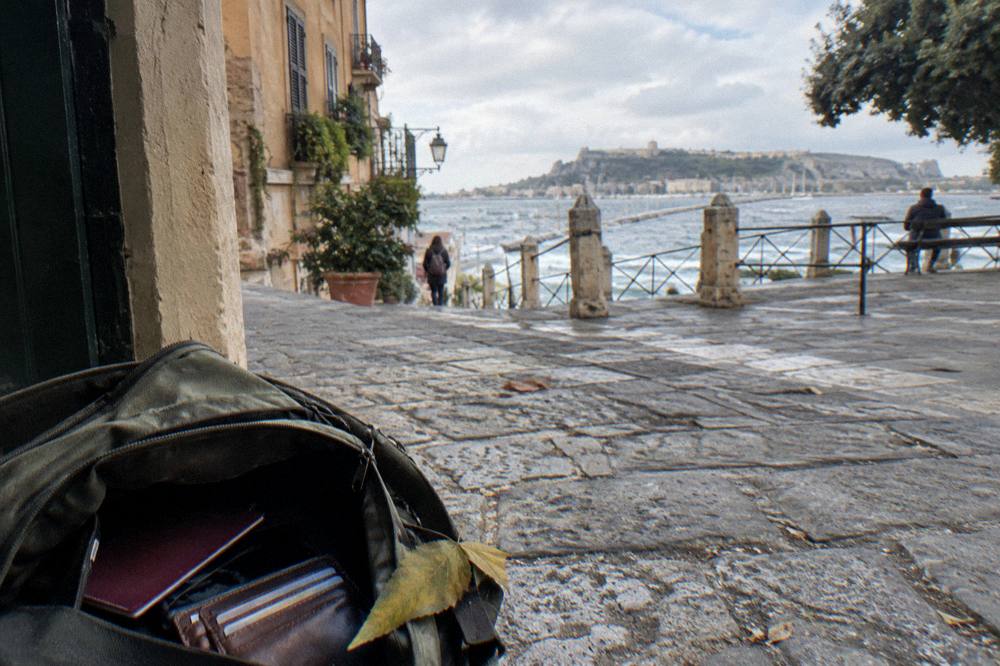
Bags and locks need one sentence each. A small backpack or crossbody bag works on every tour, and most e-bikes take it in a basket; the Sant'Antioco sunset listing even includes a storage bag, though that ride starts further afield. Locks are the operator's concern on guided tours, because the bike stays with the group, so leave yours at the hotel unless you are renting independently.
Medication deserves more emphasis than packing lists usually give it. Four hours on a hot canal road is the wrong place to discover an inhaler is at the hotel, and the same goes for antihistamines in spring, when the park and the maestrale-borne dust can bother riders who are not usually affected. If your tour includes a train leg, note that regional trains in Sardinia carry one bike or e-bike per traveller for a EUR 3.50 daily supplement, per Trenitalia's bike service conditions; the rail-plus-bike angle is expanded in day trips from Cagliari by bike and train.
Two rules to finish, both official. Bicycles and compliant e-bikes may enter and park in all of Cagliari's limited traffic zones, including Castello, Marina, Stampace and Villanova, without a pass, per the city's ZTL regulation page, so no permit belongs on your list. And if your route touches the Molentargius-Saline park's green areas, those are for non-motorised bikes with riders staying on marked itineraries, per the park's own access page; the flamingo rides use the canals and public paths around it, a distinction explained in the Molentargius flamingo bike tour guide.
The featured Old Town ride makes a good worked example of the whole list. It is from $56 per person, rated 4.9 across 325 reviews, meets at Via Santa Margherita 22, and hands you the bicycle, a local guide, bottled water and a coffee or soft drink. What you bring on top: one litre more of water, sunscreen, sunglasses, trainers, your ID, the phone, and a layer if the wind is up. Read the full Old Town e-bike tour details or check availability before you pack around it.
That is the whole kit. Water, sun, shoes, documents, a layer, and whatever the booking page says your specific tour already includes.
Common Questions About Packing For A Cagliari Bike Tour
Do I Need To Bring My Own Helmet?
Not necessarily. Several tours include a helmet in the price, among them the Three-Hour Old Town E-Bike Tour, the Old Town and Flamingos Combo, the Poetto and Flamingos E-Bike Tour and the Bike and Hike. On others a helmet is not stated on the booking page, so check before you ride. Italian law makes helmets mandatory only for riders under 18.
Is Water Included On Cagliari Bike Tours?
On some, yes. The Old Town Guided E-Bike Ride includes bottled water plus a coffee or soft drink, the Three-Hour Old Town tour and the Bike and Hike include a bottle of water, and the Poetto and Flamingos trip includes bottled water. Carry your own litre or more regardless, especially in summer.
Can I Wear Flip-Flops On An E-Bike Tour?
It is a bad idea. The historic districts have worn cobblestones, several tours stop at lights where you put a foot down, and the Bike and Hike includes a real trail walk on the Sella del Diavolo promontory. Trainers or any flat closed shoe with grip are the right choice.
What Should I Bring For The Bike And Hike To Devil's Saddle?
Treat it as two trips in one: normal cycling kit plus proper walking shoes, more water than a two-hour ride needs for its roughly four hours, sun protection and a layer. Bicycles are not allowed on the promontory's Natura 2000 trails, so the final climb to the viewpoint is on foot.
Should I Bring My Passport On The Tour?
Yes, bring your passport or ID card. Operators may check the booking against your name when you check in for the tour. Keep it in a zipped pocket or the basket bag rather than loose clothing.
Do I Need Cycling Clothes Or Padded Shorts?
No. Every tour here is a city or coastal ride at a leisurely pace on e-bikes, and locals ride in ordinary clothes. Light, breathable clothing and a windproof layer for the coast cover every season; tight cuffs or rolled trouser legs just keep fabric clear of the chain.