Best Time To Cycle In Cagliari, Month By Month
Summer in Cagliari brings average highs near 32 C, a persistent northwest wind and a cruise port running at record volume. Here is how those forces shape every month of cycling, and which slots reward booking most.
Short answer
The best time to cycle in Cagliari is April to June and September to October, when highs sit between 17 and 28 C and the maestrale wind is calmer. July and August average 31.6 to 32 C, so ride early. Flamingos stay at Molentargius year round, with colonies largest April to September.
When Is The Best Time To Cycle In Cagliari?
The best time to cycle in Cagliari is April to June or September to October, when average highs run roughly 17 to 28 C, rainfall stays modest and the summer wind has either not arrived or has already eased. July and August, with average highs of 31.6 and 32 C respectively, still work if you ride in the morning and finish before the hottest hours. If those same autumn months have you wondering about a post-ride dip, our guide to swimming in Sardinia in October covers which beaches near Cagliari stay warm enough.
That is the short answer. The longer one depends on what you want from the saddle, because Cagliari's cycling year is shaped by three overlapping rhythms: the heat curve, the wind and the flamingo calendar at Molentargius. The Cagliari Bike Tours site exists because those rhythms rarely point the same way at once, and knowing which one matters most to you is half the planning.
Consider the climate record first. Cagliari's 1991 to 2020 normals show July with an average high of 31.6 C and just 3 mm of rain, and August with an average high of 32 C and 10 mm. Shoulder months are kinder. March to May and September to October bring milder highs between roughly 17 and 28 C, with more rain days but far fewer hours of punishing sun. Nothing here stops you cycling in July; it just changes when in the day you should do it.
| Month band | Average high | Rain | Cycling character |
|---|---|---|---|
| March to May | Roughly 17 to 25 C | Moderate, more rain days | Mild air, green park, peak flamingo nesting |
| June | High 20s C | Very low | Warm but before peak heat, best flamingo weeks |
| July | 31.6 C | 3 mm | Hot, ride early morning, windy afternoons |
| August | 32 C | 10 mm | Peak heat and peak crowds, start at sunrise |
| September | High 20s C | Low | Sea-warm, calmer, colonies still large |
| October to February | Mid teens to low 20s C | Higher | Quiet paths, year-round flamingos, shorter days |
The table above is the spine of this guide. Everything after it is about the details: what the wind does, when the flamingos are most visible, how cruise days change the old town, and which guided rides fit each slot.

What Are The Summer Months Really Like For Cycling In Cagliari?
July and August in Cagliari combine average highs of 31.6 and 32 C with a northwest wind, the maestrale, that is strongest from May to September and often gusts hard along exposed coastal stretches in the afternoon. Cycling is still pleasant if you start early, and the sea breeze makes the Poetto promenade rideable when the old town feels baked. If summer heat has you weighing other regions, our guide to Italy's best cycling destinations compares how coastal Sardinia stacks up against the Dolomites and Puglia.
The maestrale deserves respect. It is the dominant wind here year round, but it is most frequent and most forceful from May through September, and on the exposed stretch between Poetto and the Sella del Diavolo headland it can turn a flat seaside cruise into a grind. Locals plan around it: morning rides heading east along the promenade, when the air is still cool and the gusts have not built, and afternoons in the shade. If a guided ride is on your list, book the earliest slot available in high summer.
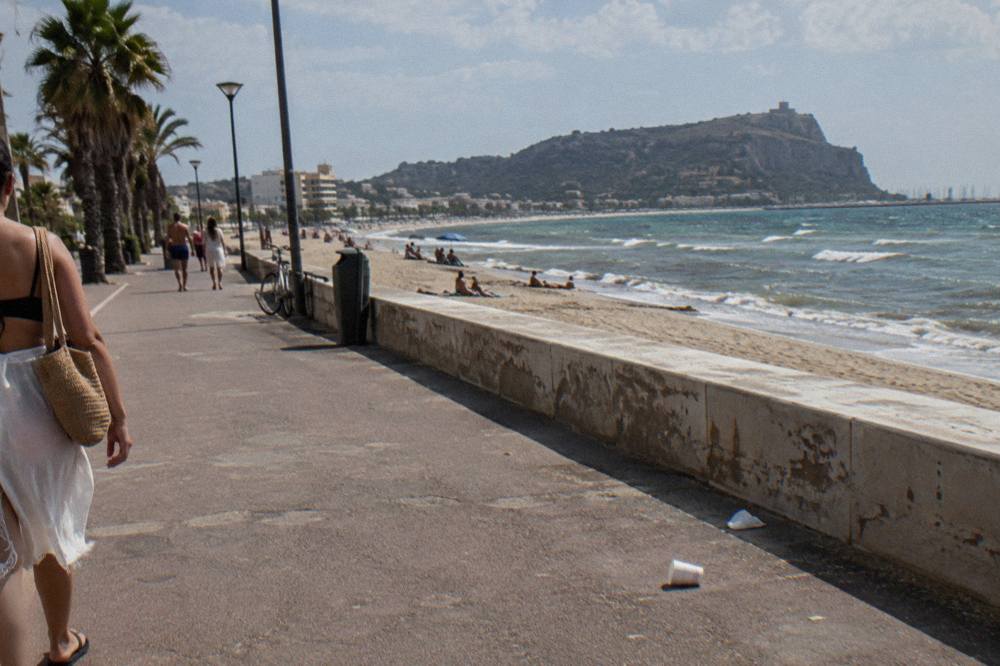
Heat changes the terrain too. The four old town districts, Stampace, Castello, Villanova and Marina, hold stone heat long after the sun drops, so a 9 am start feels nothing like a 1 pm one. The Molentargius side is flatter and more open, with canal paths that carry whatever breeze exists, which is why summer itineraries lean that way. The Poetto promenade runs about 8 km of sand from the Sella del Diavolo end toward Quartu Sant'Elena, mostly on an asphalt surface with some shared pedestrian sections, and it is the classic summer ride: flat, breezy and easy to abandon for a swim.
Water and timing matter more than distance in August. Carry more than you think you need, plan a stop, and treat the middle of the day as time for the beach rather than the bike. Check each tour's live booking page for its current departure times, and the listings that include bottled water or a coffee stop earn their keep.
If summer is your only window, the two rides above are the shapes that work best: a flamingo oasis route with flat, open paths, and a sunset salt-marsh departure that dodges the midday heat that moves the whole day later.
Which Shoulder Months Are Best For A Cagliari Bike Ride?
April, May, June, September and October are the sweet spots for cycling in Cagliari, with highs between roughly 17 and 28 C, thin crowds before July and thinner ones again after August, and flamingo colonies at Molentargius at their largest from April to September. June's first weeks are singled out by local wildlife watchers as the most photogenic of the year.
May carries one caveat. The Sant'Efisio festival fills central streets on 1 to 4 May, with processions moving through Stampace and along Via Roma, and that changes old town itineraries for those four days. It is a spectacle worth seeing, but it is not a biking spectacle: the routes you would ride are the routes the procession uses. If your dates are fixed across the festival, plan the bike day before or after, or head east to Poetto and the park, which sit outside the procession corridor.
September is arguably the finest cycling month of all. The sea is at its warmest, family holidays have ended, the light is soft, and the flamingo colonies at Molentargius are still large before activity tapers in autumn. The park's green areas stay open until 21:00 through 15 October, so evening rides remain on the table well past summer. From 16 October the park closes its green areas at 18:00 instead, per the park's official page, which quietly reshapes late-autumn itineraries toward the coastal side.
October deserves more credit than it gets. Late-month days can still feel like early summer, cruise traffic is heavy but concentrated in the port and old town, and the promenade is quiet by mid-morning. Rain days increase, so keep a flexible day in the plan, but the riding itself, flat, scenic and uncrowded, is close to ideal. For a deeper route-by-route comparison for these conditions, read which Cagliari bike route suits you.
The Poetto and Flamingos E-Bike Tour, about four hours from $80 per person, rated 4.8 across 85 reviews, fits the shoulder months perfectly: it leaves from the Easycletta shop, includes helmet, bicycle and bottled water, caps groups at eight and offers free cancellation, which matters when a shoulder-season rain day forces a reshuffle.
When Can You See Flamingos At Molentargius?
Flamingos stay at Molentargius-Saline all twelve months of the year, since part of the population is settled permanently near Cagliari, but the colonies are largest and most active between April and September, with the first weeks of June the peak for nesting and photography. The colony has nested steadily at the site since 1993.
That year-round presence surprises visitors who assumed the birds were a summer phenomenon. Winter sightings along the canal paths are routine, and a calm January morning beside the Molentargius salt pans can outperform a windy August afternoon for viewing, simply because fewer people and less heat mean calmer birds. What changes across the year is colony size and behaviour, not presence.
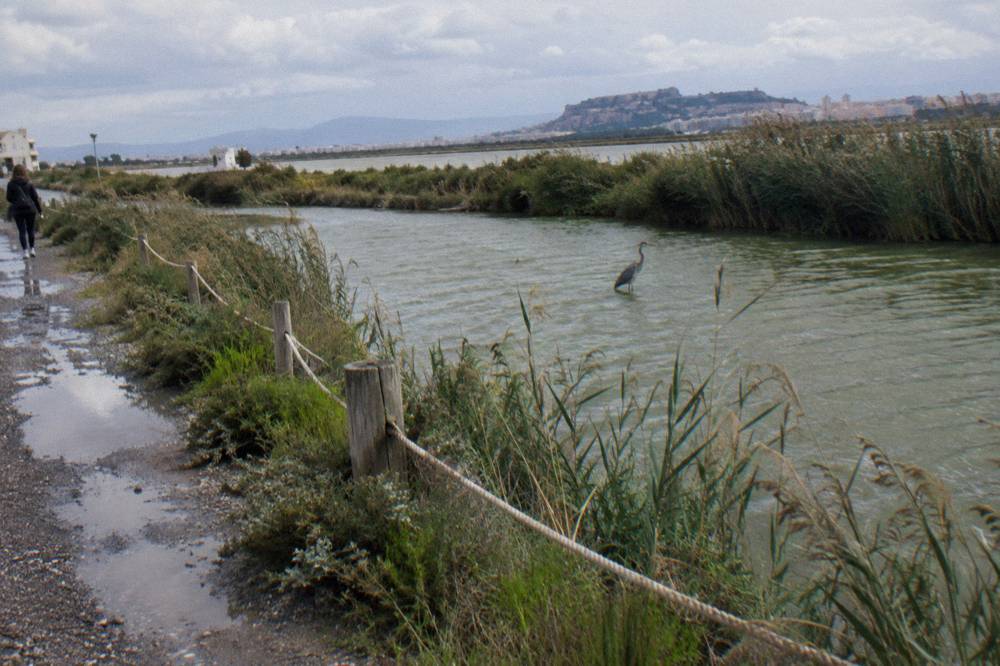
There are two honest caveats. First, the park's own rules permit cycling in its green areas only with non-motorised bikes, so guided e-bike flamingo rides use the surrounding canals, public paths and the Poetto side rather than the park's managed interior. Second, sightings are wildlife, not theatre: operators report flamingos on their routes and the listings describe them, but no honest guide promises a bird on demand. Keep expectations modest: flamingos stay in these wetlands year round, but a sighting is never guaranteed.
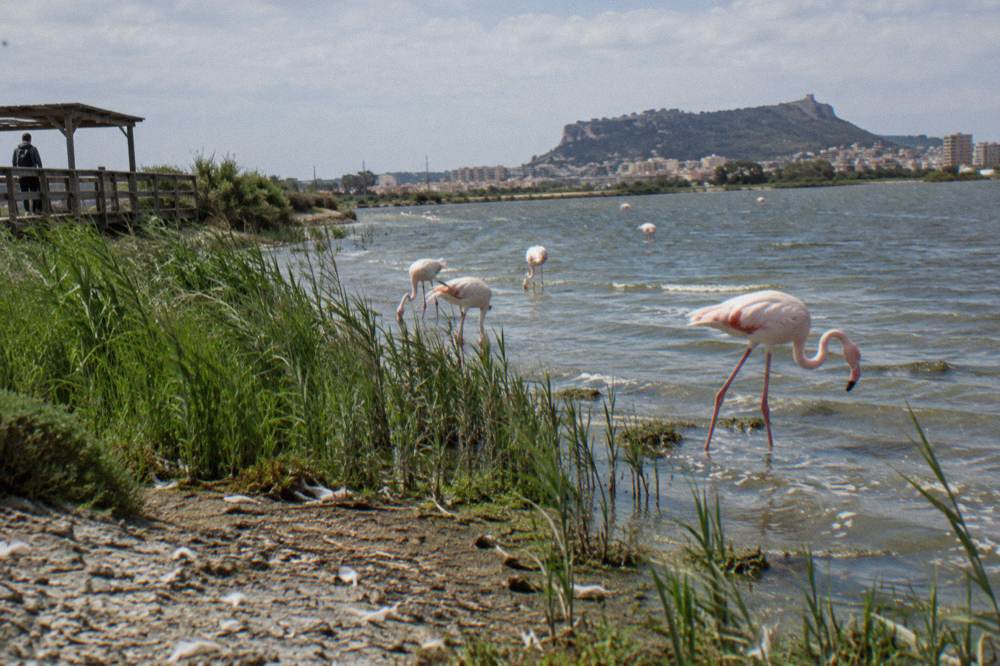
Timing within the day matters as much as timing within the year. Birds feed actively in the first and last hours of light, which is one reason sunset departures exist: the Sant'Antioco Salt Flats Sunset E-Bike, a roughly two-hour ride rated 4.9 across 20 reviews from $66 per person, in groups capped at six, is built entirely around that window, though it runs on the island's southwest coast rather than at Molentargius itself. For a full treatment of the where and how, see our Molentargius flamingo bike tour guide.
How Do Cruise-Ship Days Change Cycling In Cagliari?
Cruise days concentrate crowds in the port-side districts of Marina and Castello rather than on the bike paths, and 2026 is a record year: 181 port calls are projected, over 600,000 passengers, a 26 percent increase on 2025. On 28 October 2026 four ships called in a single day, bringing more than 11,000 passengers.
The practical effect is narrow but real. On big call days, the lower city streets around the cruise terminal, the lift up to Castello and the Bastione di Saint Remy get congested from mid-morning to late afternoon. The promenade, the park canals and the Quartu direction barely notice. If your only day in Cagliari is a port day with four ships in harbour, a guided ride out of the congestion zone is often the smartest move, and several tours are timed precisely for that.
Meeting points tell the story. The Old Town Guided E-Bike Tour meets at Via Santa Margherita 22, a short distance from the cruise terminal, so the Old Town can be busier on days when several ships call at once. The Old Town Guided E-Bike Ride, about two hours, rated 4.9 across 325 reviews, from $56 per person, visits Stampace, Castello, Villanova and Marina with a local guide, and includes bicycle rental, bottled water and a coffee or soft drink. A comparable ride, the Old Town E-Bike With Coffee Stop, also meets at Via Santa Margherita 22, runs about two hours, is rated 4.9 across 369 reviews, from $53 per person, and caps groups at nine.
| Tour | Length | Price | Rating and reviews | Meeting point |
|---|---|---|---|---|
| Old Town Guided E-Bike Ride | ~2 hours | From $56 per person | Rated 4.9 across 325 reviews | Via Santa Margherita 22 |
| Old Town E-Bike With Coffee Stop | ~2 hours | From $53 per person | Rated 4.9 across 369 reviews | Via Santa Margherita 22 |
| Two-Hour E-Bike Tour With Coffee | ~2 hours | From $50 per person | Rated 4.7 across 281 reviews | NewWaySardinia |
| Poetto and Flamingos E-Bike Tour | ~4 hours | From $80 per person | Rated 4.8 across 85 reviews | Easycletta shop |
Port-day booking advice is simple: take the earliest departure your ship allows. Morning slots beat both the heat and the shore-excursion waves, and they leave the afternoon for the parts of Cagliari that absorb crowds gracefully. If you are planning around a specific sailing, our cruise port guide covers the terminal-to-centre logistics in detail.
What Time Of Day Should You Ride In Cagliari?
In summer, ride before about 10 am or after 5 pm, since average highs of 31.6 to 32 C make the middle hours punishing on exposed paths. In the shoulder months, mid-morning to late afternoon is comfortable, and the Molentargius green areas stay open until 21:00 from March to mid-October, which keeps evening rides possible.
Morning has a second advantage beyond temperature: wildlife and light. Flamingos feed early, the canals are mirror-calm before the wind builds, and the old town's stone streets are still cool and nearly empty. In July and August the sensible pick is an early start, before the midday heat builds, and each tour's departure times are on its live booking page.
Sunset riding is Cagliari's quiet luxury. The maestrale typically eases as the day's heating dies, the promenade fills with locals rather than visitors, and the light across the gulf turns the colour photographers chase. Sunset-specific products exist, and even standard tours shift later in summer where schedules allow. The one honest limit is daylight in winter: by late December the usable window is short, so a midday ride beats a dawn one from November to February.
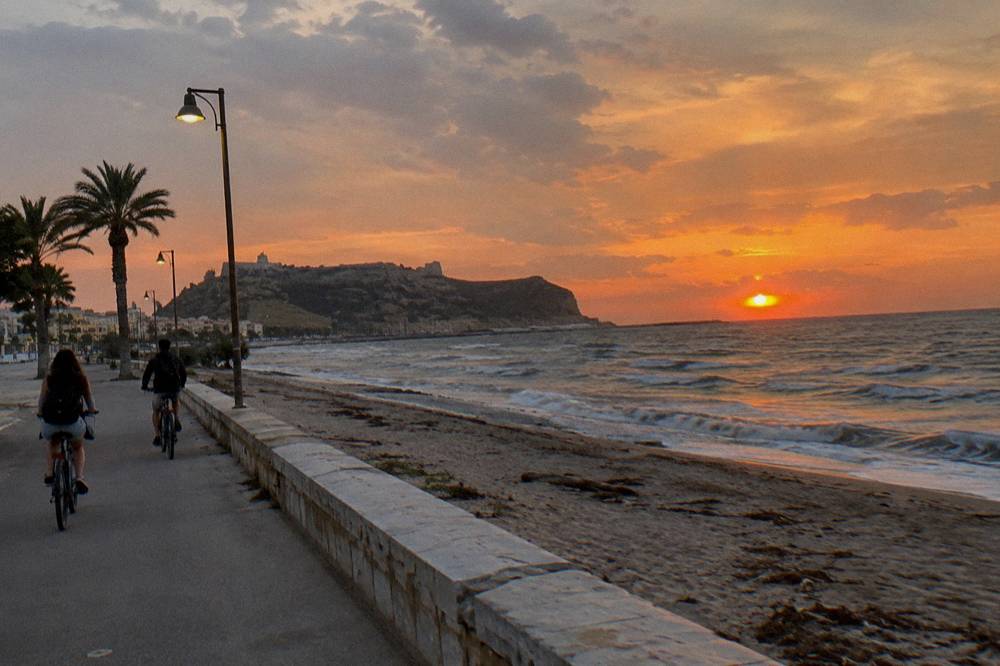
Afternoon wind deserves one planning note. Because the maestrale blows from the northwest, riding east along the coast in the morning usually means a following breeze outbound, with the return leg ridden into the wind, or at least a crosswind rather than a head-on gust. Riders heading to Poetto in the afternoon in high summer should expect the return leg into the wind to feel twice as long, and e-bike assistance, cutting out progressively at 25 km/h under Italian rules, softens but does not erase it.
Which Guided Ride Fits Each Season?
Winter and early spring suit old town rides and year-round flamingo paths; late spring and June suit the full four-hour canal and coast rides while colonies are largest; high summer suits early-morning short rides and sunset departures; and autumn suits every kind of ride, with September and October bringing milder air after the summer heat.
Match the shape of the ride to the season rather than just the price. A four-hour ride in August is a commitment; the same ride in October is a pleasure. Conversely, a two-hour old town spin in January can feel brisk on the exposed bastions, while the same ride in May is close to perfect. The table below pairs each season with the rides whose length, terrain and timing suit it, using the tour details from the booking pages.
| Season | Best ride shapes | Why it fits |
|---|---|---|
| March to May | Old town e-bike rides, two to three hours | Mild air, festival caveat 1 to 4 May, nesting starts |
| June | Four-hour canal and coast rides, morning | Peak flamingo weeks, warmth before peak heat |
| July and August | Two-hour morning rides, sunset departures | Heat caps the midday window, wind peaks |
| September | Four-hour full routes | Warm sea, calm air, colonies still large |
| October | Any format, book early slots on cruise days | Record cruise traffic in the old town, fine weather |
| November to February | Short old town or promenade rides at midday | Year-round flamingos, short days, quiet paths |
Budget does not change much across the year, which is worth knowing: guided e-bike rides here cluster between from $50 and from $80 per person, with the two-hour options at the lower end and the four-hour canal and coast rides at the top. Rental, delivered to your location from $28 per person, is the budget alternative, though note it is a city or mountain bike, not electric, and it comes without a guide.
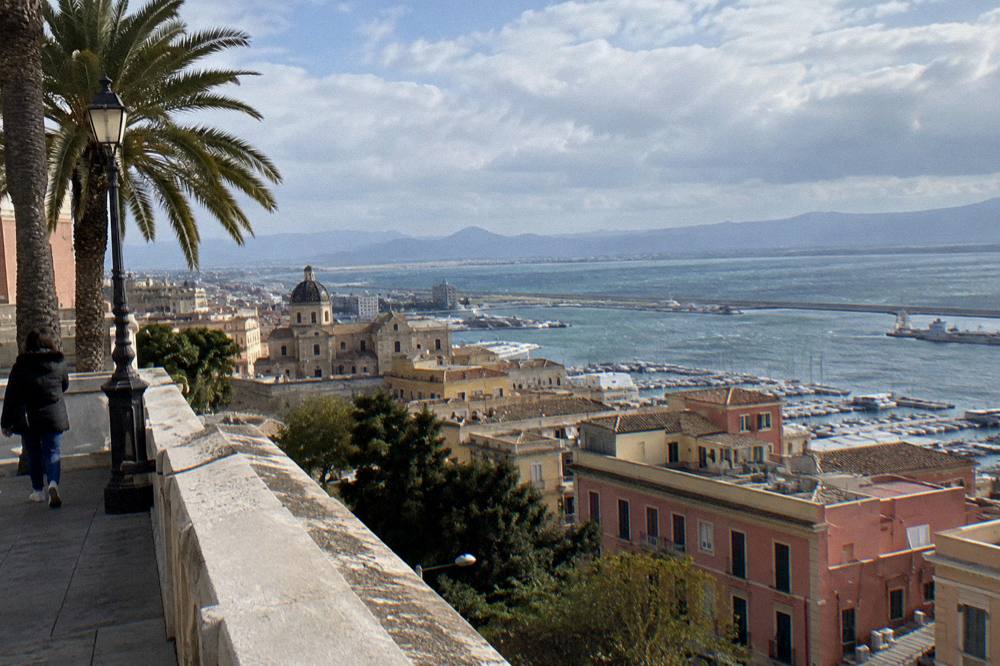
One structural fact makes Cagliari unusually season-proof: the city's limited-traffic zones, the ZTLs covering Castello, Marina, Stampace and Villanova, admit bicycles and compliant e-bikes freely, per the comune's official ZTL page. Whatever the month, the medieval streets that cars cannot freely enter remain open to two wheels, which is why the old town rides run all year without seasonal interruption.
Weather planning still matters for families. Children under 14 cannot ride a compliant e-bike on public roads, and helmets are mandatory for riders under 18, so a family booking in any season needs to fit those rules; our cycling with kids guide covers the workarounds. For packing, whatever the month throws at you, the what to bring guide is the checklist.
The Bike and Hike to Devil's Saddle deserves its own seasonal note. It runs about four hours from $78 per person, too few reviews have accumulated for a rating claim, and it pairs an e-bike leg along Poetto with Molentargius flamingos with a walk on foot up the Sella del Diavolo, where bikes are not permitted on the protected Natura 2000 trails. In high summer its hiking portion argues strongly for the earliest departure; in October it is arguably the single best day out on this list, combining flamingos, beach and headland in one loop while the heat stays friendly.
Whatever the season you land on, the decision tree is short. Pick your month's constraint, heat, wind, birds or crowds, choose the ride shape that answers it, and book the time of day that constraint rewards. Cagliari rewards that small amount of planning more than most cycling cities, because almost nothing here, not the ZTL streets, not the flat promenade, not the resident flamingos, ever fully closes. The same wind that dictates your ride also stirs up the water, and our guide to which beach in Cagliari has the clearest water for a post-ride swim sorts Poetto from the Calamosca coves.
Common Questions About The Best Time To Cycle In Cagliari
When Is The Best Time To Cycle In Cagliari?
April to June and September to October, when average highs run roughly 17 to 28 C and the maestrale wind is calmer. July and August average 31.6 to 32 C, so ride early morning if summer is your window.
Is Cagliari Too Hot For Cycling In Summer?
No, but the middle of the day is. With average highs of 31.6 C in July and 32 C in August, ride before about 10 am or after 5 pm, carry water, and prefer canal and coast paths over stone streets.
What Months Are Flamingos Most Visible At Molentargius?
Flamingos are present year round, since part of the population is resident, but colonies are largest and most active April to September, with the first weeks of June the peak.
Does The Maestrale Wind Affect Cycling In Cagliari?
Yes. The maestrale is the dominant wind, most frequent and strongest from May to September, and it hits the exposed Poetto and Sella del Diavolo stretches hardest, usually building through the afternoon.
Do Cruise-Ship Days Spoil Cycling In Cagliari?
Only in the old town. Cagliari projects 181 cruise calls and over 600,000 passengers in 2026, crowding Marina and Castello mid-morning to late afternoon, while the promenade and park paths stay quiet.
Can You Cycle In Cagliari In Winter?
Yes. Winters are mild, paths are quiet, flamingos remain at Molentargius, and bikes and compliant e-bikes can enter the old town ZTLs freely. The park's green areas close at 18:00 from mid-October, so plan midday rides.