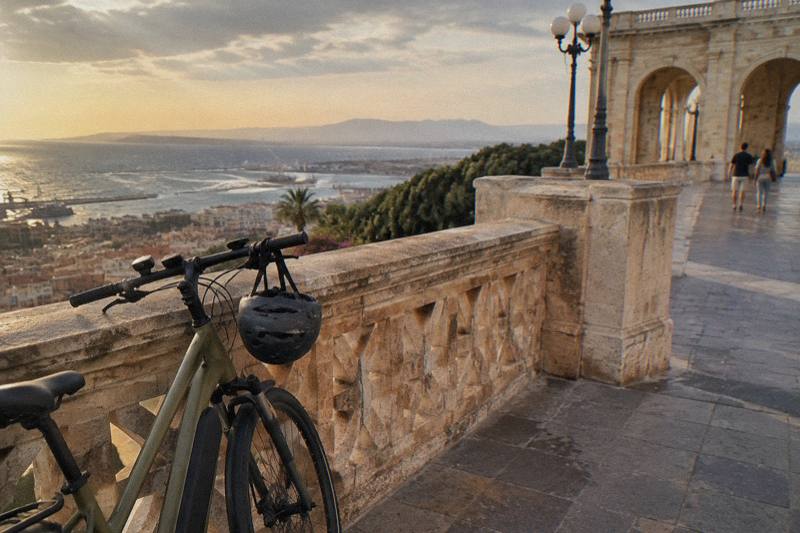
Is Cycling In Cagliari Safe? Roads, Lanes And Traffic
Cagliari is safer to cycle than its steep old lanes suggest: a 366 km metropolitan bike network was approved in February 2026, bikes ride freely through the restricted-traffic centre, and the flat Poetto and Molentargius paths keep cars at a distance.
Short answer
Yes, cycling in Cagliari is generally safe, with caveats. Bikes and compliant e-bikes enter all central restricted-traffic zones without a pass, the metropolitan cycle network grew to 366 km in February 2026, and Poetto offers 8 km of separated promenade riding. The old town's steep, narrow streets and busy junctions are where a guided group helps most.
Cycling in Cagliari splits neatly into two experiences. The first is the historic core: four districts stacked on hills, joined by steep lanes, stone stairs and a handful of busy arterial roads. The second is the flat coastal strip east of the centre, where an 8 km promenade runs the length of Poetto beach and canal-side paths trace the edge of the Molentargius wetlands. Riders who understand which experience they are choosing, and when, rarely report problems. If you're also deciding between Sardinia's capital and its northeast gateway, our comparison of Cagliari and Olbia for cyclists and casual visitors weighs up the riding, the prices and the practicalities.
The city has also been investing. In February 2026 the metropolitan council approved a Biciplan that grows the cycle network from 243 km to 366 km across Cagliari and 17 neighbouring municipalities, and roughly 12 km of new or upgraded lanes were under construction on more than 30 streets in mid-2026. This guide walks through what that means in practice: the roads, the rules, the seasons and the situations where a guide earns their fee.
Is Cycling In Cagliari Safe Overall?
Broadly yes, for a city of its size and age, and the city's guided routes reflect that: 366 km of planned cycle network, free bike access to every central restricted-traffic zone, and 8 km of separated promenade at Poetto. The real risks are concentrated in a few steep, narrow old-town streets and busy multi-lane junctions, not spread across the city.
Cagliari is a compact Mediterranean capital, and its traffic behaves the way traffic behaves across southern Italy: roundabouts are assertive, scooters overtake closely, and drivers are used to sharing narrow streets with two wheels. That cuts both ways. Local drivers expect bicycles and are generally calm around them, but the physical space in the old districts, Castello above all, is tight, cobbled and steep.
The safety picture improved meaningfully in 2026. The metropolitan Biciplan, approved on 16 February 2026, raised the planned network to 366 km, and a separate municipal programme was reported in June 2026 to be adding or upgrading roughly 12 km of lanes across more than 30 streets, with the city stressing improved safety and no loss of parking. For visitors, the practical effect is that the rides that matter most, the seafront at Poetto and the canals near Molentargius, run on paths largely away from moving cars.
None of this makes Cagliari a Dutch-style cycling city. The centre still asks for attention. But the pattern is consistent: flat, purpose-built paths on the coast, calm but demanding lanes in the middle, and a set of clear rules, covered below, that treat bikes well.
What Is Traffic Like In Cagliari's Centre?
Traffic in the centre is dense but slow, concentrated on a handful of multi-lane arterials such as Via Roma and the roads around the port, while the four historic districts themselves carry limited traffic under restricted-zone rules that bicycles are exempt from. The difficult moments are junctions and descents, not constant flow.
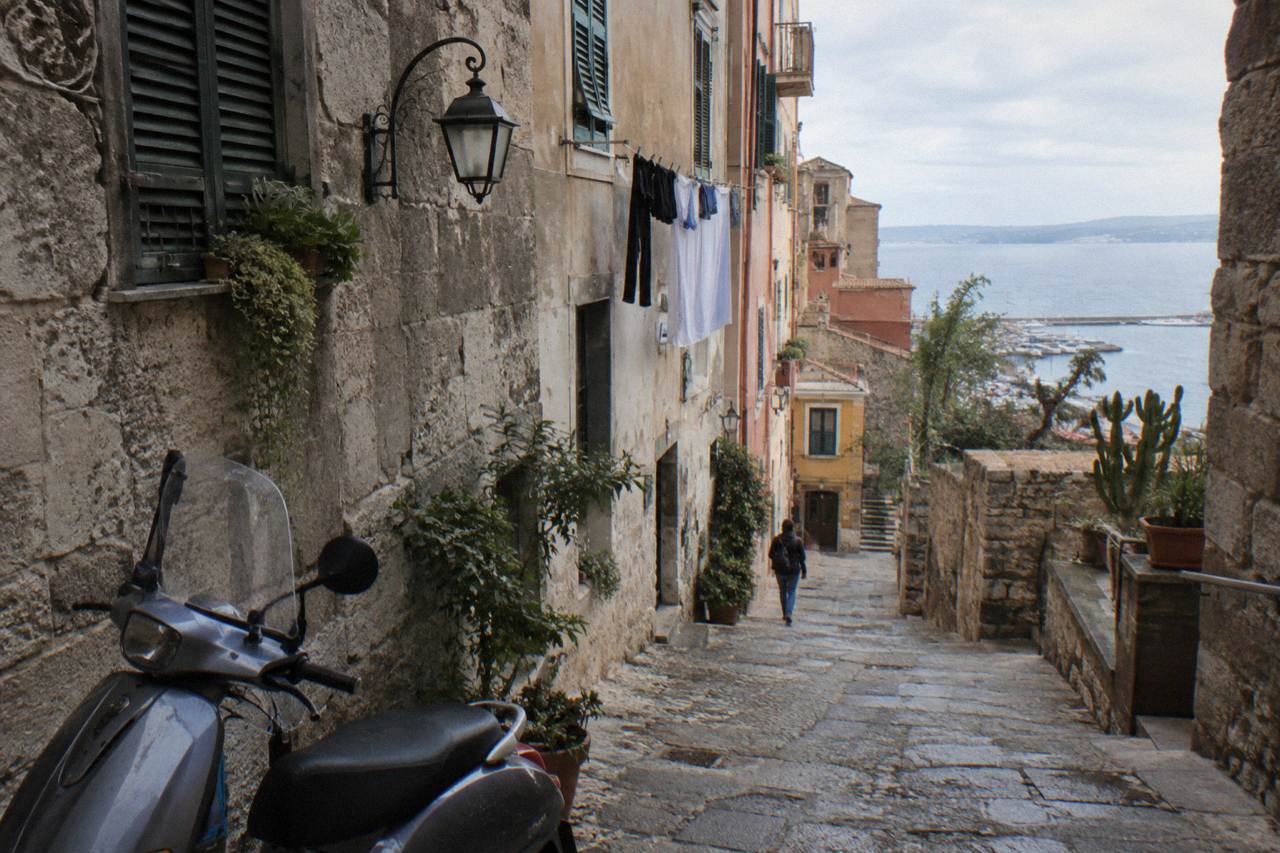
The shape of the city does much of the work. Cagliari's old core sits on a hill between the port and the lagoons, so through-traffic is funnelled onto a small number of roads at the base of the hill. Via Roma along the waterfront, the port approaches and the ring roads carry the volume. Above them, Castello, Stampace, Villanova and Marina are quieter by design: they sit inside the city's zone a traffico limitato, the restricted traffic zones that keep most private cars out of the historic centre during controlled periods.
For a cyclist the consequence is favourable. The streets you actually want to ride, the ones with the cathedral, the bastion views and the pasticcerie, are the streets with the least traffic. The streets with the traffic, the arterials, are the ones you cross rather than ride along. The two moments that deserve full attention are joining or crossing an arterial at a junction, and descending the steep lanes from Castello, where speed builds quickly on stone that is polished by centuries of use.
An e-bike changes the calculus in the centre's favour, because the hills that make walking tiring make riding steady. The e-bike versus city bike question in Cagliari is really a question about these hills. Riders on pedal-assist bikes spend less time grinding uphill at walking pace in traffic and more time moving with confidence.
Guided tours exist largely for this reason. A local guide who rides the same junctions weekly knows the lane positions, the sight lines and the timing. The Old Town E-Bike With Coffee Stop caps its group at 9 riders and meets at Via Santa Margherita 22, a short distance from the cruise port, and its listing includes bike use plus coffee or tea. Alongside it, the Old Town Guided E-Bike Ride, rated 4.9 across 325 reviews from $56 per person, covers Stampace, Castello, Villanova and Marina in about 2 hours. For riders who prefer their own pace, a delivered rental from $28 per person drops a city or mountain bike at your location. Three options span the range:
A comparison of the guided old-town options shows how close they are on paper, and where they differ in ways that matter for safety and comfort:
| Tour | Duration | Rating | Price (per person) | Group cap | Meeting point |
|---|---|---|---|---|---|
| Old Town E-Bike With Coffee Stop | ~2 hours | 4.9 across 369 reviews | from $53 | 9 | Via Santa Margherita 22 |
| Old Town Guided E-Bike Ride | ~2 hours | 4.9 across 325 reviews | from $56 | Not stated | Via Santa Margherita 22 |
| Two-Hour E-Bike Tour With Coffee | ~2 hours | 4.7 across 281 reviews | from $50 | Not stated | NewWaySardinia |
| Three-Hour Old Town E-Bike Tour | ~3 hours | 4.7 across 18 reviews | from $56 | Not stated | Easycletta shop |
The differences are real but modest. The cap of 9 and the cap of 8 on some coastal rides keep groups manoeuvrable in narrow lanes, which is a genuine safety factor in Castello. Where a listing does not state a group size, check the booking page before deciding.
Can Bikes Enter The Restricted Traffic Zones?
Yes. The comune of Cagliari's own rules state that bicycles, including compliant e-bikes, may access and park in all of the city's restricted traffic zones, Castello, Marina, Stampace and Villanova included, without any pass or permit. Cyclists are the one category of road user the ZTL does not restrict.
This is the single most useful rule for a visitor on two wheels. Italy's zone a traffico limitato scheme keeps non-resident cars out of historic centres, and Cagliari's version, last amended by council deliberation n.168 of 2 December 2025, follows the national pattern. But the comune's published rules, confirmed on the official page updated in early 2026, are explicit that velocipedi and e-bikes are permitted access and parking in all Cagliari ZTLs without a pass, as the city's ZTL page sets out.
The practical reading: the prettiest, quietest streets in the city are legally the most welcoming to bikes. There is no hour to wait for, no permit to buy, no camera fine to fear. What the ZTL does not do is flatten the hills or widen the lanes, so the old town asks for low speeds and a hand on the brake on descents.
One nuance from the park world mirrors this. Molentargius-Saline park permits cycling in its green areas only with non-motorised bikes, meaning e-bikes are not covered by the park's own wording; the flamingo e-bike tours instead ride the canals, public paths and the Poetto side. That is covered fully in its own section below.
How Much New Cycle Infrastructure Is Being Built?
A lot, by the standards of a mid-sized Italian city: the metropolitan Biciplan approved on 16 February 2026 grows the network from 243 km to 366 km, while a separate programme reported in June 2026 has roughly 12 km of new or upgraded bike lanes under construction across more than 30 city streets.
The Biciplan is the headline. Approved by metropolitan council deliberation n.1 of 16 February 2026, it plans a 366 km network spanning Cagliari and 17 neighbouring municipalities, up from 243 km, a 50 percent expansion. Reporting on the plan, which CagliariToday covered in March 2026, noted that the ambition is a connected metropolitan system rather than isolated seafront segments.

The street-level programme is the part a visitor may notice first. Works noted in June 2026 cover about 12 km of lanes on over 30 streets, with the municipality emphasising improved safety and no reduction in parking, a political detail that matters because parking fights are what usually kill Italian bike-lane projects. Santa Gilla lagoon is also reachable by flat cycling routes linking toward the Molentargius and Poetto networks under wider metropolitan plans.
For a reader asking about safety, the honest summary is direction of travel. The network is growing, the seafront and park edges are already pleasant, and the dense central streets remain the part of the city where infrastructure cannot fully solve the problem, because the streets predate bicycles by a millennium.
Is The Poetto Promenade Safe For Cycling?
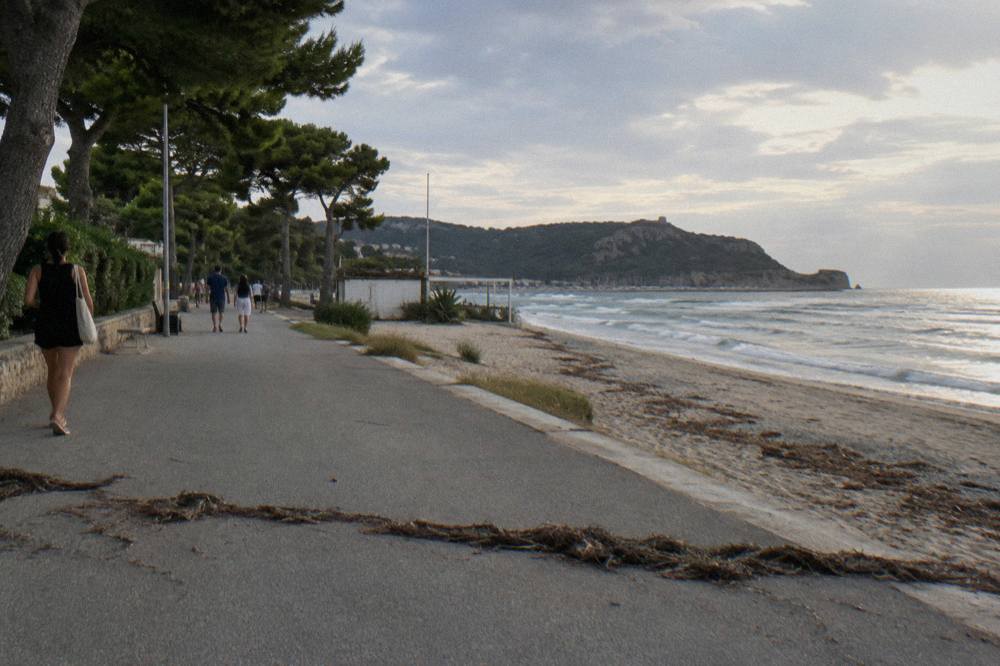
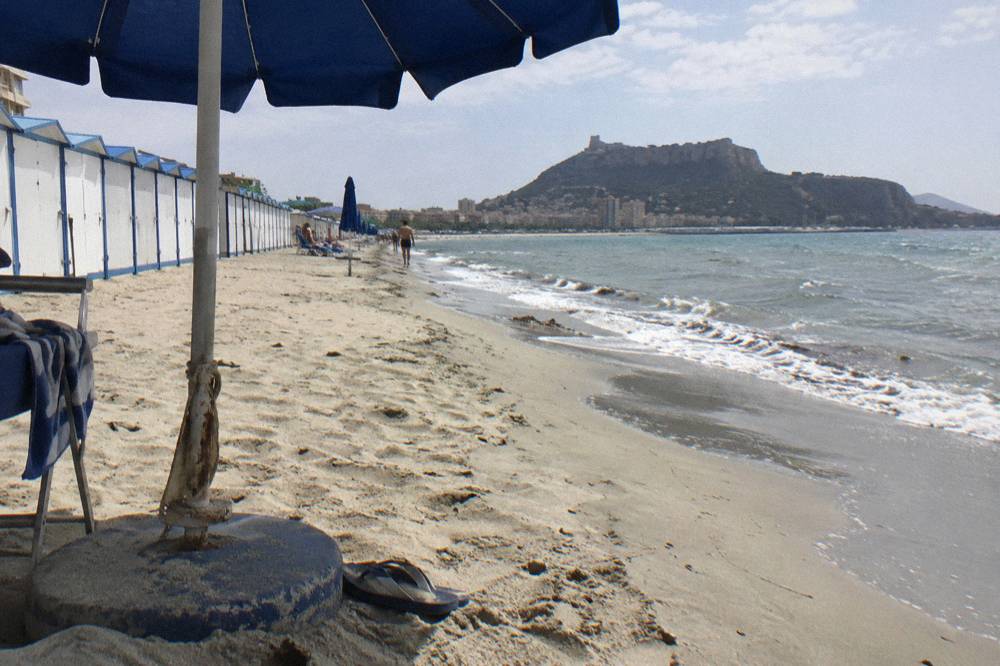
The Poetto promenade is the safest high-value ride in the city: 8 km of largely asphalted cycle and pedestrian path running the full length of the beach from the Sella del Diavolo headland toward Quartu Sant'Elena, almost entirely away from moving traffic. The cautions are crowds, not cars.
Poetto is Cagliari's city beach, and its promenade behaves like a seafront boulevard rather than a road. The path is mostly asphalt with some shared sections where pedestrians, runners and cyclists mix, so the risk profile on a busy July afternoon is collision with a pedestrian, not with a Fiat. Locals walk, run and cycle the promenade as a matter of routine, and the full guide to it is in the Poetto bike path guide.
Two behaviours keep it stress-free. Ride the shared sections at conversational speed and call out or slow when passing families, and expect the maestrale, the northwest wind that dominates Cagliari's weather year-round and blows hardest from May to September, to push you sideways on exposed stretches. Wind, not traffic, is the honest hazard of the Poetto ride; plan to ride into it on the way out and with it on the way back rather than the reverse.
The promenade also connects onward. From its eastern end the network continues toward Quartu Sant'Elena, and the delivered rental option, a city or mountain bike with free delivery from $28 per person, exists precisely for riders who want to cover the full 8 km and beyond at their own pace.
Families weighing the same question more broadly will find the same conclusion holds across the city's flat edges, and the bike tour with kids guide covers age limits and child seats in detail.
Is Riding Near Molentargius And The Flamingos Safe?
Yes, with one rule that matters: Molentargius-Saline park's green areas admit only non-motorised bikes, so the guided e-bike tours ride the canals, public paths and the Poetto side rather than inside the park's managed areas, and those routes are flat, low-traffic and separated from the seafront road for most of their length.
The park's own rules, published by the Molentargius-Saline park authority, open the green areas daily from 06:30 to 21:00 between March and mid-October and 07:00 to 18:00 the rest of the year, and permit walking, running and cycling with non-motorised means only, on marked itineraries, yielding to pedestrians. That wording does not cover e-bikes, which is why no honest operator claims an e-bike ride inside the park proper.
What the tours do instead is use the surrounding network: the canal paths, the public routes between the park and Poetto, and the cycle path along Via la Palma, which local guides single out as a good flamingo-spotting stretch. The flamingos themselves are present year-round, with the colony nesting steadily near Cagliari since 1993 and the largest gatherings from April to September. Sighting expectations belong to the operators' descriptions, not to promises: the birds are wild and move with the water and the season.
On safety specifically, these routes rank with Poetto at the easy end. They are flat, they avoid the arterial roads, and the main demands are patience on shared surfaces and sun protection on exposed canal banks. The dedicated flamingo bike tour guide covers the options in full; the short version for the safety-minded is below.
| Tour | Duration | Rating | Price (per person) | Bike type | Helmet |
|---|---|---|---|---|---|
| Old Town and Flamingos Combo | ~2.5 hours | 4.7 across 126 reviews | from $56 | e-bike | included |
| Poetto and Flamingos E-Bike Tour | ~4 hours | 4.8 across 85 reviews | from $80 | e-bike | included |
| Flamingo Oasis Bike Tour | ~2 hours | 4.6 across 158 reviews | from $56 | Not stated | included |
All three carry free cancellation. Where a listing is silent on a detail, a group size or a pickup, check the booking page rather than assuming.
Is The Sella Del Diavolo Ride Safe?
The Sella del Diavolo promontory itself is closed to bicycles entirely, a protected Natura 2000 site whose trails are footpaths only, so the safe and legal pattern is to ride the flat route to the Calamosca or Poetto end and hike the promontory on foot. Products that combine the two, such as the Bike and Hike tour, do exactly that.
Local reporting in October 2026 described cyclists riding the promontory trails as an ongoing enforcement problem, with complaints lodged precisely because bicycles are prohibited there. The message for a visitor is unambiguous: riding the Sella del Diavolo is neither legal nor welcome. The reward for respecting that is a genuinely good hybrid day: a flat ride along the coast, then a short hike on the trail network from the Calamosca end for the panoramic views over the headland and the gulf.
The Bike and Hike to Devil's Saddle tour, about 4 hours from $78 per person, pairs an e-bike ride through the Molentargius area and along Poetto with the hike to the Sella del Diavolo viewpoint, helmet and water included. It has 10 reviews, too few a pool for a fair rating claim, so judge it on its format rather than a score. The full story, including the hike itself, is in the Sella del Diavolo by bike and on foot guide.
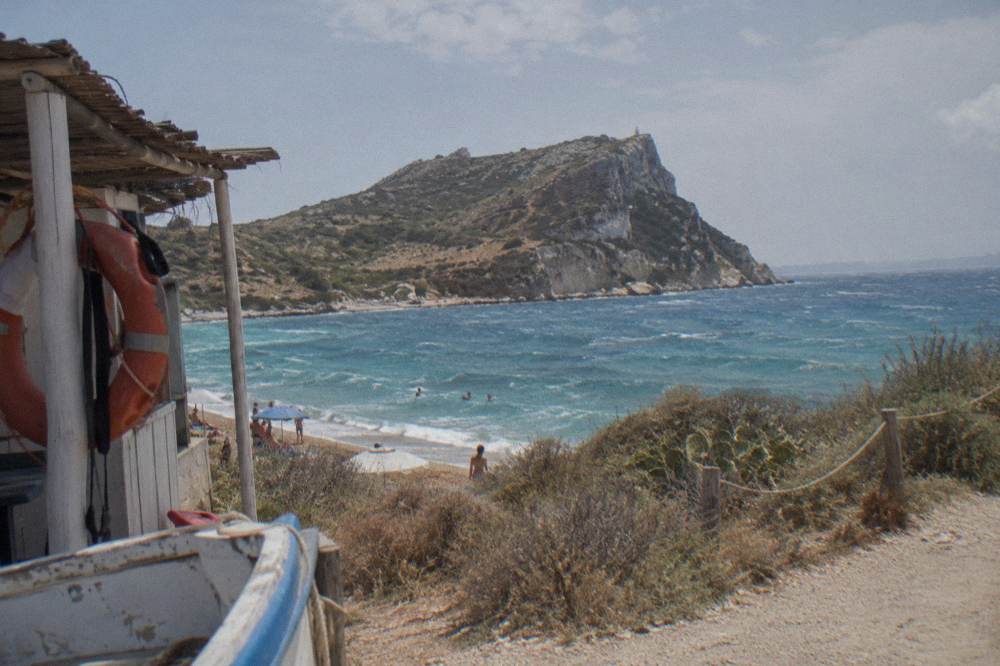
What Are Sardinia's Rules For E-Bikes And Helmets?
A compliant Italian e-bike is legally a bicycle: 250 W motor, pedal assistance cutting out progressively at 25 km/h, no licence, plate or insurance required, minimum rider age 14 on public roads, and a helmet mandatory only for riders under 18, though it is strongly recommended for everyone.
The technical definition comes from the Italian highway code as commonly summarised: the motor must be 250 W continuous rated power, must assist only while pedalling, and must taper off by 25 km/h. Meet those conditions and the e-bike may use cycle paths, urban roads and restricted traffic zones wherever a bicycle may go, which is exactly why the ZTL access described above applies to the tour fleets.
Age and helmet are the two rules families ask about. Fourteen is the minimum age to ride a compliant e-bike on public roads and cycle paths, and an adult may carry one child up to 8 years in an approved seat. Helmets are legally required only for under-18s and strongly recommended for everyone else. Among the guided tours, the Three-Hour Old Town, Poetto and Flamingos, Flamingo Oasis, Bike and Hike and Sant'Antioco tours all include a helmet; for the two Via Santa Margherita old-town rides the listing is silent, so check the booking page if a helmet matters to you. A few listings also state a minimum height, 150 cm on an old town e-bike ride with coffee stop, so confirm rider measurements before booking.
| Rule | What applies in Cagliari |
|---|---|
| E-bike definition | 250 W, pedal-assist only, cuts out at 25 km/h |
| Licence, plate, insurance | None required for a compliant e-bike |
| Minimum rider age | 14 on public roads and cycle paths |
| Helmet | Mandatory under 18; included on most listed tours |
| ZTL access | Bikes and e-bikes enter all zones, no pass |
| Molentargius park | Non-motorised bikes only, marked itineraries |
When Is The Safest Time Of Year To Cycle In Cagliari?
Spring and autumn are the safest and most comfortable windows: March to May and September to October bring milder highs of roughly 17 to 28 degrees with fewer crowds, while July and August average highs above 31 degrees with the maestrale wind at its strongest, and May brings processions that close central streets.
The climate normals for Cagliari show July averaging a high of 31.6 degrees and August 32 degrees, with almost no rain, 3 mm and 10 mm respectively. Heat of that order is a real safety variable on a 4-hour ride with no shade, which is why the coastal tours schedule around it and why a bottle of water is included on several of them. The best time to cycle in Cagliari guide works through the calendar month by month.
Two calendar facts deserve planning. First, the Sant'Efisio festival runs 1 to 4 May in both 2026 and 2027, and its processions pass through Stampace and along Via Roma, closing and crowding central routes on those days. Second, the cruise season is heavy, 181 port calls and over 600,000 passengers projected for 2026, and it peaks into early November, so old-town rides booked on quadruple-call days share the lanes with more pedestrians than usual. Neither is a danger, but both change the texture of a ride, and what to pack for it is covered in what to bring on a Cagliari bike tour.
| Period | Conditions | Safety notes |
|---|---|---|
| March to May | Highs roughly 17 to 25 degrees | Sant'Efisio closures 1 to 4 May |
| June | Warm, peak flamingo nesting | Book coastal rides early in the day |
| July to August | Highs above 31 degrees, strong maestrale | Heat and wind; ride mornings |
| September to October | Highs easing through the 20s | Busy cruise days into early November |
| November to February | Mild, quieter | Shorter park hours, 07:00 to 18:00 |
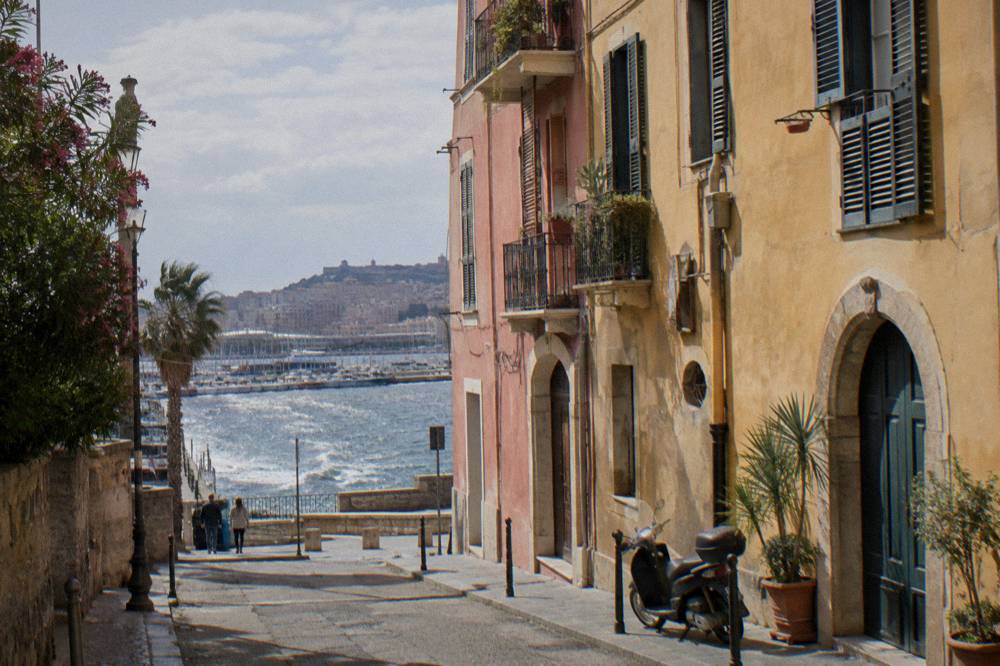
Why Does A Guided Tour Make Riding Safer?
A guide removes the three things that catch out solo riders in Cagliari: unfamiliar junctions on the arterials, route-finding on steep old-town lanes, and mechanical or fitness surprises, and the small capped groups, 9 on one old-town ride, 8 and 6 on the coastal and sunset rides, keep the whole party visible to the guide at all times.
The value is concrete, not sentimental. A guide who works the same streets weekly knows which crossing lights give bikes a clean line, which cobbled descent to walk, and where the flamingos have been gathering that week. On the safety front specifically, a group of eight or nine behind a local leader is far more visible to Sardinian drivers than a lone tourist studying a phone at a junction, and the guide carries the local knowledge that no map app renders well on stone lanes built for donkeys.
The published inclusions support this. The old-town rides include a local guide and bike use, with coffee on one option; the Three-Hour Old Town E-Bike Tour adds helmet use; the Poetto and Flamingos ride includes helmet, water and a capped group of 8. Every tour listed on this page carries free cancellation per its listing, which lowers the stakes of committing before you see the streets yourself. Where a detail is not stated, group size on some listings, pickup on others, check the booking page.
For riders whose honest self-assessment is nervous, the calculus is simple. Start with a guided old-town ride, learn the geography from inside a group, then decide whether the second day is a solo rental or another tour. That progression is easier to sketch out once you browse the tour line-up, and the rental versus guided tour comparison works through the trade-offs line by line.
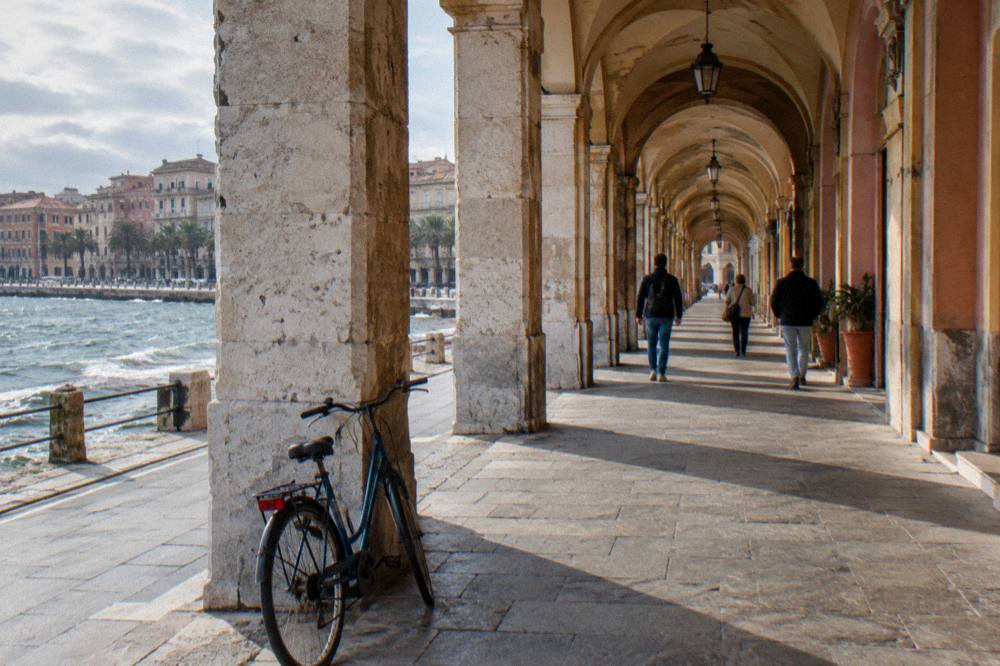
For the final word on where to point the wheels once you have decided how to ride, the route chooser guide matches ambition to itinerary, from a first flat spin at Poetto to a full coast-and-wetlands half day.
Common Questions About Cycling Safety In Cagliari
Is Cycling In Cagliari Safe?
Yes, with normal city caution. Bikes and compliant e-bikes may enter all central restricted-traffic zones without a pass, the metropolitan cycle network grew to a planned 366 km in 2026, and the Poetto promenade offers 8 km of riding largely away from cars. The demanding parts are the steep old-town lanes and busy arterial junctions.
Do I Need A Helmet To Cycle In Cagliari?
Italian law makes helmets mandatory only for riders under 18; for adults they are strongly recommended. Most listed tours include a helmet, but two old-town rides do not state it, so check the booking page if you want one provided.
Can E-Bikes Enter The Cagliari Restricted Traffic Zones?
Yes. The comune's rules permit bicycles and e-bikes to access and park in all Cagliari ZTLs, including Castello, Marina, Stampace and Villanova, with no pass required.
Are E-Bikes Allowed Inside Molentargius Park?
No. The park's green areas admit non-motorised bikes only, so guided e-bike tours ride the canals, public paths and the Poetto side instead, on routes that are flat and low-traffic.
Can I Cycle On The Sella Del Diavolo?
No, bicycles are prohibited on its Natura 2000 trails. The accepted pattern is to ride to the Calamosca or Poetto end and hike the promontory on foot, which is exactly what the Bike and Hike tour does.
What Is The Minimum Age For An E-Bike In Sardinia?
Fourteen is the national minimum age to ride a compliant e-bike on public roads and cycle paths, and an adult may carry one child up to 8 years in an approved seat.