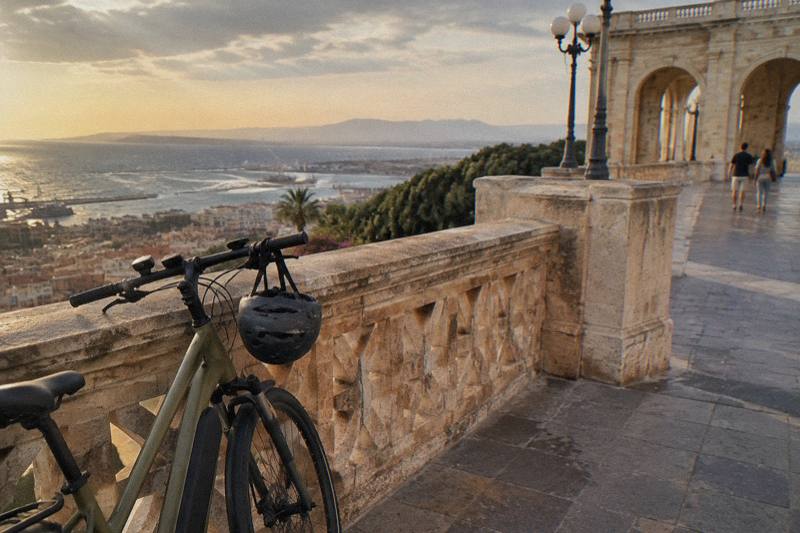
Which Is Nicer, Cagliari Or Olbia?
An honest comparison of Cagliari and Olbia for travellers choosing between Sardinia's capital and its northeast gateway, with cycling angles, prices and practical logistics.
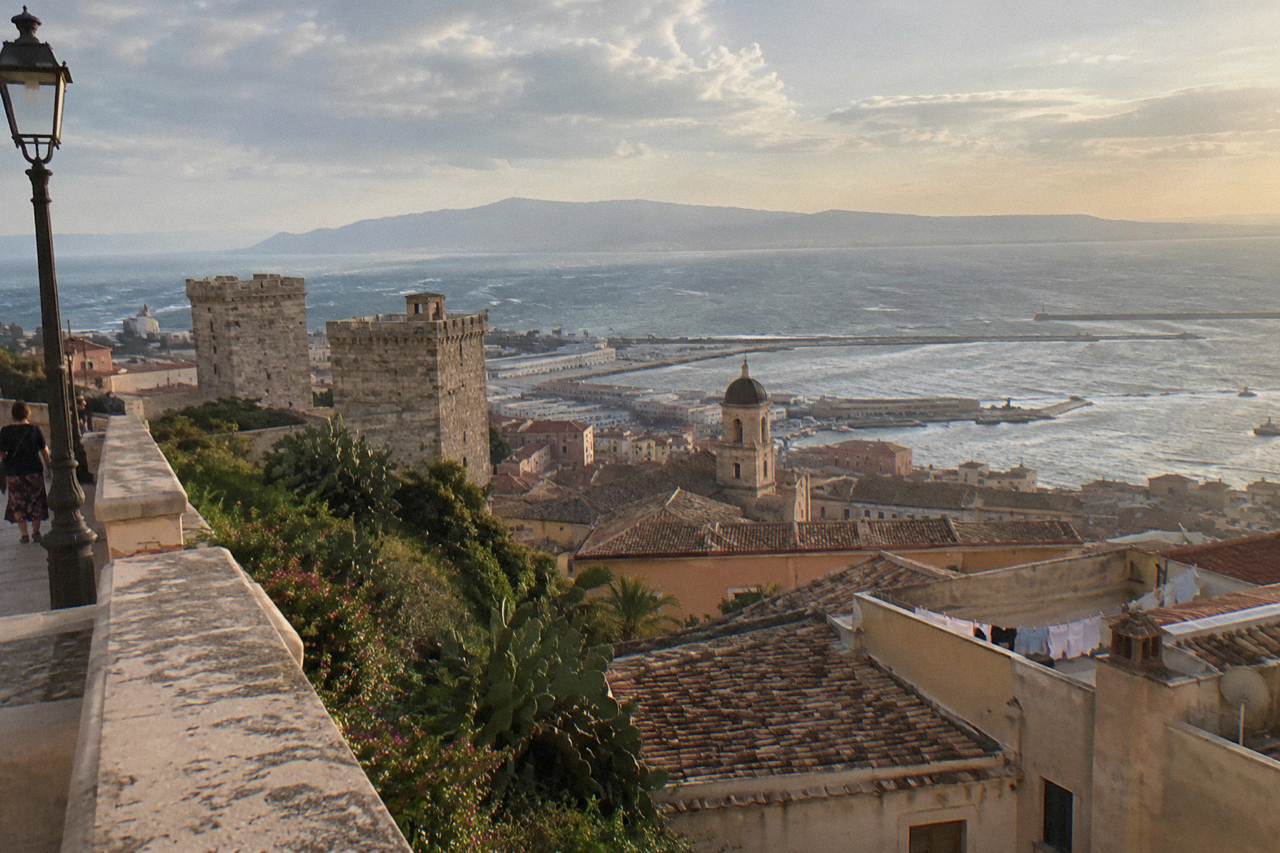
For most travellers, Cagliari is the nicer city to visit: it has the layered old town, the museums, the food scene, the Molentargius flamingos and an 8 km city beach at Poetto, all in one place. Olbia is nicer only if your real destination is the Costa Smeralda and you want a quick gateway with fast access to northeast beaches, ferries and the airport.
That is the short version, and it comes with an honest caveat: the two cities are not really competing for the same trip. Cagliari is Sardinia's capital, a working city of four historic districts stacked above a port, with a university, a cathedral, Roman ruins and a lagoon full of flamingos on its doorstep. Olbia, over on the northeast coast, is first and foremost a transit hub: the airport and the main ferry port for connections from mainland Italy sit right there, and most visitors pass through on their way to Porto Cervo, San Pantaleo or the beaches of the Gallura.
Ask the question another way and it gets easier. If your holiday is the city itself, with restaurants, sights and sea within reach of your hotel, Cagliari wins clearly. If your holiday is a villa or a beach club in the northeast and you simply need a bed for one night either side of a flight, Olbia does that job with less driving. The comparison below walks through what each city actually offers, then covers the logistics of doing both, because plenty of travellers land in one and end up curious about the other.
There is also a cycling angle, and it is not a small one. Cagliari has built a genuine case for seeing itself by bike: a metropolitan cycle network that grew from 243 km to 366 km under the Biciplan approved in February 2026, a seafront cycle and pedestrian promenade along all 8 km of Poetto beach, and a stack of guided e-bike tours through the old town and out to the flamingo lagoon. A good way to test whether Cagliari is your kind of city is to ride it on the first morning, and the selection below gathers the options that do exactly that.
Is Olbia Nicer Than Cagliari?
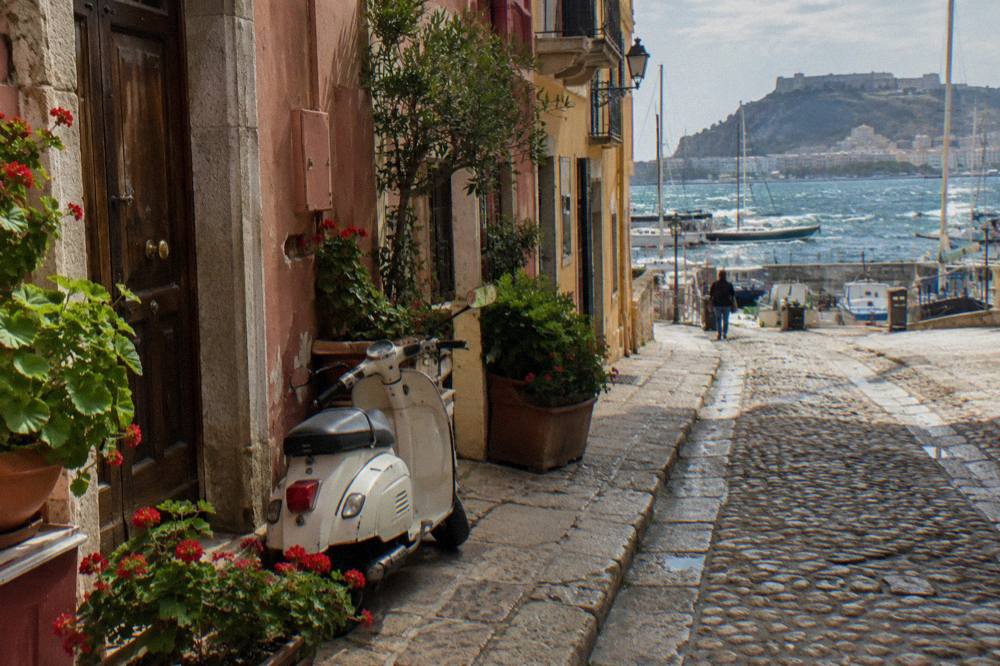
Olbia is nicer than Cagliari in one specific sense: it is closer to the famous beaches of the Costa Smeralda and the Gallura coast, and it makes a calmer, lower-effort base if sand is the whole point of your trip. Cagliari beats it on almost everything urban: history, museums, atmosphere, food variety and the sheer number of things to do without a car.
Start with what Olbia does well. It is a relaxed, manageable town with a pleasant waterfront, a granite-built Romanesque basilica in San Simplicio, and a well-regarded archaeological museum that tells the story of the nuragic and Phoenician ages. It is clean, easy to drive in and out of, and it sits within easy reach of the beaches that put Sardinia's northeast on the map. If your mental image of this island is turquoise water over white sand, Olbia is the doorway to that image, and Cagliari, three-plus hours of coastline away, simply is not.
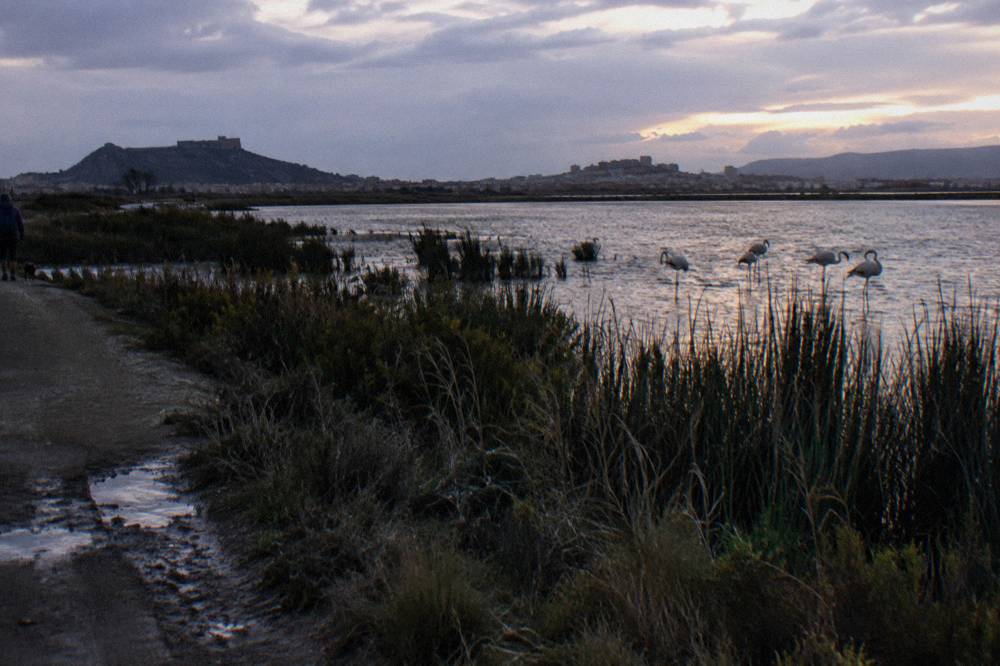
Cagliari's counterargument is depth. The city stacks four distinct historic districts, Stampace, Castello, Villanova and Marina, on and around a hill above the port, and the guided e-bike tours here are built around riding through all four. There is a Pisan-era cathedral, Roman cisterns and an amphitheatre carved into the rock, a panorama across the Golfo degli Angeli from the bastion terraces, and a food scene that runs from street markets to seafood restaurants. Then there is the thing no other Sardinian city can match: a regional park with year-round flamingos sitting between the centre and the beach. Molentargius-Saline holds flamingos twelve months of the year, with the colonies at their largest between April and September, and the park's green areas are open daily, 06:30 to 21:00 from March to mid-October and 07:00 to 18:00 through the winter, per the park's official information.
The honest summary is that Olbia is a gateway that outperforms as a base, while Cagliari is a destination that rewards staying put. Neither is "nicer" in the abstract. A traveller who spends three nights in Olbia town itself and never drives out will run out of things to do sooner than one who spends three nights in Cagliari without leaving. Flip it around, and a traveller who wants to swim at a different cove every morning will find Olbia's position worth far more than Cagliari's museums.
For cyclists the gap widens further. Cagliari's riding is varied and mostly flat where it counts: the old town hills are short and steep, the Poetto promenade is level for its full 8 km, and the flamingo canals run on quiet flat paths. Olbia's immediate cycling is functional rather than scenic, and its best rides, up the Gallura coast, assume you are already confident on roads. If a bike is part of your plan, the capital is the easier city to be a cyclist in.
Wondering How To Test Cagliari In One Morning?
An old town e-bike ride answers the "is it for me" question faster than any guidebook, and free cancellation applies.
Olbia To Cagliari
Olbia to Cagliari is a journey of roughly 260 km by road or rail across the island, most often done by train along the main line through the Sardinian interior or by car on the main cross-island roads. There are no direct flights between the two, and the train with a bike aboard costs a EUR 3.50 daily supplement per bicycle on Trenitalia regional services.
The Olbia to Cagliari link is the spine of Sardinian travel, and plenty of visitors end up using it in one direction or the other. Fly into Olbia, ride or drive south, and you see the island's interior, the granite hills of the Gallura giving way to the softer, scrubbier heart of Sardinia, before the road finally drops toward the capital's gulf. The regional train covers the same ground more slowly but far more pleasantly, and it is the option that matters most to cyclists: Trenitalia's regional services in Sardinia allow one bicycle, e-bike included, per traveller at a maximum length of 2 m, with a EUR 3.50 daily supplement or the equivalent second-class single fare, per the official bike-on-train conditions. Folded bikes within the size limits travel free.
Do not plan the connection tightly. Island trains are real but not frequent, and the exact journey time depends on the service; check the current timetable before committing a same-day plan, especially if a bike is coming along, because bike spaces are limited per train. The practical pattern most travellers settle on is one base in the north and one in the south, with the cross-island transfer treated as a travel day rather than a commute. Some people break the journey in the interior; others ride it straight through and treat the arrival in Cagliari, with the old town rising above the port, as the payoff.
Cyclists with a day or two in the capital after the transfer have a well-trodden set of options, and the guided products are the least hassle because the bike and the route all come sorted. The most reviewed guided ride in the city is the Ebike Tour with Local Guide of Cagliari's Old Town, about two hours through the historic quarters, run by Viva Cagliari Tour, rated 4.9 across 369 reviews and priced from $53 per person. If the transfer day leaves energy for more, the Old Town and Flamingos Combo adds the lagoon side of the city in about two and a half hours, rated 4.7 across 126 reviews and also from $56 per person, while the 2-Hour Guided E-Bike Tour with Coffee throws in a coffee stop along the way.
For a fuller picture of pairing trains and bikes across the island, the day trips by bike and train guide covers the mechanics, tickets and bike rules in detail.
Is It Better To Stay In Cagliari Or Olbia?
Stay in Cagliari if you want a city holiday: sights, restaurants and atmosphere within walking or riding distance, plus a city beach and a flamingo lagoon on the edge of town. Stay in Olbia if your trip is really about the northeast's beaches and boats, you arrive through its airport or port, and you want short transfers rather than long day drives.
The stay-vs-visit distinction does most of the work here. Cagliari rewards staying: its four old town districts are genuinely walkable, the Marina district below the walls is where much of the evening life happens, and Poetto means you never have to choose between a city day and a beach day. The climate supports that mix for most of the year, too. The capital's July and August normals run to average highs of 31.6 C and 32 C respectively with barely any rain, 3 mm in July and 10 mm in August, while the shoulder months of March to May and September to October bring milder highs and more bearable riding conditions. The trade-off is summer wind: the maestrale blows strongest from May to September, and exposed coastal stretches like the Poetto front can feel it in gusty afternoon spells.
Olbia rewards being a launchpad. Its own sights fill a relaxed day rather than a week, and its value is measured in drive times to the coves and resorts of the Gallura. The cost of that position shows up if you want variety: almost everything worth visiting is a drive away, so the trip becomes a road trip with a hotel base. That suits families with a rental car and couples anchored to one beach club very well, and it suits travellers who want to unpack once. It suits a car-free visitor far less well, and that is a real consideration in a comparison like this, because Cagliari is the more functional city without a vehicle.
| Factor | Cagliari | Olbia |
|---|---|---|
| Best for | City break, food, history, car-free travel | Costa Smeralda base, ferry and airport access |
| Old town | Four districts, hilly, layered | Compact, granite, quieter |
| Nature on the edge of town | Molentargius flamingos year-round | Immediate coast geared to driving out |
| City beach | Poetto, 8 km of sand | Waterfront, famous beaches a drive away |
| Cycling in town | Guided e-bike tours, flat promenade, 366 km regional network | Functional riding, best routes head up the coast |
| Getting around without a car | Walkable centre, buses, trains south and west | Mostly car-dependent for beaches |
| Typical stay | 2 to 4 nights | 1 night transit or full-week beach base |
Price-wise the two cities are different markets rather than rivals. On the Cagliari side, guided e-bike tours run from $50 per person for the 2-Hour Guided E-Bike Tour with Coffee, rated 4.7 across 281 reviews, up to $80 per person for the four-hour Gulf, Canals and Flamingos E-Bike Tour at Molentargius, rated 4.8 across 85 reviews. The budget option is self-guided, a delivered bike rental from $28 per person for around seven hours, with a city or mountain bike, note, not electric, brought to your door. Olbia is another story. Operators there set their own prices, so compare listings directly before booking.
One more angle worth naming: season and crowds. Cagliari's port is handling a record 2026 cruise season, 181 calls projected and over 600,000 passengers, a 26 percent rise on 2025, so midsummer days with multiple ships in port can thicken the old town's lanes around midday. Early mornings and evenings stay pleasant, and riders who take a morning e-bike tour largely stay ahead of that flow. Olbia absorbs its own tourist volume more diffusely across the northeast, but its airport and ferries concentrate arrivals in waves in July and August, when the Gallura as a whole is at its busiest and its most expensive.
For timing a Cagliari stay around weather and wind rather than raw heat, the best time to cycle in Cagliari guide breaks the year down month by month.
What Kind Of Traveller Suits Each City?
Choose Cagliari if you enjoy cities with grit and layers, want to eat well without driving, care about wildlife and viewpoints as much as beaches, or are travelling without a car. Choose Olbia if your holiday is anchored to the Costa Smeralda, you value short airport and ferry transfers, or you are renting a car and want the northeast as your playground.
It helps to sketch the two archetypes. The Cagliari traveller arrives, maybe by ferry into the port or by train from the north, stays somewhere in Marina or Castello, and spends days moving between the old town, the museums, the Poetto sand and the lagoon paths, mostly under their own power. Their highlights are a drink on a bastion terrace at sunset, a morning among flamingos, and long lunches. This traveller is often, though not always, the one browsing Cagliari Bike Tours for a first-morning orientation ride, because a bike compresses the city's hills into something manageable.
The Olbia traveller lands at the airport twenty minutes from the Gallura, picks up a car, and treats the town as a first and last night. Their highlights are a beach cove with water like glass, a boat day out of one of the Costa Smeralda ports, and dinners in a seaside piazza. They will tell you Olbia itself is pleasant and mean it, but their memories are all from within an hour's drive of it.
Neither archetype is wrong, and the strongest Sardinia trips often borrow from both: a few nights in the northeast and a few in the capital, linked by the cross-island train or the main island roads. Doing it in that order works nicely, because Cagliari makes a satisfying final act, and the city's scale means you can end a beach-heavy fortnight with two days of cathedrals, markets and salt-lagoon birds without feeling like you have swapped holidays.
Cruise passengers get a compressed version of the same choice, since some itineraries call at both. If your ship docks in Cagliari, the old town is close enough that a two-hour ride is a realistic shore excursion; the Old Town E-Bike With Coffee Stop, from $53 per person, rated 4.9 across 369 reviews, meets at Via Santa Margherita 22 with a maximum of nine travellers per group, and the cruise port guide covers how the timings fit a port day. An Olbia call, by contrast, usually pushes passengers outward toward the coast rather than into the town itself, which tells you most of what you need to know about how the two compare as places to spend time.
The comparison, in the end, is less about nice and more about intent. Cagliari is the island's showcase city; Olbia is its front door to the most glamorous stretch of coast. Know which of those your trip needs, and the question answers itself.
Common Questions About Cagliari Or Olbia
Which Is Nicer, Cagliari Or Olbia?
For a city break, Cagliari is nicer: it has the historic old town, the food scene, the Molentargius flamingos and the 8 km Poetto beach in one place. Olbia is nicer as a base for the Costa Smeralda's beaches and for fast airport and ferry access. Most travellers comparing the two directly end up preferring Cagliari as a destination and Olbia as a gateway.
Is Olbia Nicer Than Cagliari?
Only for beach-focused trips anchored in the northeast. Olbia sits closest to the Gallura's famous coves, which makes it the better base if sand is the whole point. On history, museums, food variety, wildlife and car-free travel, Cagliari is the stronger city.
How Do You Get From Olbia To Cagliari?
By regional train across the island's interior or by car, a long cross-island run either way. There are no direct flights between the two. Trenitalia regional trains take one bicycle, e-bike included, per traveller at up to 2 m length, for a EUR 3.50 daily supplement or the price of a second-class single ticket. Check current timetables before planning a same-day connection.
Is It Better To Stay In Cagliari Or Olbia?
Stay in Cagliari for a city holiday with sights, restaurants, a lagoon full of flamingos and a city beach within reach, especially without a car. Stay in Olbia if you are renting a car and basing yourself around the Costa Smeralda, or if you just need a night either side of an airport or ferry connection.
Can You See Flamingos From Cagliari But Not Olbia?
The Molentargius-Saline park sits between central Cagliari and Poetto, and its flamingos are present year-round, with the largest colonies from April to September. Guided e-bike tours ride the canals and public paths around the lagoon. Olbia has no equivalent urban lagoon colony; its wildlife interest lies along the northeast coast and offshore.
Are Cagliari's E-Bike Tours Suitable For A First Visit?
Yes. The old town rides last about two hours, cover the four historic districts with a local guide, and need only normal bike confidence; the listings note a minimum rider height of 150 cm on some products, and e-bike riders on public roads must be at least 14 under Italian rules. Prices start from $50 per person, and every guided tour listed here allows free cancellation.