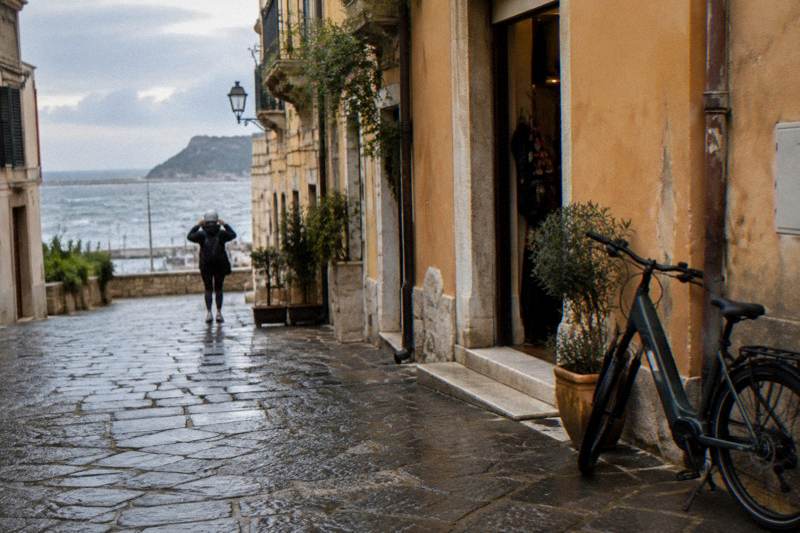
Castello And The Cagliari Old Town, Explained
Cagliari's old town is four districts stacked on a hill, and the climbs between them are the reason pedal assist sells itself here. This guide explains what each district holds, what the guided e-bike rides actually visit, and what it costs to put wheels under the whole thing.
Short answer
Castello is the fortified hilltop quarter at the top of Cagliari's old town, with Stampace, Marina and Villanova ranged around it. Guided e-bike tours cover all four districts in about two to three hours, from $50 per person, with the most reviewed option rated 4.9 across 369 reviews and meeting at Via Santa Margherita 22.
What Is The Castello District Of Cagliari?
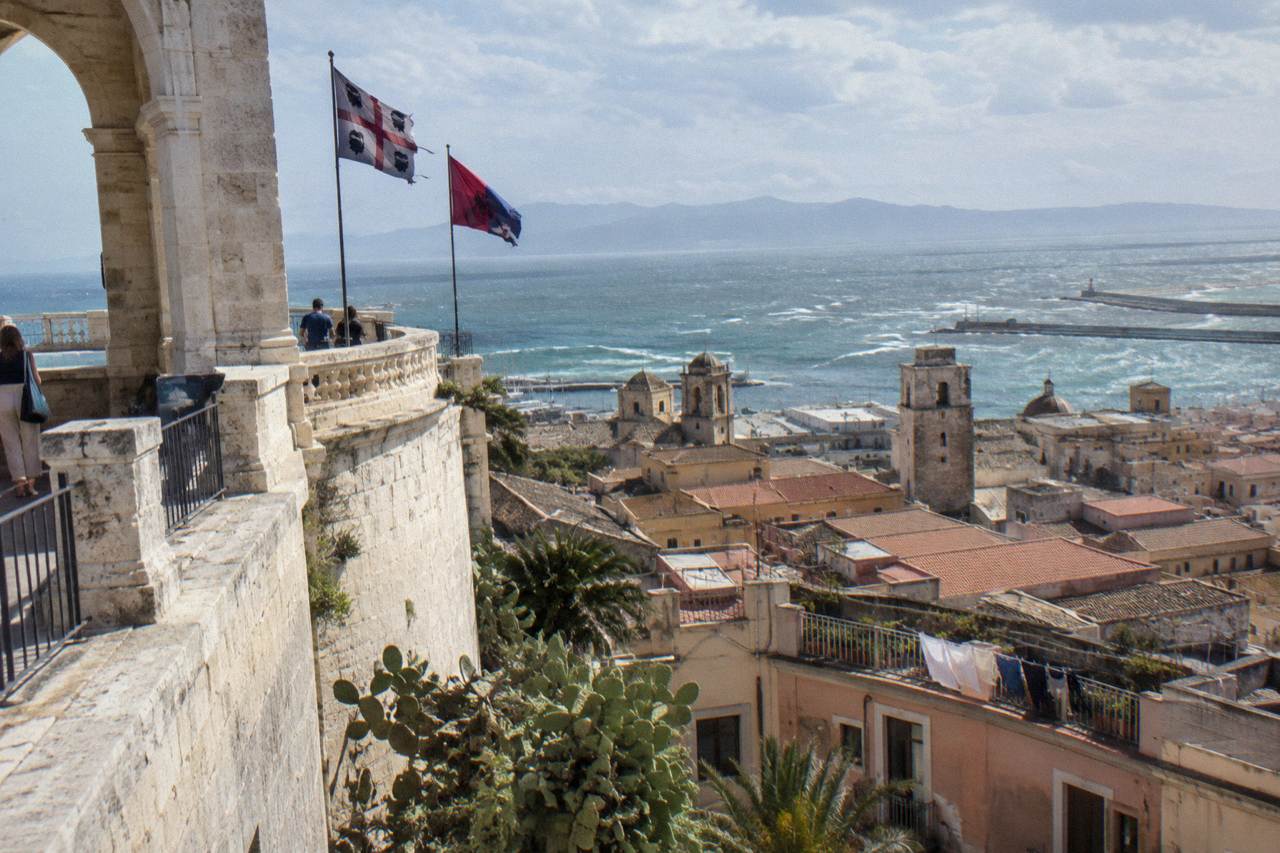
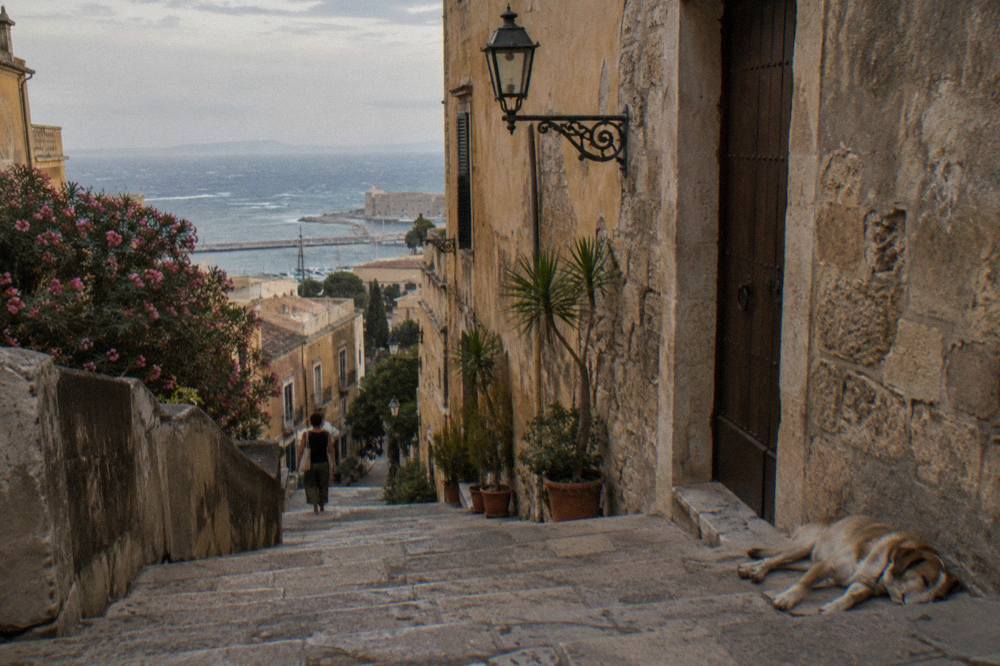
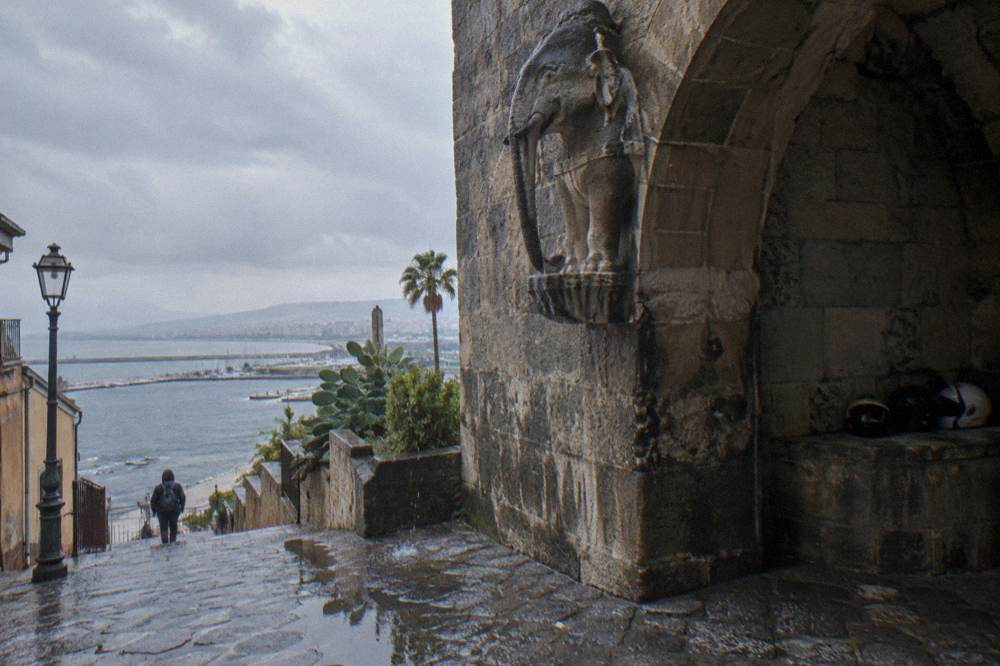
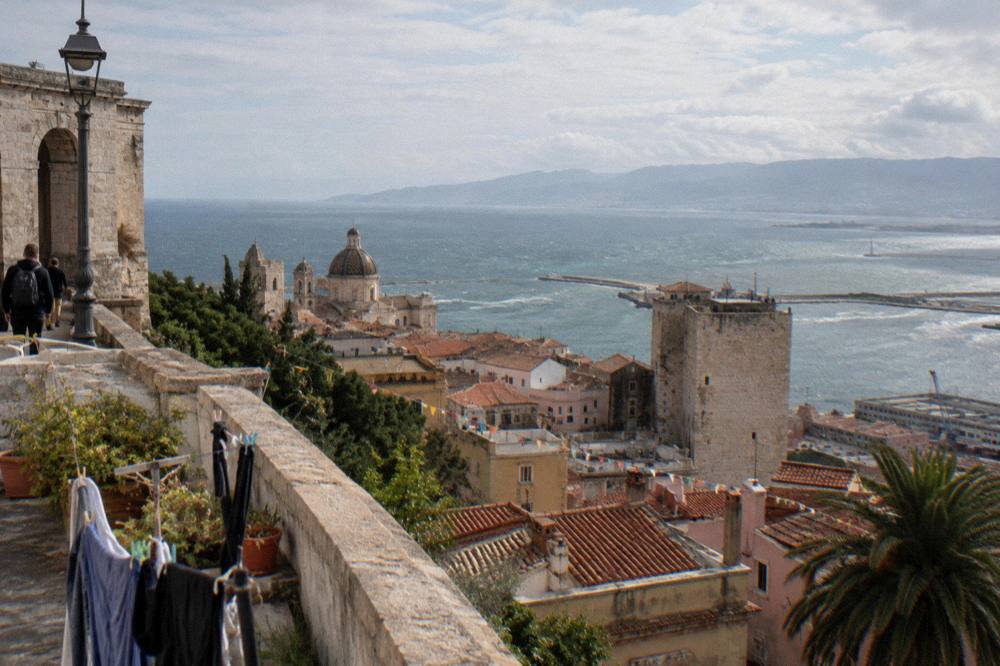
Castello is the walled medieval quarter that crowns the hill at the centre of Cagliari, built up under Pisan rule and still entered through its original gates. Two towers survive from the Pisan walls, the Torre dell'Elefante and the Torre di San Pancrazio, and the quarter holds the cathedral, the former royal palace and the terrace of the Bastione di Saint Remy, all stacked above the port on steep cobbled streets. The streets inside are narrow, which is exactly why pedal assist and this district belong in the same conversation.
The quarter sits high above the Marina district at the port, and the route between them is a sustained climb on stone. Visitors who walk it in August heat, when average highs run around 32 degrees, often arrive at the top regretting the midday start. An e-bike flattens that climb while leaving the viewpoints, the gates and the cathedral exactly where they have always been.
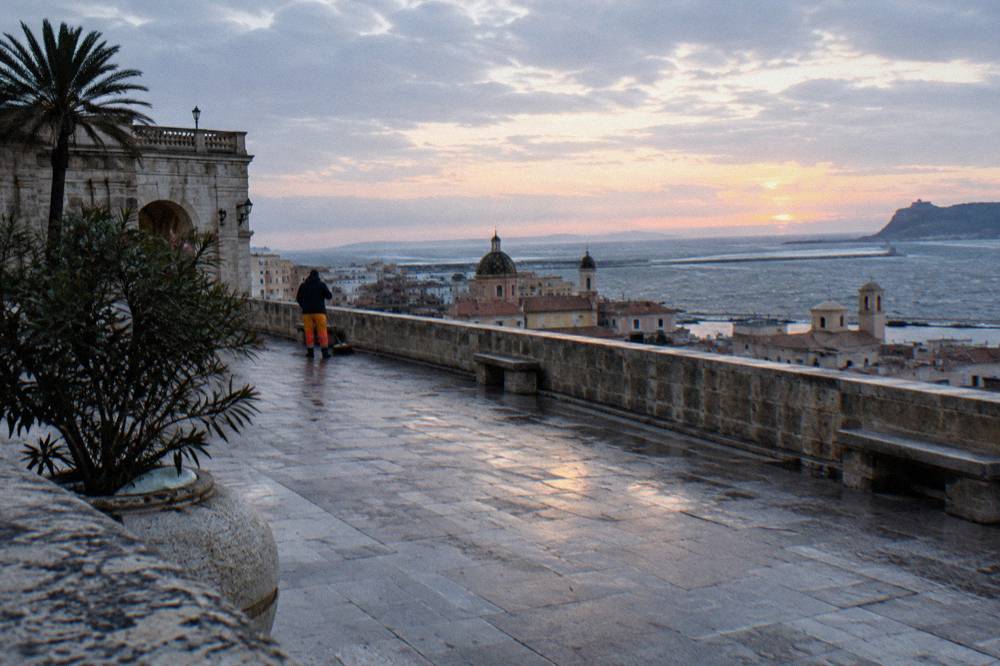
What surprises many first time visitors is that Castello is not a museum piece. People live here, small shops operate, and the Pisan and Spanish layers sit beside ordinary daily Sardinian life. The walls themselves frame the Gulf of Cagliari to the south and the lagoon and plain to the north, which is why nearly every guided old town ride builds in a terrace stop.
The name matters for planning too. When a listing says "old town tour", it almost always means the four historic districts around and including Castello, not Castello alone. Knowing which of the four a ride names tells you what you will actually see, and the next section breaks them apart.
What Are The Four Historic Districts Of Cagliari?
The old town of Cagliari is made of four quarters, Castello on the hilltop, Stampace to the west, Marina at the port below, and Villanova to the east, each with its own character and its own stops on the guided rides. The listing for the Old Town Guided E-Bike Ride names all four in its route. Understanding the layout helps you judge any tour, a walking route or a self guided day against your own interests. If you want a fuller sense of which quarter suits you best, our guide to the nicest neighborhood in Cagliari compares what each district offers a visitor and how to combine several on the same ride.
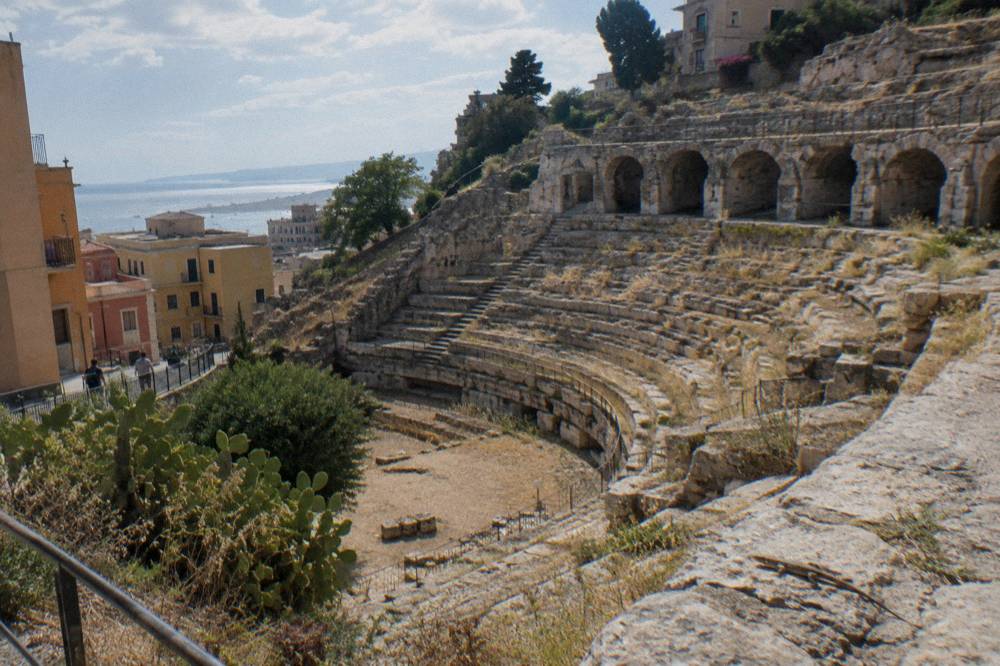
Castello is the monuments and viewpoints quarter, as described above. Stampace, to the west, holds the Roman amphitheatre carved into the rock, the botanical garden and the church of Sant'Efisio, the saint celebrated in the city's largest festival every 1 to 4 May. Marina is the flat district around the port and Via Roma, full of restaurants and the easiest walking streets, and it is where cruise passengers come ashore. Villanova, east of Castello, began as a medieval garden suburb and today pairs quiet lanes with the basilica of Bonaria on its slope toward the sea.
| District | Position | Signature sights | Terrain |
|---|---|---|---|
| Castello | Hilltop, walled | Torre dell'Elefante, cathedral, Bastione di Saint Remy | Steep, cobbled |
| Stampace | West of Castello | Roman amphitheatre, botanical garden, Sant'Efisio church | Sloped |
| Marina | Below Castello at the port | Via Roma, restaurants, cruise terminal approaches | Flat |
| Villanova | East of Castello | Basilica of Bonaria, quiet lanes, gardens | Gently sloped |
The four fit together in a loop, which is what makes them rideable at all. The Two-Hour E-Bike Tour With Coffee, from $50 per person and rated 4.7 across 281 reviews, names the Bonaria basilica and the cathedral among its stops with a cafe break built in. The Three-Hour Old Town E-Bike Tour gives the same set of districts more breathing room, from $56 per person, rated 4.7 across 18 reviews, and it includes a helmet and a bottle of water alongside the bike.
All three run from the same hill logic, you climb with the motor, you stop where it matters, and you roll back down to the port.
If you are weighing electric versus muscle power generally rather than for this hill alone, the e-bike and city bike comparison works through the trade offs for Cagliari's terrain in detail.
What Does The Old Town E-Bike Ride Look Like?
A typical guided old town e-bike ride in Cagliari runs about two to three hours, starts near the port at Via Santa Margherita 22, climbs through Marina into Castello, loops Stampace and Villanova, and pauses for viewpoints and a coffee before rolling back down. Every bike on the guided options is a pedal assist e-bike, meaning the motor helps only while you pedal and cuts out progressively at 25 km/h under Italian law, so you still ride, you just do not suffer the walls.
The Old Town Guided E-Bike Ride, the option this site features most often, is rated 4.9 across 325 reviews and costs from $56 per person. The listing names Stampace, Castello, Villanova and Marina as the route, includes bicycle rental, a local guide, bottled water and a coffee or soft drink, and sets the meeting point at Via Santa Margherita 22, a short walk from the cruise piers. The listing does not state a minimum rider height or any riding requirement. Hotel pickup is not included.
The ride is stop-start by design. You are not racing through the districts, you are parking at the Elephant Tower, walking a few steps for the view from the Bastione, and remounting. These listings are guided rides, with a guide leading the way through the old town.
Riders under 14 cannot ride a compliant e-bike on Italian public roads, and helmets are mandatory under 18 and strongly recommended for everyone else; several of the tours include one in the price anyway. Families weighing the whole question should read the bike tour with kids guide before booking, since the age rule shapes what is possible.
How Much Do Old Town E-Bike Tours In Cagliari Cost?
Guided old town e-bike tours in Cagliari cost from $50 to $56 per person for the two and three hour rides, with the two hour NewWaySardinia coffee tour at the low end and the two and three hour full district tours at $56, all with free cancellation. The small group alternative from the same meeting point runs from $53 per person. Prices move with season and date, so treat these as the floor the booking page confirms.
| Tour | Duration | Price | Rating | Group cap |
|---|---|---|---|---|
| Old Town Guided E-Bike Ride | ~2 hours | from $56 per person | 4.9 across 325 reviews | Not stated |
| Old Town E-Bike With Coffee Stop | ~2 hours | from $53 per person | 4.9 across 369 reviews | 9 |
| Three-Hour Old Town E-Bike Tour | ~3 hours | from $56 per person | 4.7 across 18 reviews | Not stated |
| Two-Hour E-Bike Tour With Coffee | ~2 hours | from $50 per person | 4.7 across 281 reviews | Not stated |
Two things separate these options more than price does. First, group size: one listing caps the group at nine, while the others leave it unstated, so check the booking page if a crowd matters to you. Second, inclusions: all four include a guide, the bike and a drink of some kind, and only one listing states a helmet, so the cheapest ticket is not always the cheapest day once you value what is inside it.

Against self guided rental, the delivered city or mountain bike option, from $28 per person, is the cheap way to get wheels, but it is not electric and it includes no guide, and this site's rental options do not include a lone e-bike. On the Castello hill specifically, that difference is the whole product. The rental versus guided tour guide breaks the math for longer stays.
Can You Ride A Bike Into The Castello ZTL?
Yes. Bicycles and compliant e-bikes may enter and park in all of Cagliari's limited traffic zones, including Castello, Marina, Stampace and Villanova, with no pass of any kind, because Italian law treats a pedal assist bike under 250 W with a 25 km/h cut out as a bicycle. The city's ZTL regulation, last amended by council deliberation n.168 of 2 December 2025, restricts motor vehicles, not velocipedi.
The Comune di Cagliari states this directly on its official ZTL page, which is worth knowing because drivers in your party face barriers and cameras that simply do not apply to you. What the page does not publish, and what you should not trust a blog to invent, is the ZTL's operating hours for cars; if a driver is meeting you afterward, have them check the comune page directly.
Inside Castello the constraint is not legal but physical: cobbles, steps and narrow lanes on a slope. Guided rides keep to the rideable streets and dismount at the tight spots, which is the practical reason to follow a guide who knows which arch leads where. On your own, the same rule of thumb applies, ride the wide lanes, walk the stairs, and the quarter rewards both. The wider set of guides lives on Cagliari Bike Tours.
The e-bike rules themselves come from the Italian highway code, as summarised in this explainer of the Codice della Strada: no licence, plate or insurance for a compliant bike, minimum age 14 on public roads, helmet mandatory under 18. Everything the tours rent you sits inside those limits.
What Should You Not Miss In Castello On Foot?
The five stops that justify the climb, in most visitors' order of value, are the Bastione di Saint Remy terrace, the Torre dell'Elefante, the cathedral of Santa Maria, the royal palace gardens, and the gate of Porta dei Due Leoni, all within a few minutes' walk of each other at the top of the hill. The Bastione terrace is free to enter and frames the whole gulf, which is why the guided rides treat it as a viewpoint stop rather than riding past it. If you want to stretch your budget further across the city, our guide to free things to do in Cagliari pairs this hilltop terrace with beaches, viewpoints, and a tip-based walking tour.
Below the walls, two more old town landmarks sit a short ride or walk from the Castello gates. The Roman amphitheatre, carved into the hillside rock, sits near the edge of the old town. The basilica of Bonaria stands on its own rise toward the sea, and its name is the origin of the Argentine capital's, a fact that surprises most visitors and delights Argentines in particular.
The listing for the Old Town Guided E-Bike Ride names the four districts rather than individual monuments, so treat the stop list as guide dependent and check the booking page for the current route card. What is not guide dependent is the layout: whichever door you enter Castello by, the towers and the Bastione are at the top and the food streets of Marina are at the bottom, and the e-bike handles the middle.
For travellers pairing the old town with the rest of the city, the one day Cagliari itinerary sequences Castello, Poetto and the flamingo lagoon into a single workable day, and the free things to do guide covers the viewpoints and terraces that cost nothing.
When Is The Best Time Of Day To Ride The Old Town?
Morning and late afternoon are the best windows for riding the old town: July and August average highs of 31.6 and 32 degrees respectively with as little as 3 mm of rain, so midday heat on the Castello cobbles is the single biggest comfort factor in summer, while spring and autumn days open the whole schedule up. The maestrale wind is strongest from May to September and can gust hard on exposed terraces in the afternoon, another argument for an early start.
Cruise traffic shapes the crowds more than the weather does. The 2026 season brought 181 port calls and over 600,000 passengers to Cagliari, and a quadruple ship day in late October put more than 11,000 passengers ashore at once, most of them heading up the same hill. On days with multiple ships in port, riding the districts before the walking groups climb, or waiting until they descend for lunch, changes how empty the lanes feel.
| Month | Average high | Notes for riding |
|---|---|---|
| March to May | Mild, climbing toward summer | Peak comfort, festival dates 1 to 4 May affect central streets |
| June | Warm | Peak flamingo nesting nearby |
| July | 31.6 degrees, 3 mm rain | Ride early morning, carry water |
| August | 32 degrees, 10 mm rain | Earliest starts of the year |
| September to October | Easing | Comfortable all day, busy cruise port |
| November to February | Cool, shorter days | Quietest lanes, check tour schedules |
The Sant'Efisio festival on 1 to 4 May sends processions through Stampace and along Via Roma, closing central streets to normal traffic flow for hours at a stretch. It is a spectacular thing to see and a complicated thing to ride through, so if your dates land on the festival, plan to walk those streets that weekend and ride the coast instead, the Poetto bike path guide covers that alternative.
Every tour on this page allows free cancellation, which pairs well with uncertain weather: book the morning slot, and if the maestrale turns the terraces into a wind tunnel, move the ride rather than fight it. Season by season detail, including sea temperatures and what closes in winter, is in the best time to cycle in Cagliari guide. And if the wind dies down and the afternoon turns warm, our guide to October swimming around Cagliari points to the beaches that stay pleasant late in the season.
How Does The Old Town Ride Compare With The Nature Rides?
The old town e-bike rides spend their whole time inside the four historic districts, while Cagliari's other guided rides head out to the Molentargius lagoon, the Poetto seafront and the Calamosca end of the Sella del Diavolo, so the choice is monuments versus flamingos and beach, or a combo tour that stitches both together in one outing. The Old Town and Flamingos Combo, rated 4.7 across 126 reviews, from $56 per person for about 2.5 hours, is exactly that stitch.
The nature rides answer a different question than this page does, but one rule from the facts shapes all of them: the Molentargius-Saline park permits only non motorised bikes inside its green areas, per the park's own access page, so guided e-bike tours ride the canals, public paths and the Poetto side rather than entering the park's managed zone. Flamingos are present at the lagoon all twelve months of the year, with the colonies at their largest from April to September, and the listings mention them without promising a sighting on any given day.
Similarly, the Sella del Diavolo promontory is a protected Natura 2000 site where bikes are barred from the trails, as local reporting on the enforcement complaint makes explicit. The honest version of that trip is a ride to Calamosca or the Poetto end, then the summit on foot, which is precisely how the Bike and Hike tour is built.
For the full picture on that side of the city, the Molentargius flamingo bike tour guide and the Sella del Diavolo by bike and on foot guide cover routes, seasons and the park rules in depth.
Common Questions About The Castello District Of Cagliari
What Is The Castello District Of Cagliari?
Castello is the walled medieval quarter on the hilltop at the centre of Cagliari, built up under Pisan rule. It holds the Torre dell'Elefante, the Torre di San Pancrazio, the cathedral, the former royal palace and the Bastione di Saint Remy terrace, and its steep cobbled streets sit above the port district of Marina.
Which Old Town Districts Does The Cagliari E-Bike Tour Visit?
The listing for the Old Town Guided E-Bike Ride names Stampace, Castello, Villanova and Marina, all four historic districts, in about two hours. The three hour version comes from Easycletta and sticks to the old town, with more time at each stop, and the two hour coffee tour from NewWaySardinia names the Bonaria basilica and the cathedral with a cafe break.
How Much Does An Old Town E-Bike Tour In Cagliari Cost?
Guided old town e-bike tours cost from $50 to $56 per person: the two hour coffee tour from $50, the two and three hour district tours from $56, and the small group alternative capped at nine riders from $53. All of them allow free cancellation.
Can You Cycle Inside The Castello ZTL?
Yes. Bicycles and compliant e-bikes may enter and park in all Cagliari limited traffic zones, including Castello, without a pass, per the comune's own ZTL page. The practical limits are the cobbles and slope, not the law, and guided rides dismount at the tight sections.
Where Do The Old Town E-Bike Tours Meet?
The Old Town Guided E-Bike Ride and the small group alternative both meet at Via Santa Margherita 22, a short walk from the cruise port. The three hour tour meets at the Easycletta shop and the two hour coffee tour at NewWaySardinia; hotel pickup is not included on the tours where the listing states it.
Is Castello In Cagliari Hilly Enough To Need An E-Bike?
For most visitors, yes. The quarter sits well above the port, the streets are cobbled, and summer highs average above 31 degrees. A pedal assist bike legally helps only while you pedal and cuts out at 25 km/h, so you still ride, but the walls stop being an obstacle and become the itinerary.