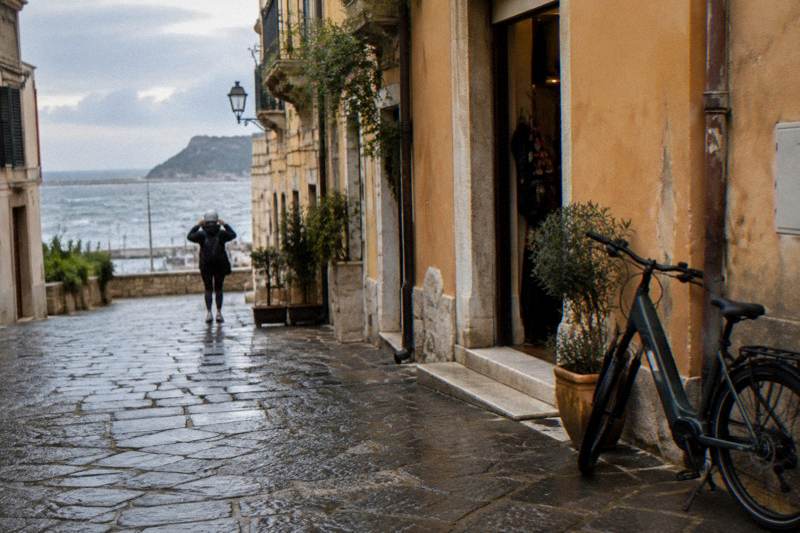
What Is The Nicest Neighborhood In Cagliari?
A district by district comparison of Castello, Villanova, Marina, Stampace and the Poetto side of Cagliari, with what each one offers a visitor and how to see several in one ride.
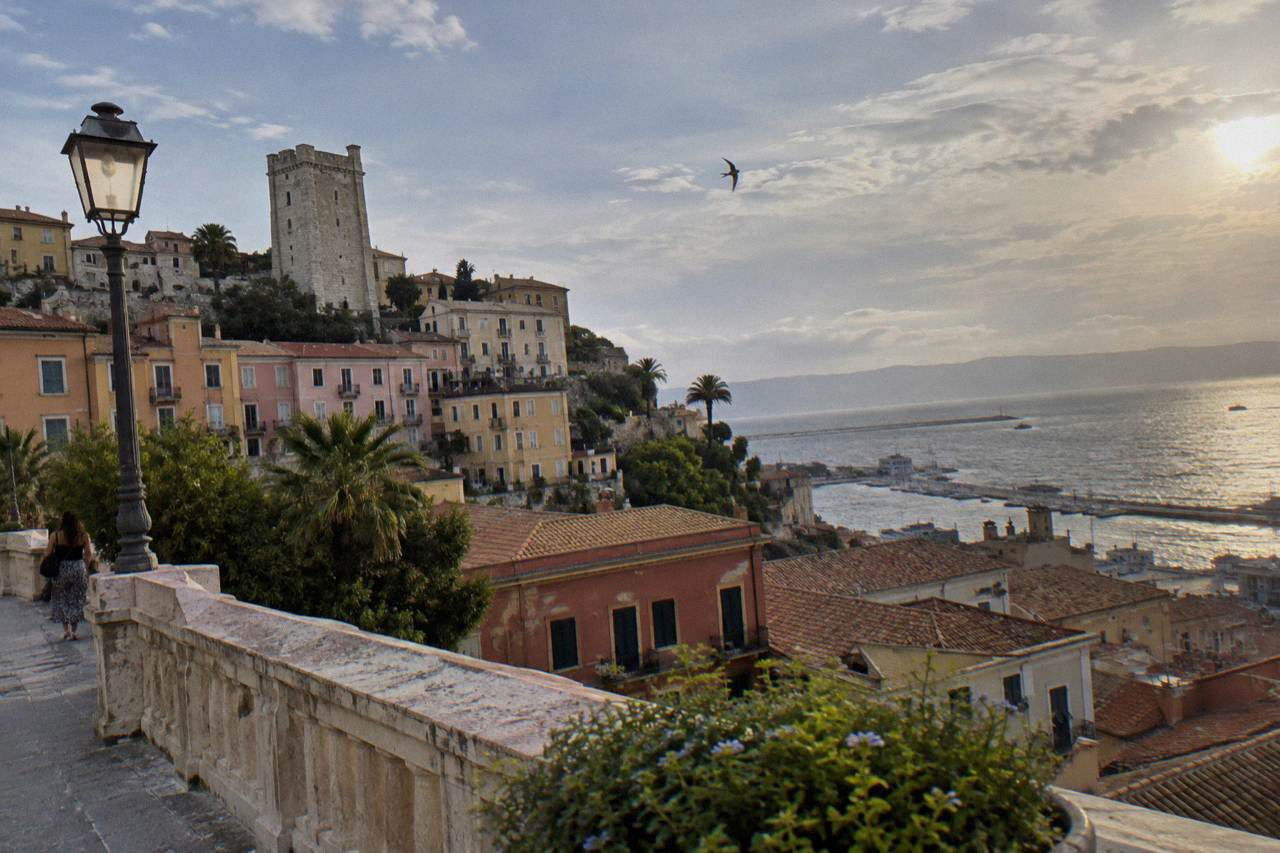
Cagliari stacks its history vertically and its daily life horizontally. The four ancient quarters, Castello, Marina, Stampace and Villanova, sit wrapped around each other on and below the central hill, while the modern city spreads east toward the lagoon and the long sand of Poetto. Anyone asking which part is nicest is really asking three separate questions: where the postcard views are, where the food and evening life are, and where you would actually want to sleep. The answers are not the same district, and the differences matter more here than in most mid sized Italian cities because the hill genuinely divides the town.
The practical geometry also rewards visitors who move between districts rather than staying put. The whole old core is compact, but the climbs between Marina at sea level and Castello on top are steep on foot, and the beach and flamingo lagoon sit outside the historic centre entirely. That is why two wheels, pedal or pedal assisted, have become a common way for short stay visitors to see all four quarters plus the coast in a single morning, a point worth keeping in mind as the districts are described below.
For most visitors the nicest neighborhood is Castello, the walled medieval quarter on top of the hill, for its towers, views and concentrated history. Locals often argue instead for Villanova, with its low houses, gardens and quieter café life, while food led travellers rank Marina, the old port quarter, highest. There is no single wrong answer, but there is a clear ranking per travel style, laid out district by district below.
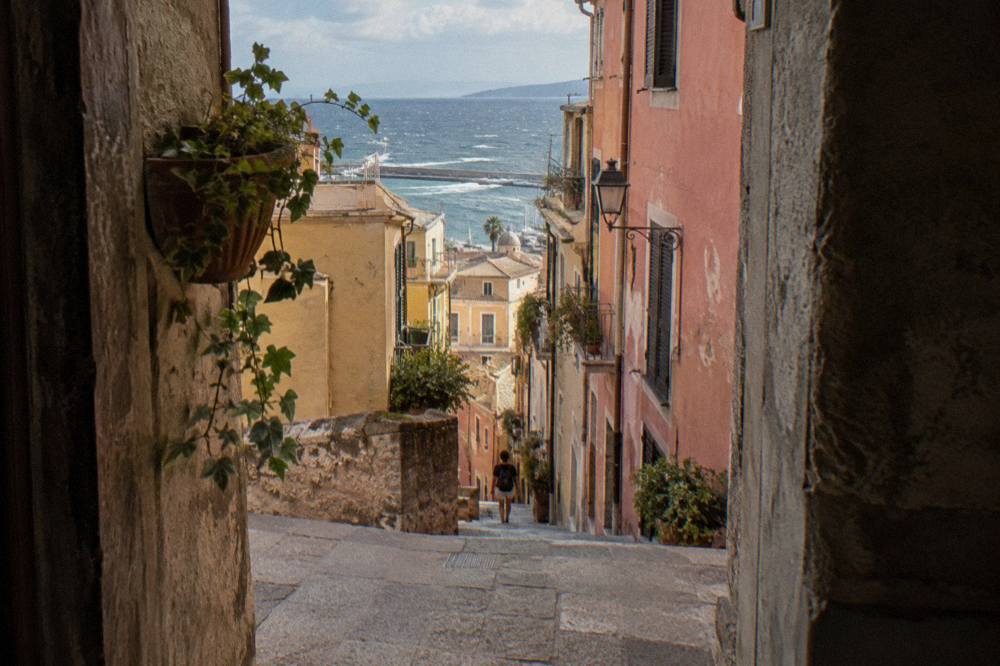
Castello earns its reputation on first impressions. You enter through the Bastione di Saint Remy, climb the central staircase, and the city changes character within a hundred metres: cobbled lanes, the twin Pisan towers of San Pancrazio and the Elephant, the cathedral, and long balconied streets that end abruptly at viewpoints over the lagoon and the port. Almost every classic photograph of Cagliari was taken here. The quarter is small enough to cross on foot in half an hour and dense enough to fill a full day.
What Castello does not offer is nightlife or much everyday shopping. By late evening the lanes empty, many restaurants sit down the hill, and the quarter reads as a monument rather than a living room. That is the trade: the best skyline, the least street life. Visitors who want atmosphere after dinner usually head down to Marina or across to Villanova.
The hill itself is the practical catch. The way up from the port side is a steady staircase climb that rewards you with the view and taxes anyone with knee trouble or small children. E-bikes flatten it completely, which is one reason the guided old town rides are so popular with cruise passengers and short stay visitors: the Cagliari Bike Tours selection of city rides exists largely because of this hill.
For travelers weighing the two approaches, the old town versus beach path decision breaks down the same trade-off by itinerary rather than by quarter.
Is Castello The Best Base For A First Visit?
Castello is the best base for a first visit of one or two nights, because the cathedral, the towers, the bastion viewpoints and several museums are all inside it and everything else sits within a short walk or ride downhill. The downsides are real: fewer restaurants after dark, higher room rates on average, and luggage dragged up steep lanes. For stays of three nights or more, Villanova or Marina usually work better as a base.
The argument for sleeping in Castello is simply time. Sunrise and sunset from the bastion walls are the two best light shows in the city, and hotel guests get them without commuting. The quarter also holds the main civic sights: the cathedral of Santa Maria, the royal palace, the archaeology museum and the tower climbs. A first time visitor staying elsewhere typically spends the whole first day walking up here anyway.
The argument against is equally simple. Castello is quiet by ten in the evening, grocery options are thin, and the lanes are stone steps in places, which turns every arrival and departure with a suitcase into a minor expedition. Cars are restricted in the limited traffic zones, though the details vary by street and by hour, so check the comune's own ZTL page before counting on a taxi drop-off at the door.
A common compromise is to sleep at the bottom of the hill and visit the top on a ride. The Old Town Guided E-Bike Ride from Via Santa Margherita 22 climbs into Castello with a local guide, covers all four historic districts in about two hours, from $56 per person, and is rated 4.9 across 325 reviews. Two other old town rides make the same climb with small variations, and all three appear in the comparison further down.
Why Villanova Feels Like A Village Inside The City
Villanova is the quarter locals most often name when asked for the nicest one to live in, and visitors tend to agree once they have walked it. It sits east of Castello's walls as a low maze of small houses, painted shutters, parish churches and garden courtyards, with far fewer monuments and far more everyday life. For atmosphere without crowds it is the strongest candidate in the city.
Historically the quarter held the artisans and gardeners who supplied the walled town above, and its scale never changed: single storey and two storey homes, narrow lanes, tiny squares with a bench and a fountain. The church of San Giacomo anchors one edge, and the walk up to the Basilica of Bonaria along its flank is one of the pleasantest gradients in the city. Compared with Castello, Villanova is flat at its eastern end and gently rising toward the walls.
Eating in Villanova means neighbourhood trattorias and wine bars rather than tourist menus, and the pace after dark is conversational rather than festive. It is also the quarter where the city's festivals feel most like family events: the Sant'Efisio procession on 1 to 4 May, whose route runs through Stampace and along Via Roma, sends side celebrations, bands and traditional dress into the surrounding streets, and future editions keep the same pattern.
The practical strength of Villanova as a base is position. It borders Castello on one side, the modern centre and its markets on another, and it sits on the natural line toward the Poetto side of the city, which matters if you plan to ride to the beach or the flamingo lagoon. The Poetto bike path guide describes that route in detail.
Marina: The Seafood Quarter By The Port
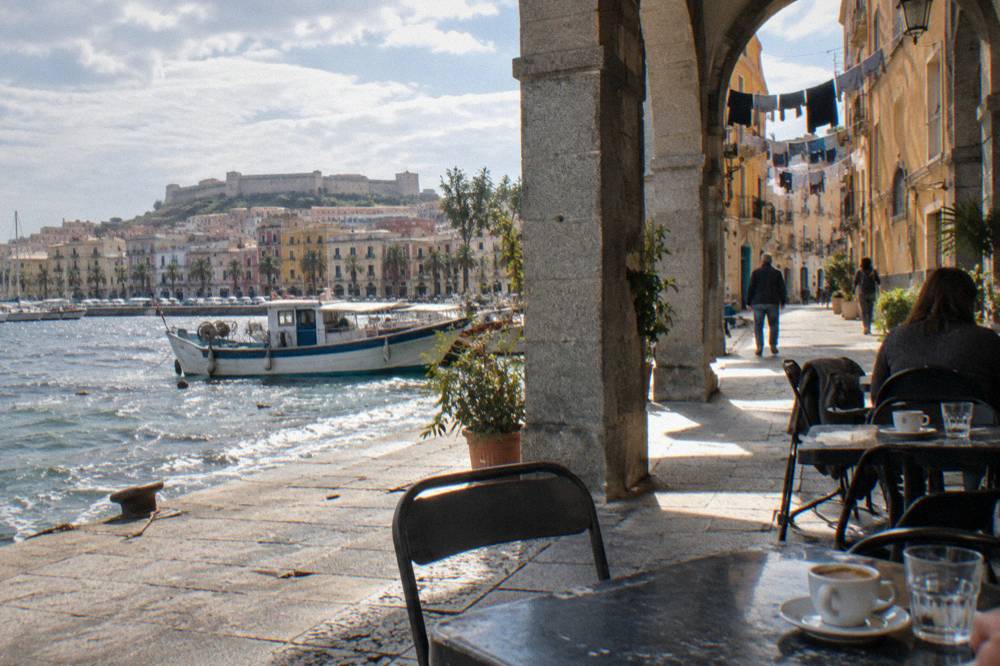
Marina is the old merchant and fishermen's quarter stretched along the port below Castello, and it is unambiguously the best district for eating. Its grid of low arcaded streets holds the densest concentration of seafood trattorias, markets and aperitivo bars in the city. It is also the flattest quarter, the closest to the cruise terminal, and the most convenient for arrivals, which cuts both ways in summer.
The quarter's character comes from its history as the foreigners' district, when Pisans, Genoese, Jews, Greeks and Arabs traded below the walled town. The church of Sant'Antonio and the long port-facing streets belong to Marina; the Roman amphitheatre and the covered market of San Benedetto are both in neighbouring Stampace. In the evening the tables fill with locals over grilled fish and breaded cutlets, which is the tell that matters.
For cruise passengers Marina is the practical front door. The terminal sits at its western edge, and the first real street you meet, including Via Santa Margherita where several guided bike rides gather, is already inside it. The Old Town E-Bike With Coffee Stop, rated 4.9 across 369 reviews, from $53 per person, caps its groups at nine and uses that same meeting point, which makes it one of the smoothest port-day options: off the ship, on the bike, up the hill within the first twenty minutes.
Marina's weakness is the flip side of its popularity. In peak cruise season the port area absorbs large numbers of day visitors, and the 2026 season brought 181 port calls and more than 600,000 passengers to the city, so the western edge of the quarter can feel processed by mid morning. Walk three blocks east and that thins out fast.
Stampace: History, Street Life And The Carnival Heart
Stampace is the artisans' and tanners' old quarter below Castello's southern walls, and it is the locals' answer for nightlife and character outside the fish-and-port scene of Marina. It holds some of the city's oldest churches, its crypts and Roman ruins, and the anchor of its identity, the sanctuary of Sant'Efisio, whose festival the quarter owns every May. For evening life it competes with Marina and usually wins on price.
The sanctuary on the piazza named for the saint is the emotional centre: the festival that begins there on 1 May draws enormous oxen-drawn carts, riders and traditional choirs through streets that otherwise run quiet for the rest of the year. Around it, Stampace mixes artisan workshops, small wine bars, students from the nearby university buildings, and a stretch of trendy nightlife around Piazza Yenne and the Largo Carlo Felice end, which technically borders the modern centre.
The 2-Hour Guided E-Bike Tour with Coffee, rated 4.7 across 281 reviews, from $50 per person, includes a coffee stop and rides the old town quarters with a local guide, meeting at the NewWaySardinia base. It is a good fit for visitors who want Stampace and Castello covered together without committing a whole morning.
The quarter also holds two of the city's more surprising sights, the Roman amphitheatre on its slope and the early Christian domus with underground rooms carved from stone, both a short walk from the sanctuary. Like the rest of the historic core, Stampace sits inside the limited traffic zones where bikes ride freely, so it crosses well by bicycle even when car access is restricted.
Poetto And Calamosca: Beach Life A Short Ride Away
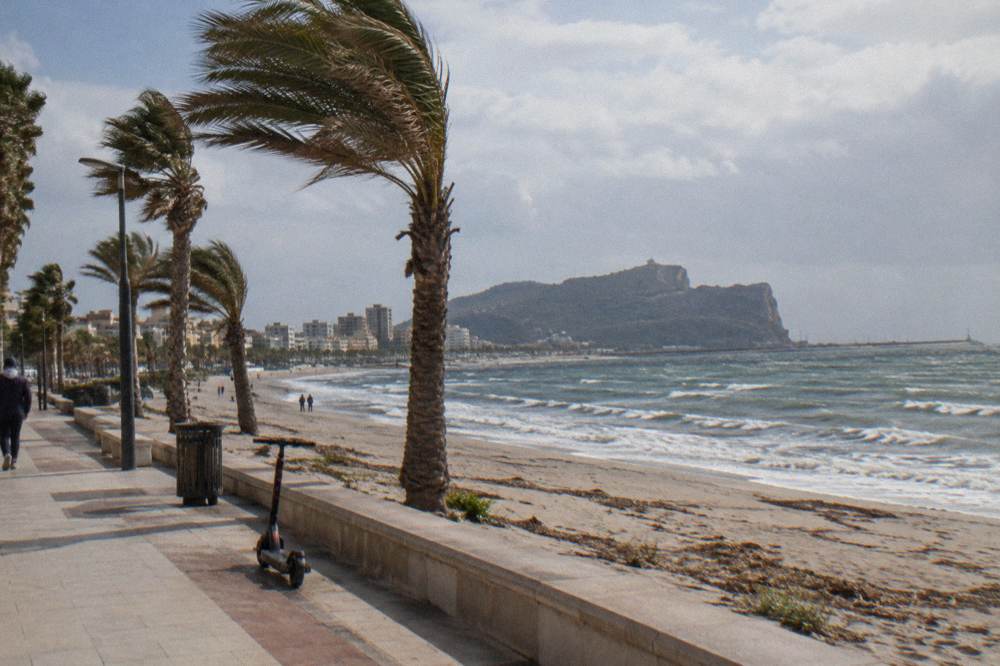
If your version of nicest includes sand and water, the Poetto side wins, and it is less a neighborhood than an eight kilometre stretch of beach, beach clubs and apartment blocks facing the sea, with the Molentargius flamingo lagoon directly behind it. It is the flattest, most family friendly and most outdoor oriented part of the city, but it is far from the old town's sights and thin on historic atmosphere.
Locals treat Poetto as the city's front room: eight kilometres of sand running from the Sella del Diavolo headland toward Quartu Sant'Elena, with a seafront promenade that people walk, run and cycle its whole length, and licensed beach clubs renting loungers and umbrellas for the equivalent of EUR 10 to 15 a day. Behind the sand sits the Molentargius-Saline park, whose green areas are open 06:30 to 21:00 from March to mid October and 07:00 to 18:00 through the winter per the park's official page, with pink flamingos present year round and the largest colonies from April to September.
The catch is distance. Poetto is outside the historic core, connected by bus and by bike, and staying there means commuting into town for the cathedral, the museums and most of the restaurants. The flat coastal riding is the compensation: the seafront path is mostly asphalt, and the metropolitan cycle network, expanded to 366 km by the plan approved in February 2026, links the beach toward the city and the lagoon.
One boundary rule matters here. The Sella del Diavolo headland that closes Poetto's southern end is a protected Natura 2000 site where bicycles are not permitted on the trails; the correct pattern, and the pattern the guided Bike and Hike tour follows, is to ride to the Calamosca or Poetto end and hike the headland on foot.
How Do The Neighborhoods Compare For Visitors?
The five areas sort cleanly by travel style: Castello for sights and views, Marina for food and port convenience, Villanova for quiet atmosphere, Stampace for nightlife and local character, Poetto for beach and flat family riding. The table below compares them on base suitability, evening life, terrain and the practical detail that most often decides the choice, how easy each is to reach and leave with luggage or a bike.
| District | Best for | Evening life | Terrain | Luggage and access |
|---|---|---|---|---|
| Castello | Monuments, towers, viewpoints | Quiet, empties early | Steep hill, steps and cobbles | Hard with suitcases, fine by e-bike |
| Marina | Seafood, markets, cruise arrivals | Lively, restaurant led | Flat | Easiest, port and station side |
| Villanova | Local atmosphere, gardens | Calm, café and trattoria | Mostly gentle | Moderate, lanes can be narrow |
| Stampace | Nightlife, churches, festival roots | Liveliest, wine bars | Gentle rise to the walls | Moderate, near the station side |
| Poetto side | Beach, flamingos, family cycling | Beach bars, seasonal | Flat, seafront path | Needs a bus or bike ride into town |
Two honest caveats belong beside any table like this. First, the quarters are small and contiguous, so choosing a base is a decision about where you sleep and eat, not about what you can see: everything in the table is within a short ride of everything else. Second, seasonal rhythm shifts the ranking. From roughly October to April many Poetto beach bars reduce hours, which tilts the balance back toward Marina and Stampace for an off season visit, while summer heat and the strong maestrale wind afternoons push daytime plans toward the morning and the water.
Seeing Several Neighborhoods In One Ride
The single most efficient way to answer the nicest-neighborhood question for yourself is to ride all four historic quarters in one loop, which takes about two hours with a guide and costs from $50 to $56 per person on the city e-bike rides. The Old Town Guided E-Bike Ride covers Stampace, Castello, Villanova and Marina, rated 4.9 across 325 reviews, and its electric assist removes the one obstacle, the hill, that segments the quarters on foot.
The loop logic is simple. Start in Marina near the port, climb once into Castello while legs are fresh, descend through Villanova's flat lanes, and finish through Stampace back toward the centre, with the guide naming what you are looking at in each. The meeting point at Via Santa Margherita 22 sits a few minutes from the cruise terminal, the rides include bike rental and a local guide, and the listing mentions a coffee or soft drink on the flagship option. Free cancellation applies across the guided city rides, so weather decisions can stay open.
The three old town rides differ mainly in pace and depth. The Three-Hour Old Town E-Bike Tour, rated 4.7 across 18 reviews, from $56 per person, adds time and includes helmet and water; the two-hour options trade depth for portability. Whichever you pick, the practical framing from the guided tour versus rental comparison holds: a guide earns its cost most clearly on a short first visit, when you want the geography explained once rather than decoded from a map.
Practical Rules For Riding Between Neighborhoods
Under Italian rules, compliant e-bikes count as bicycles, so you may ride cycle paths and urban roads anywhere a bike can go. Limited traffic zone rules vary by street and hour, so check the Comune di Cagliari ZTL page before heading into the centre. Riders must be at least 14, helmets are mandatory only under 18, and the motor assist stops at 25 km/h, helping on climbs while keeping descents bicycle-slow.
The rules that matter day to day are few. Stay off the Sella del Diavolo trails, where bikes are prohibited. Inside Molentargius park's green areas only non-motorised bikes are covered by the park's own wording, so the guided flamingo rides use the canals, public paths and the Poetto side rather than the park interior. On shared lanes and promenades, marked itineraries and pedestrian priority apply.
Weather planning beats rule planning. July and August average highs of 31.6 and 32 degrees with almost no rain, the maestrale wind blows hardest from May to September, and autumn brings the cruise peak into early November. Morning starts solve all three at once, and free cancellation on the guided rides keeps a windy forecast from costing money.
Common Questions About Neighborhoods In Cagliari
What Is The Nicest Neighborhood In Cagliari?
Castello is the nicest for most first time visitors because it holds the towers, cathedral, bastion views and museums. Villanova is the nicest for quiet local atmosphere, Marina for seafood and port convenience, Stampace for nightlife, and the Poetto side for beach and flat riding. Since all five sit within a short ride of each other, the choice is really about where to sleep and eat.
Which Cagliari District Is Best For Food?
Marina, the old port quarter below Castello, has the densest concentration of seafood trattorias and holds the covered San Benedetto fish market, one of the largest in Italy. Stampace competes with wine bars and trattorias at lower prices, while Castello itself thins out after dark.
Where Should You Stay In Cagliari For One Night?
Castello if you want the views and sights at your door and do not mind steps and evening quiet. Marina if you arrive by ship or train, want dinner options and need a flat base. Both put the full old town within a short walk or ride.
Can You Cycle Between The Neighborhoods?
Yes. Compliant e-bikes count as bicycles under Italian law and may use cycle paths; limited traffic zone rules vary by street and by hour, so check the signs as you go. The only significant climb is into Castello, which electric assist handles easily. Bicycles are prohibited on the Sella del Diavolo trails, where you hike on foot instead.
Is Poetto Worth Staying Near Instead Of The Old Town?
Poetto suits beach-focused and family stays: eight kilometres of sand, a seafront promenade people cycle and run, and the flamingo lagoon directly behind it. The trade is distance from the cathedral, museums and most restaurants, and beach bar hours shrink from roughly October to April.
How Long Does It Take To See All Four Historic Districts?
On foot, most of a day with the Castello climbs. On a guided e-bike ride, about two hours, which is exactly what the flagship Old Town ride does, covering Stampace, Castello, Villanova and Marina with a local guide from $56 per person.