Day Trips From Cagliari By Bike And Train
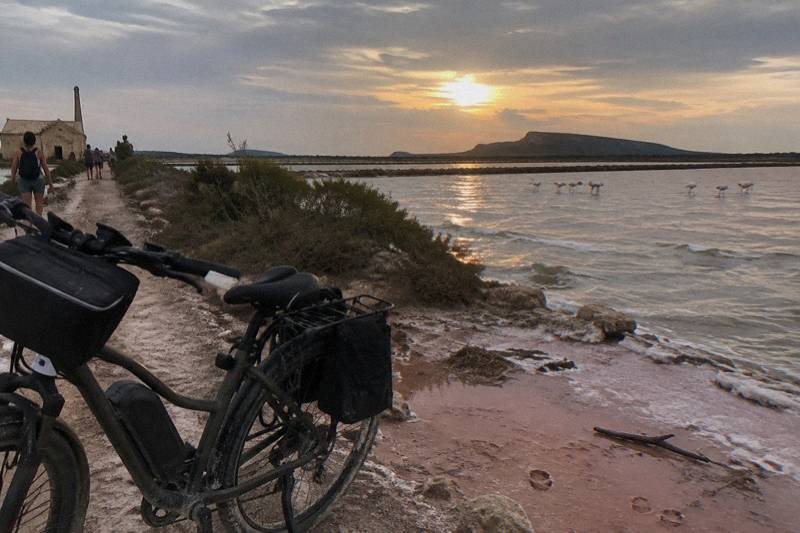
Cagliari sits at the hinge of southern Sardinia: flat lagoon paths out of the city, a regional rail network along the southern coast, and hills that open up within an hour of pedalling. A bike travels on regional trains for a EUR 3.50 daily supplement, Pula and Nora are reached by ARST bus instead, and the guided evening ride reaches the Sant'Antioco salt flats.
Short answer
Guided e-bike day trips from Cagliari run from $56 to $80 per person, and a delivered rental bike starts from $28 per person for about seven hours. Trenitalia regional trains carry one bike per traveller for a EUR 3.50 daily supplement. Villasimius, Pula and the wine hills are the three classic day-trip directions.
Cagliari is small enough to cycle out of and connected enough to leave by rail. That combination is what makes day trips from Cagliari by bike and train genuinely practical rather than a novelty: the city's own paths get you onto flat lagoon and seafront riding within minutes, the regional network runs along the southern coast, and the hills behind the city hold wineries within about an hour of pedalling, as one operator's countryside listing describes. The metropolitan cycle plan approved in February 2026 grows the mapped network from 243 km to 366 km of routes across Cagliari and 17 neighbouring municipalities, so the stitching between city riding and countryside riding keeps improving.
This guide lays out the three classic directions, what the train rules actually say, what a guided option costs versus riding on your own, and where a bike simply is not allowed. If you are still weighing whether two wheels suit you at all, the comparison in E-Bike Versus City Bike in Cagliari settles the question of which machine fits which day trip.
Why Combine Bikes And Trains For Day Trips From Cagliari?
Combining a bike with regional transport turns Cagliari into a base for the whole south of the island: you ride the flat city and lagoon miles yourself, then let buses and trains carry you past the long, trafficked stretches toward Villasimius, Pula or the Iglesiente coast. Check current operator rules for taking a bike along. One bike per traveller travels on Trenitalia regional trains for a EUR 3.50 daily supplement.
The logic is simple. Southern Sardinia's best day-trip targets sit within easy reach of the city, and not every kilometre between here and there is worth pedalling. The coastal approach to Villasimius is spectacular; the industrial belt on the way out of the metropolitan area is not. The train skips the dull part. You arrive at a station with the interesting riding already in front of you, and the same EUR 3.50 ticket brings you and the bike home again.
The same trick works in reverse for cruise visitors and short-stay travellers who have no bike at all. A delivered rental solves that: the operator's listing for Bike Rental Delivered to You covers about seven hours, from $28 per person, with a city or mountain bike brought to your location anywhere along the seafront. It is a plain bike, not electric, which matters if your plan involves the hills; the details on that distinction are in Bike Rental in Cagliari Versus a Guided Tour.
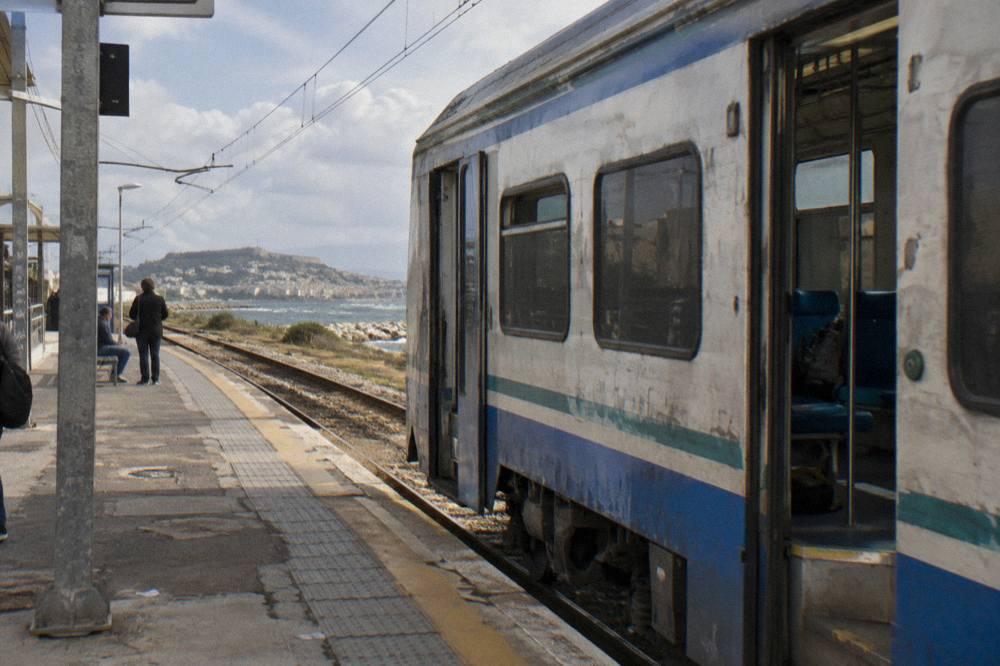
For riders who prefer to keep the whole day inside one guided package, the choice below covers the three formats that map onto a day trip: a sunset ride far from the city, a delivered rental for a self-guided rail day, and a half-day flamingo circuit close to home.
Can You Reach Villasimius And Capo Carbonara By Bike?
Yes: route planners show well-documented coastal routes from Cagliari toward Villasimius with views over the Capo Carbonara area, and the riding is a genuine full-day commitment rather than a morning spin. The train does not serve Villasimius, so this one is pedal power or a bus, which makes it the trip that rewards an early start and an honest look at the distance.
What the route looks like matters more than the number. You leave the city on the Poetto side, follow the 8 km of sand from the Sella del Diavolo headland toward Quartu Sant'Elena on the seafront promenade, then continue along the coast road as it turns rocky and scenic. The stretch after Quartu is the part people come for: clear water, headlands, and the protected marine area around Capo Carbonara at the end. Cycling around Cagliari is well served: the metropolitan cycle network totals 366 km of routes.
Two cautions worth knowing before you set off. First, the maestrale, the northwest wind that dominates Sardinian weather, blows hardest from May to September and can make the return leg along the exposed coast a grind; check the forecast and ride out into the wind if you can. Second, summer traffic on the Villasimius road is real, especially on cruise days. The port is projecting 181 calls and over 600,000 passengers across the 2026 season, and a single October 2026 day saw four ships and more than 11,000 visitors in town. Shoulder months are calmer on both counts.
If a full Villasimius day sounds like more bike than you want, the honest comparison is with Which Cagliari Bike Route Is Right For You, which matches routes to fitness and time. And if you want the long-ride feel without the logistics, the sunset salt-flats ride at the bottom of this page is the closest guided equivalent: coastal, quiet and capped at six riders.
How Do You Take A Bike On A Train In Sardinia?
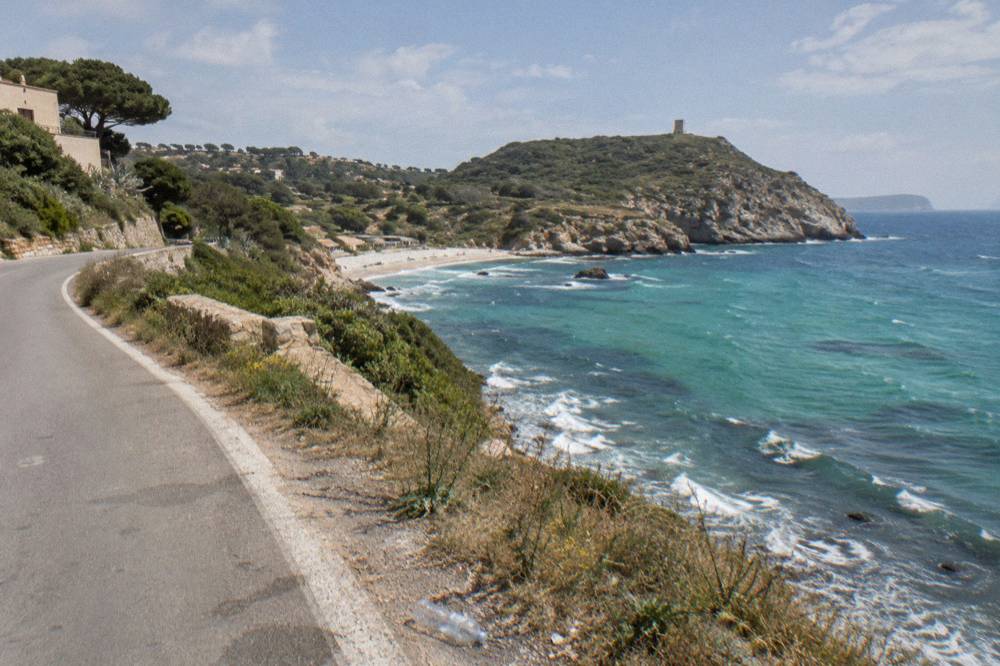
Trenitalia regional trains in Sardinia allow one bicycle per traveller, e-bikes included, up to 2 m in length, for a EUR 3.50 daily bike supplement or the price of a second-class single for the same journey. Folded bikes within size limits travel free. City buses are stricter: non-folding bikes are not accepted, so plan the last mile on foot or by bike.
The bike supplement is the single most useful number in Sardinian bike logistics, and it applies to the regional trains that serve the southern coast and the Cagliari hinterland. The rules, published on Trenitalia's official bike page, also cover Intercity services: six bike hooks in carriage 3 and two e-bike charging points, with the Intercity bike service priced separately. For day trips from Cagliari the regional trains are the ones you want anyway, since they stop at the small stations the coast actually runs through.
| Question | The rule as published | What it means for your day trip |
|---|---|---|
| Bike on a regional train? | One bike per traveller, EUR 3.50 daily supplement | Buy the bike supplement for the train before you board |
| E-bike on a regional train? | Same rule, e-bike included, max length 2 m | A standard pedal-assist bike fits; a cargo e-bike may not |
| Folded bike? | Free within size limits | A folding bike makes the whole day simpler |
| City bus (CTM)? | Non-folding bikes not accepted | Do not plan a bus leg with a full-size bike |
| Inside Cagliari's limited-traffic zones? | Bikes and compliant e-bikes ride in without a pass | No permit worry in Castello, Marina, Stampace or Villanova |
The last row deserves a note, because it surprises people. The comune's own ZTL page confirms that bicycles and e-bikes may enter and park in all of Cagliari's limited-traffic zones, including the four historic districts, without any pass. Cars need permissions; you do not. That is why a day that starts with a train ride can still begin and end with a spin through the old town, and why Cycling in Sardinia: The Practical Guide treats the regional network as the backbone of a car-free trip.
One open point the sources do not settle: ARST bus bike rules circulate as a EUR 3.50 special ticket for oversized bikes, but the operator's own tariff page has not been verified directly, and ARST urban services apply their own bike rules, so check before you go. Check with the operator before planning a bus leg with a bike, and prefer the train where the rails go.
A guided half day is the low-effort alternative when a full train-and-bike expedition feels like too much wiring for one morning.
The Poetto and Flamingos E-Bike Tour makes that trade concrete: about four hours, from $80 per person, rated 4.8 across 85 reviews, group capped at eight, with e-bike, helmet and bottled water included and the meeting point at the Easycletta shop. You give up the distance of a rail day and get the guide, the birdlife context and a route that ends where the city's own seafront begins.
Is Nora, Pula And The South Coast A Good Bike Day Trip?
Pula and the archaeological site of Nora are a classic day trip south of Cagliari: no railway runs this way, the connection is the ARST bus, the riding around Pula is quieter than the eastern beaches, and Nora's Roman ruins sit right on a low, sea-level headland that involves no serious climbing. It is the direction to choose when you want history and flat miles rather than a workout.
The shape of the day is straightforward. ARST buses link Cagliari to Pula, and you can ride on from there to Nora at the coast. The terrain around Pula is gentler than the Villasimius road, and the site at Nora combines ruins with two small beaches, so the day splits naturally into a morning of pedalling and an afternoon of stones and swimming. The timing question, especially for swimming, is covered in Can You Still Swim in Sardinia in October.
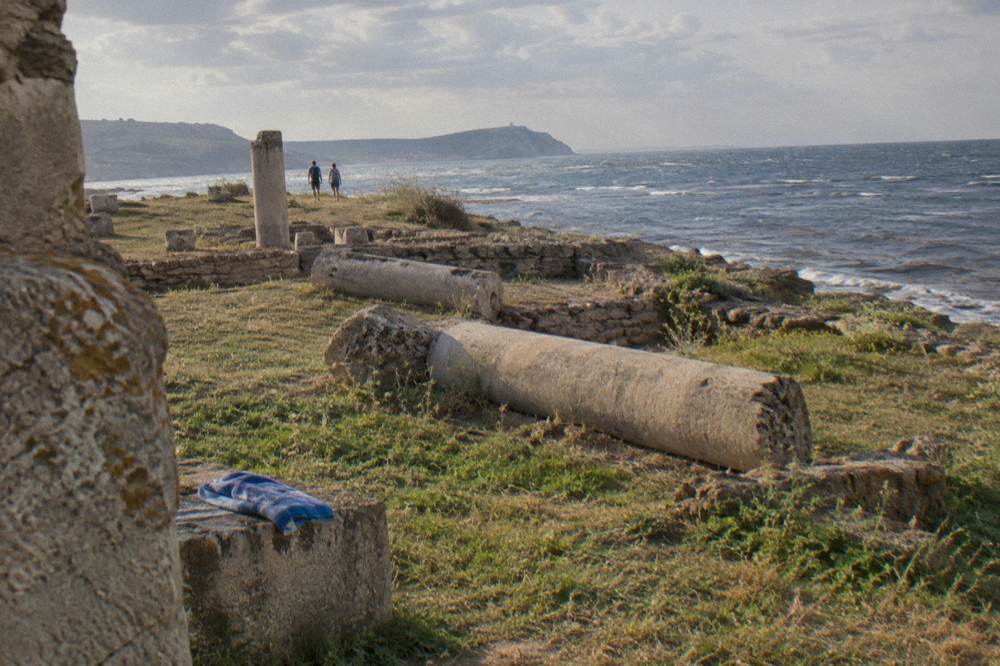
The south coast also opens a second, wilder option: the Sant'Antioco salt flats. The Sant'Antioco Salt Flats Sunset E-Bike ride, about two hours, from $66 per person, rated 4.9 across 20 reviews with a group cap of six, meets at the Ziru Tour cabin at Porto Ponte Romano and includes bicycle, helmet and a storage bag. Salt pans, sunset light and a tiny group make it the most intimate guided option on this page, and it is bookable as an evening, leaving the day free for Pula or the beaches. Reaching Sant'Antioco itself from Cagliari is a longer proposition than Pula, so treat the sunset ride as the destination rather than an add-on.
Water clarity along the south coast is a real draw, and it varies by beach; the comparisons in Which Cagliari Beach Has the Clearest Water help you pick a swim stop before you commit to a direction.
What About The Wine Hills Behind Cagliari?
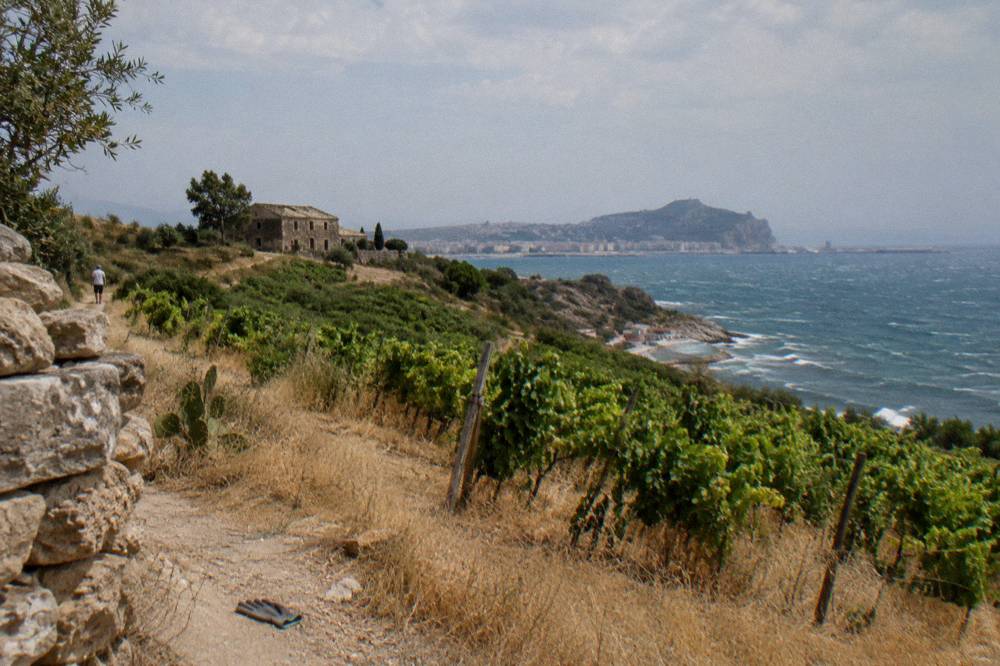
The wine hills are the day trip that rewards leg power or a pedal-assist motor: an operator's countryside listing describes a winery visit with Cannonau, Vermentino and Carignano tastings in hills roughly 18 km from Cagliari, reachable by bike in about an hour. This is the direction where the delivered rental's plain city bike starts to feel like the wrong tool, and where an e-bike earns its price difference. If you want the full route with market and aperitivo stops plus notes on what Cannonau and Vermentino actually taste like, our food and wine cycling day around Cagliari has the details.
Cannonau is the island's flagship red, Vermentino the white, Carignano the coastal red of the south, and tasting all three without driving is exactly the argument for arriving on two wheels. The listing describes the hills as about an hour's ride out of the city, which puts the trip firmly in half-day-plus territory: out, taste, back, with the climb home after the tasting being the part worth thinking about in advance. The rest of the planning pages sit on Cagliari Bike Tours.
The pairing question, what to eat and where to stop, has its own treatment in Food and Wine by Bike in Cagliari. The equipment question is simpler: a 250 W pedal-assist bike, the standard legal e-bike in Italy, flattens these hills, while a city bike turns them into the day's main event. The legal detail behind that, including the 25 km/h assist cut-off and the 14-year minimum age for riding an e-bike on public roads, is explained in Is Cycling in Cagliari Safe.
Guided Tour Or Self-Guided Rental: Which Fits A Day Trip?
A guided e-bike tour from Cagliari costs from $56 to $80 per person depending on length and route, while a delivered rental bike runs from $28 per person for about seven hours; the guided options include a local guide, and several include helmet, water or a coffee stop. Free cancellation applies to every option listed here, so the decision is about how much structure you want, not about risk.
The price spread is real but narrow at the guided end. The table below uses only the firm per-person figures on this site's tour pages, so every number in it is the operator's own starting price rather than an estimate.
| Option | Format | Duration | Price per person | Rating and reviews | Group cap |
|---|---|---|---|---|---|
| Sant'Antioco Salt Flats Sunset E-Bike | Guided, sunset, salt pans | ~2 hours | from $66 | 4.9 across 20 reviews | 6 |
| Poetto and Flamingos E-Bike Tour | Guided, canals and seafront | ~4 hours | from $80 | 4.8 across 85 reviews | 8 |
| Bike and Hike to Devil's Saddle | Guided, ride plus hike | ~4 hours | from $78 | too few reviews for a rating | Not stated |
| Bike Rental Delivered to You | Self-guided, city or mountain bike | ~7 hours | from $28 | too few reviews for a rating | n/a |
Read the gaps honestly. The Bike and Hike to Devil's Saddle trip and the delivered rental both have review pools too small to support a rating claim, so treat them as options you judge on format, not on crowd verdicts. What the Bike and Hike listing does promise is a specific shape: e-bike riding through the Molentargius side toward Poetto, then a hike on foot to the Devil's Saddle viewpoint. Bicycles are not allowed on the Sella del Diavolo's Natura 2000 trails, and that tour's hike-on-foot design is built around exactly that restriction, which is why it works. The full story, including how to frame the ride-and-hike split, is in Sella del Diavolo by Bike and on Foot.
The delivered rental fills the opposite niche: no guide, no schedule, about seven hours of bike, and delivery to wherever you are staying along the seafront. For a day trip, note it is a city or mountain bike, not electric, so match it to Pula rather than the wine hills. Check the booking page for helmet policy and delivery area details, which the listing leaves open.
What Should You Know Before Riding Out Of Cagliari?
The three practical limits are wind, park rules and protected trails: the maestrale blows hardest from May to September and shapes which direction to ride first, Molentargius-Saline's green areas admit non-motorised bikes only, so e-bikes are not covered by the park's own wording, and the Sella del Diavolo trails are closed to bicycles entirely. All three have workarounds, and none of them spoils a day trip.
The park point confuses many visitors, so state it precisely. Molentargius-Saline's official rules allow cycling in the green areas with your own non-motorised means, which by the park's own wording does not cover an e-bike. The guided flamingo tours ride the surrounding canals, public paths and the Poetto side, and the park's green areas are open 06:30 to 21:00 from 1 March to 15 October and 07:00 to 18:00 from 16 October to 28 February. Flamingos are present year round regardless, with the colonies at their largest from April to September.
Timing around the calendar matters too. July and August average highs of 31.6 and 32 degrees with almost no rain, which pushes serious riding into the early morning; the shoulder months trade a few rain days for far kinder afternoons. And if your day trip lands between 1 and 4 May, expect the Sant'Efisio procession to close central streets around Stampace and Via Roma; the 2027 edition follows the same pattern. None of this is a barrier, it is just scheduling, and Best Time to Cycle in Cagliari works through it season by season.
For families, one legal number decides the plan: riders must be at least 14 to ride a compliant e-bike on Italian public roads, though an adult may carry a child up to 8 years in an approved seat. The family-friendly workarounds, including non-electric options and the flat lagoon routes, are laid out in Cagliari Bike Tour With Kids.

How Do You Choose Between The Three Directions?
Pick Villasimius and Capo Carbonara for a full coastal day and the best water, Pula and Nora for flat riding plus Roman ruins, and the wine hills for tastings and a proper climb an hour from the city. Add the Sant'Antioco sunset ride as a standalone evening if you want a guided highlight without spending the whole day on a bike.
Match the direction to the machine. The hills want an e-bike or strong legs, the coast road wants an early start and a wind check, and Pula is the one direction where a plain rental bike is entirely adequate. Then match the machine to the rider: the 250 W, 25 km/h pedal-assist standard that Italian law defines makes every guided option on this site a bicycle in legal terms, ridable without a licence, plate or insurance, with helmets mandatory only for riders under 18. Operators supply helmets on several tours regardless; check the individual booking page where the listing is silent.
| Direction | Best for | Train needed? | Bike to pick | Main caution |
|---|---|---|---|---|
| Villasimius and Capo Carbonara | Coastal scenery, long day | No rail line; ride or bus | E-bike | Traffic and summer wind |
| Pula and Nora | Flat miles, ruins, swimming | ARST bus, no railway | City bike is fine | Check the return bus time |
| Wine hills behind Cagliari | Tastings, climbing | No; ride out directly | E-bike strongly preferred | Climb home after tasting |
| Sant'Antioco salt flats | Sunset, small group | No; guided evening ride | E-bike included | Distance from Cagliari; travel time |
Whatever you choose, this is the shortlist for the booking itself: the sunset salt-flats ride, the delivered rental and the Poetto flamingo circuit cover the guided-evening, self-guided and guided-half-day formats in one view.
Common Questions About Day Trips From Cagliari By Bike And Train
How Much Does It Cost To Take A Bike On The Train In Sardinia?
Trenitalia regional trains carry one bicycle per traveller, e-bikes included up to 2 m in length, for a EUR 3.50 daily supplement or the price of a second-class single ticket for the same journey. Folded bikes within size limits travel free.
Can You Reach Villasimius And Capo Carbonara By Bike?
Yes. Route planners list well-documented coastal routes from Cagliari toward Villasimius with views over the Capo Carbonara area, but there is no rail line, so it is a full-day pedal or a bus combination. Start early, check the wind, and expect summer traffic on cruise days.
What Does A Guided Bike Day Trip From Cagliari Cost?
Guided e-bike options on this site run from $56 to $80 per person depending on length and route, and a delivered rental bike starts from $28 per person for about seven hours. Every listed option includes free cancellation.
Can You Ride An E-Bike Inside Molentargius Park?
The park's own rules allow cycling in its green areas with non-motorised means only, so an e-bike is not covered by that wording. Guided flamingo tours ride the surrounding canals, public paths and the Poetto side instead, and the listings mention flamingos, which are present year round.
Is The Sella Del Diavolo Rideable By Bike?
No. The promontory is a protected Natura 2000 site and bicycles are not allowed on its trails. Ride to the Calamosca or Poetto end, then hike the top on foot; the guided Bike and Hike trip is built around exactly that split.
Do You Need A Licence Or Insurance For An E-Bike In Sardinia?
No. A compliant pedal-assist bike, 250 W with assistance cutting out at 25 km/h, counts as a bicycle under Italian law: no licence, plate or insurance required. Riders must be at least 14, and helmets are mandatory only for riders under 18.