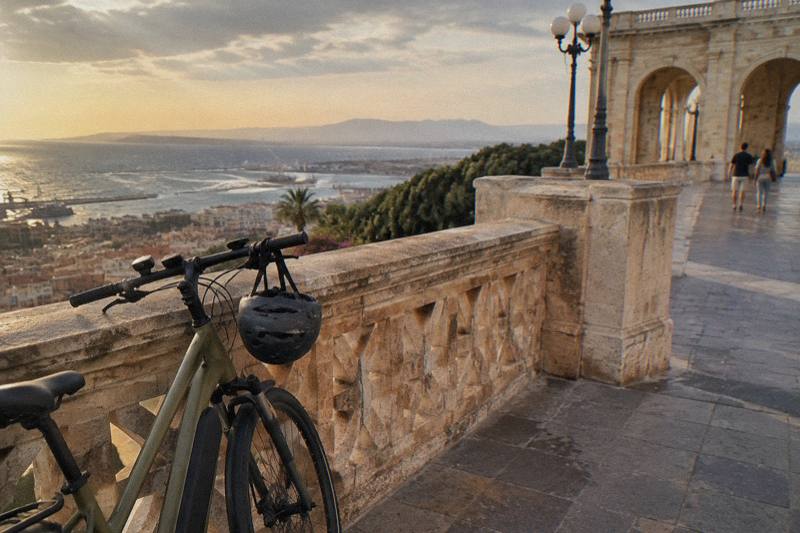
Is Cagliari A Walkable City?
Yes, Cagliari is walkable, with one big exception: the hills. A practical guide to which districts you can cover on foot, where the gradients bite, and when an e-bike earns its price.
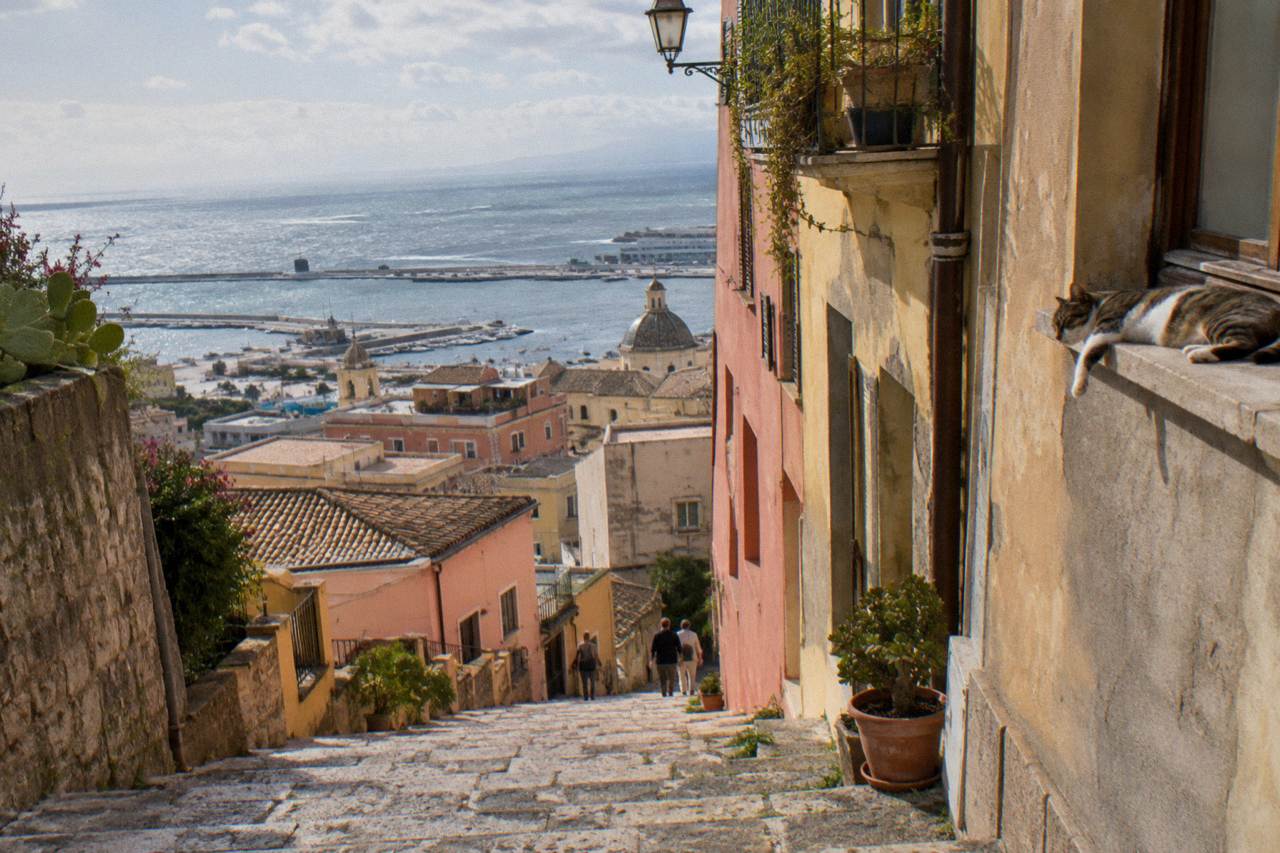
Cagliari is built on hills, and no guide pretending otherwise does you a favour. The historic core, four districts wrapped around a limestone ridge above the port, is compact enough that the whole thing fits inside a morning of walking. What the map does not show is the verticality: between the Marina district at sea level and the Castello ridge above it, streets turn into staircases, and August turns them into staircases at 32 degrees. The answer to whether this city works on foot is yes, with a slope attached. For what rewards you at the top of those stairs, from the medieval quarters to the park flamingos and the long sandy stretch beyond, see our guide to why Cagliari is famous.
Yes, Cagliari is a genuinely walkable city for sightseeing, with the qualification that its historic core sits on a hill. Stampace, Villanova and the Marina are flat to gently rolling and connect on foot in minutes, while Castello involves sustained climbs and stair streets. Most visitors walk two or three districts comfortably in a day and use transport for the rest.
The numbers back this up in a way most Mediterranean port cities cannot match. Roughly 600,000 cruise passengers are projected through Cagliari's port across 181 calls in the 2026 season, and a large share of them step off the ship and reach the old town without ever needing a taxi. The distance from the port gates to the foot of the Bastione di Saint Remy, the grand staircase that launches the climb into Castello, is a short and level walk through the Marina. That is unusual. Plenty of cruise ports put their historic centre a bus ride away.
Within the old core, everything a first-time visitor wants sits inside a rough rectangle you could cross in half an hour if the hill let you move in straight lines. The Marina holds the port-era commercial streets and most of the everyday restaurants. Stampace, west of the centre, carries the city's oldest churches and the Roman amphitheatre at its edge. Villanova, east, is the quiet residential quarter with lanes and small piazzas. Castello sits on top of all of it, crowned by the cathedral, the two Pisan towers and the terrace views over the Golfo degli Angeli.
The catch is the connective tissue. Moving between these districts on foot means either climbing into or descending from Castello, and the city's street network between quarters is cut by wide modern avenues and rail lines that interrupt a walker's line. The station quarter and the streets around Via Roma are wide, trafficked and charmless to cross. None of it is hostile, but it explains why so many visitors end their walking day earlier than planned, and why e-bike tours have become the standard fix. A two-hour guided ride such as the Old Town Guided E-Bike Ride, from $56 per person and rated 4.9 across 325 reviews, exists precisely because the geometry of the city rewards wheels.
Which Parts Of Cagliari Are Easy On Foot?
The Marina, Stampace and Villanova districts are the easy walkers, along with the area around the port and the station. All three sit on flat or gently sloping ground, their lanes interlock, and the main sights within each are minutes apart. A visitor with average mobility can cover all three in a single walking day with breaks.
Start with the Marina, because most visitors start there whether they plan to or not. It stretches from the port gates toward the centre, a grid of low streets with food shops, trattorias and the fish market atmosphere of a working quarter. From the cruise terminal it is level ground the whole way. Largo Carlo Felice runs up its spine toward the Bastione di Saint Remy, whose wide central staircase is the ceremonial front door to Castello. You will climb it eventually, but everything at its base, including the streets most worth eating in, is flat.
Stampace lies west and, apart from its upper edges, keeps to walkable gradients. Its lanes hold some of the city's oldest religious architecture, and the Roman amphitheatre and the botanical garden sit at its flank, both reachable on foot from the centre without serious effort. The quarter rewards the kind of slow wandering that walking does better than any other mode, and its scale is intimate enough that getting lost is a pleasure rather than a problem.
Villanova is the third of the flat quarters, east of Castello and below it. It began as a medieval suburb outside the walls and still reads that way, a residential mesh of low houses, small churches and cafés. Walking from Stampace to Villanova around the base of the Castello hill, rather than over it, is the flat route locals take, and it passes through the Mercato di San Benedetto area, the city's dominant food market. The combined circuit of Marina, Stampace and Villanova is the walkable heart of Cagliari, and it is a lot of city for a pair of shoes.
| District | Ground | Walking Difficulty | What You Reach On Foot |
|---|---|---|---|
| Marina | Flat, level with the port | Easy | Waterfront, commercial streets, Bastione base |
| Stampace | Mostly flat, rises at edges | Easy to moderate | Churches, Roman amphitheatre, botanical garden |
| Villanova | Flat to gently rolling | Easy | Residential lanes, San Benedetto market |
| Castello | Ridge top, stair access | Strenuous | Cathedral, towers, panoramic terraces |
| Poetto | Flat, 8 km long | Easy but long | Beach, promenade, flamingo-side paths |
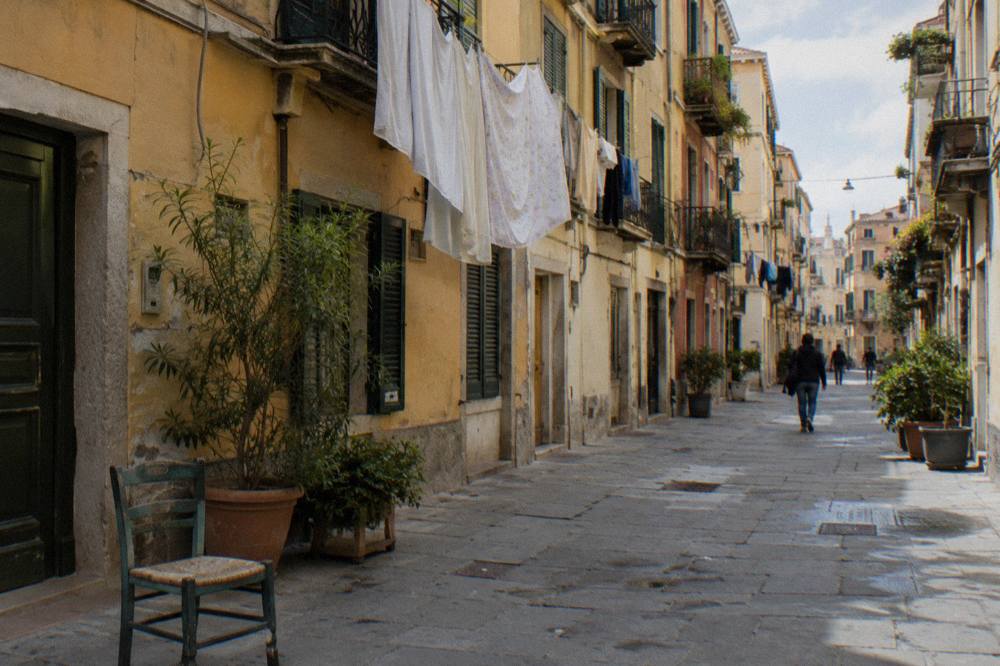
The table's last two rows are where the story changes, and they are worth a separate look. Castello is small but vertical. Poetto is flat but long, 8 kilometres of sand from the Sella del Diavolo headland toward Quartu Sant'Elena. Neither defeats a walker, but each defeats a walker's schedule.
Curious whether a bike would cover more of the coast? Our piece on walking versus riding to Poetto breaks that exact decision down.
How Steep Is The Castello District Really?
Castello sits on a limestone ridge high above the port, and its streets include genuine staircases with no vehicle alternative. The climb from the Bastione di Saint Remy to the cathedral is sustained but short, and most fit visitors manage it with pauses. The effort buys the best views in the city.
The honest description is a hill town grafted onto a port city. Castello was the walled medieval core, and its defensive position is exactly what makes it awkward now: the walls face the sea, the approaches are steep, and the internal streets follow the ridge's contours rather than fighting them. Once you are up, moving along the ridge between the cathedral, the Torre di San Pancrazio, the Torre dell'Elefante and the terraces at Piazza Indipendenza is level and pleasant. It is the getting up that sorts people.
There are three main approaches. The Bastione di Saint Remy staircase from the Marina is the grandest and most direct. From the west, Via Torre dell'Elefante climbs past the elephant tower through a steeper, narrower lane, with the botanical garden down on the Stampace flank below the walls. A lift and stair combination serves the district as well, so the hill is not closed to anyone who cannot manage stairs, only slower to reach. Check current operating hours before counting on it.
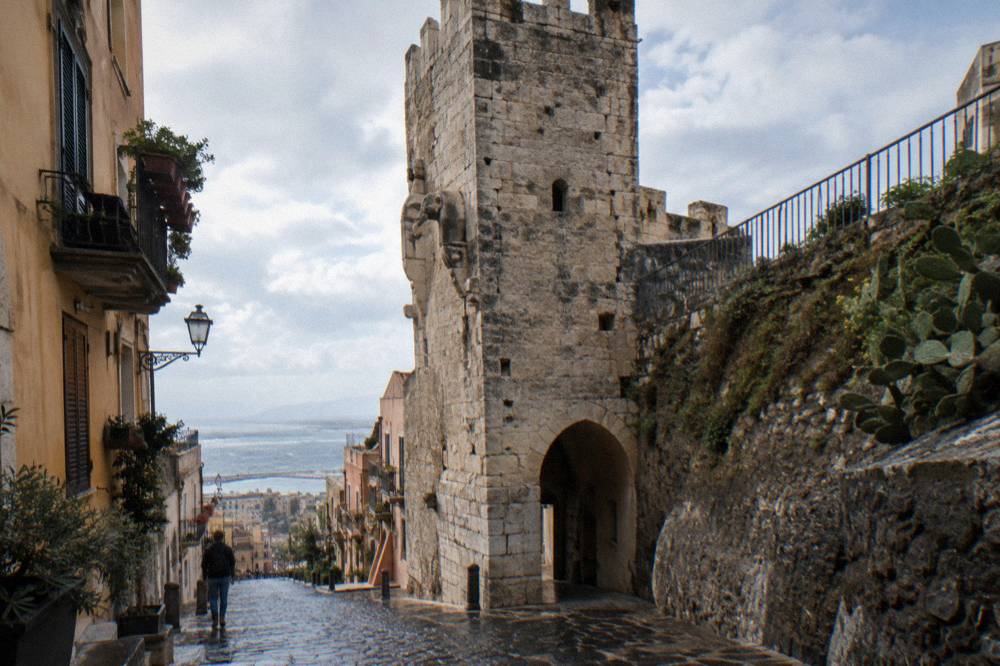
What the climb costs, the ridge repays. The terraces at the Bastione and around the citadel give the signature Cagliari panorama, the Golfo degli Angeli spread below with the Sella del Diavolo headland to the southeast. On a clear day the view runs down the coast. In July and August, when average highs sit around 31.6 to 32 degrees, the sensible pattern is to climb early, rest through the early afternoon, and walk again toward evening, which is exactly what residents do.
For visitors who want Castello's views without the climb, the e-bike answer is well established. Electric assist turns the same uphill streets into a gentle ride, and guided versions fold in the history as they go. The Three-Hour Old Town E-Bike Tour, from $56 per person and rated 4.7 across 18 reviews, includes a guide, the bike, a helmet and bottled water, and the longer format gives the guide room to explain what you are looking at.
Can You Walk From The Old Town To Poetto Beach?
Walking from central Cagliari to Poetto Beach is possible but impractical for most visitors, because the beach lies beyond the Molentargius lagoon and the route mixes long flat stretches with trafficked sections. Buses, bikes and e-bikes cover the gap quickly, and the beach's own 8 kilometre promenade is where walking shines once you arrive.
The geography is the thing to picture. The old city faces west over its lagoon and port; Poetto faces east, on the open sea, beyond the Molentargius-Saline park and the Calamosca headland. There is no short picturesque lane connecting them. The realistic walking route threads south around the park and the hill, and by the time you arrive you have spent the walking budget that the 8 kilometres of Poetto sand itself deserves. The detailed version of this question, with the route options, lives in our dedicated article on getting from Cagliari to Poetto on foot.
Once at Poetto, the verdict flips completely. The seafront promenade is described by local guides as an 8 kilometre cycle and pedestrian stretch, mostly asphalt, running the whole length of the beach from the Sella del Diavolo end toward Quartu Sant'Elena, and it is flat from end to end. For walkers this is the best ground in the city: no cars, no climbs, beach bars at intervals, and along the Via la Palma side, one of the better spots for watching the flamingos that live year-round in the adjacent lagoon park. A sun lounger and umbrella at the licensed beach clubs run about EUR 10 to 15 per day, and most bars reduce their hours from roughly October to April.
The flamingo presence is the detail that surprises people. Molentargius-Saline sits immediately behind the beach, and its greater flamingo population is resident twelve months a year, with the colonies at their largest between April and September. The park's green areas, open 06:30 to 21:00 from 1 March to 15 October and 07:00 to 18:00 through the winter, are walkable and cyclable on marked paths, with the park's own rules covering non-motorised bikes only on its internal routes. The guided e-bike flamingo tours ride the canals and public paths around the park rather than its managed interior. Our Molentargius flamingo bike guide covers how those products actually work.
Do You Need A Car Or Transport Inside Cagliari?
Inside the historic core and the flat quarters, no car is needed and parking one is a burden. Buses and the municipal lift cover the slopes, the CaBuBi bike-share covers flat trips, and a car only earns its cost for day trips beyond the city. Cruise passengers and city-break visitors can skip renting entirely.
The car question answers itself the first time you watch one negotiate a Castello lane. The centre sits inside limited-traffic zones, and the rules vary by street and by hour, so check the Comune di Cagliari ZTL page before driving anywhere near the old core. Private cars face exactly the restrictions you would expect in a medieval hill town. Visitors staying inside the old core should plan on arriving by taxi, dropping bags, and forgetting the car exists.
For the slopes, the city bus network and the public lift do the work. For flat trips, the CaBuBi municipal bike-share offers 60 one-way bicycles, 50 classic plus 6 pedal-assist, 3 tandems and 1 cargo bike, across 10 stations, with expansion announced. That is enough coverage for the Marina to Villanova kind of journey, and it is the cheap spontaneous option when a walk turns into a chore.
Two things make guided e-bikes the popular middle path. First, the electric assist on compliant Italian e-bikes cuts out progressively at 25 km/h, which is faster than any walker on the Castello stairs and quick enough to make Poetto a round trip rather than an expedition. Second, the tours solve the where-to-ride problem: a local guide takes the lane selection, the crossings and the climbs off your plate. The Old Town E-Bike With Coffee Stop, from $53 per person and rated 4.9 across 369 reviews, caps its group at 9 and meets at Via Santa Margherita 22, minutes from the port, with coffee or tea and bottled water included. For a cruise passenger with five hours ashore, that arithmetic is decisive.
The deeper comparison of renting versus riding with a guide, with prices and inclusions laid out side by side, is in our rental versus guided tour guide.
When Is Walking Better Than Riding In Cagliari?
Walking wins in the early morning and evening, inside Castello's lane network, in the food markets and on any day when you want to linger rather than cover ground. Riding wins for reaching Poetto, the flamingo paths and multiple districts in one outing, and for anyone the climbs would exclude. Most visitors sensibly do both.
The lanes of Villanova and Stampace are at their best at walking pace, and there is a practical reason beyond charm: the detail density. Carved portals, shrines at corner intersections, the fabric of a quarter that has been continuous for centuries, none of it registers at cycling speed. The market halls reward dawdling. Castello's stair streets, once you are on them, are pedestrian in character anyway, and the terraces are for standing still.
Riding wins on reach. The 366 kilometre metropolitan cycle network approved in February 2026, spanning Cagliari and 17 neighbouring municipalities, means the flat riding around the city keeps improving, with roughly 12 kilometres of new or upgraded lanes noted on over 30 streets during 2026. For a visitor, the practical version of that network is the corridor between the old town, the Molentargius canals and the Poetto front, which is exactly the corridor the guided e-bike products ride.
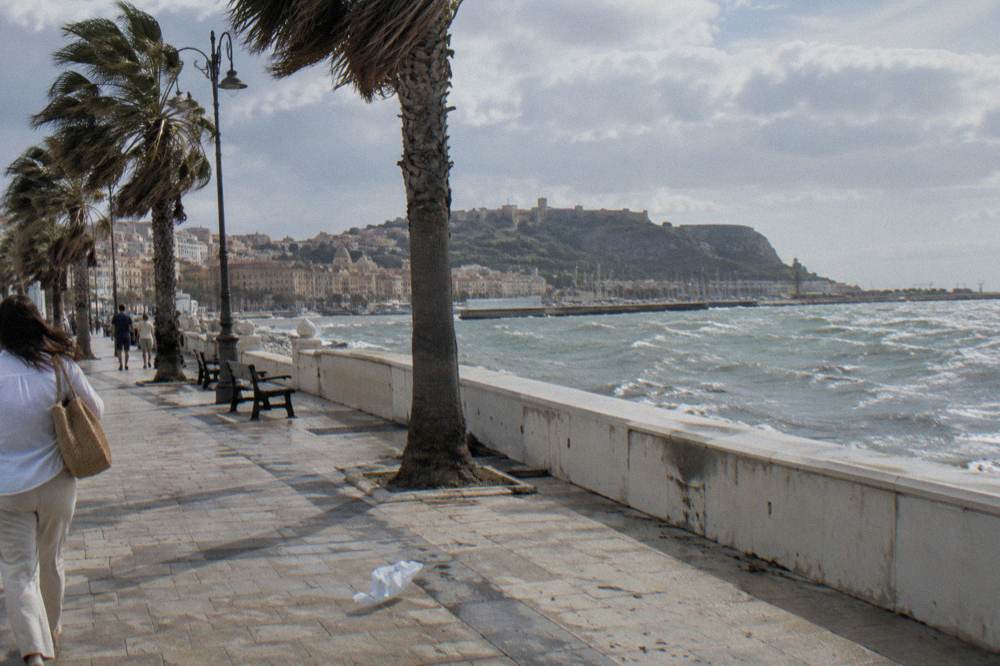
Weather tilts the choice too. July and August average just 3 to 10 millimetres of rain, so the question is heat, not storms, and the answer is to move early. The maestrale, the northwest wind that dominates here and blows hardest from May through September, can push gusty conditions onto exposed seafront sections in the afternoon. Walking lets you duck into shade; riding turns the same wind into a headwind. Our best time to cycle guide works through the seasons in detail.
One planning note belongs here because it affects walkers directly. The Sant'Efisio procession, held 1 to 4 May each year, closes and crowds central routes through Stampace and along Via Roma, with the 371st edition scheduled for May 2027. If your walking day lands on those dates, expect the centre to be full, festive and partly impassable, and treat it as a spectacle rather than an obstacle.
What Should A Walking Itinerary Through Cagliari Look Like?
A realistic one-day walking plan covers the Marina and Stampace in the morning, climbs to Castello before the heat, descends through Villanova after lunch, and leaves Poetto for a separate morning by bus or bike. Trying to add the beach to the same walking day is the single most common mistake visitors make.
Begin at the port or Piazza Matteotti and walk the Marina's grid while it is cool, then take the Bastione di Saint Remy staircase up into Castello before midday. Give the ridge two hours: the cathedral, the two towers, the terraces, the citadel gates. Descend the eastern side into Villanova for a long lunch, which is the Sardinian custom anyway, and spend the afternoon in its lanes and the San Benedetto market area. Finish at ground level with an aperitivo facing the sunset over the western lagoon.
That day uses your legs well and never asks for the impossible. What it does not include is the sea. Poetto deserves its own half-day, reached by bus or bike, walked at leisure along its flat 8 kilometres and combined, if the season is right, with the flamingo viewing behind it. Visitors who compress both into one day on foot arrive at the beach already spent and see less of it.
If a single day of hills sounds like enough climbing, Cagliari Bike Tours exists for exactly that decision: the site compares the guided e-bike rides that cover all four historic districts in about two hours, from $50 to $56 per person, against flat coastal options, so you can split your visit between feet and motor. The Old Town Guided E-Bike Ride, from $56 per person, rated 4.9 across 325 reviews and meeting at Via Santa Margherita 22, is the one most walkers graduate to on day two.
Common Questions About Walking In Cagliari
Is Cagliari A Walkable City?
Yes. The Marina, Stampace and Villanova districts are flat, compact and fully enjoyable on foot, and the port connects to the centre by a short level walk. Castello involves genuine climbs and stair streets, and Poetto Beach is a separate bus or bike trip, but for city sightseeing Cagliari is one of the more walkable ports in the western Mediterranean.
How Steep Is The Walk Up To Castello?
The historic ridge rises well above the port, high enough that streets give way to staircases. The Bastione di Saint Remy staircase is the direct route, sustained but manageable with pauses for most visitors, and a public lift serves the eastern side for anyone avoiding stairs. Once on the ridge, moving between the cathedral, towers and terraces is level.
Can You Walk To Poetto Beach From The Centre?
It is possible but impractical. The beach lies beyond the Molentargius lagoon system, and the walking route is long and partly trafficked. Buses and bikes cover the connection quickly, and once there the flat 8 kilometre promenade is ideal walking ground.
Is Cagliari Good For Visitors With Limited Mobility?
The flat quarters, the seafront promenade and the market area are all accessible, and a public lift serves the Castello hill. The stair streets inside Castello are not step-free. An e-bike tour is a common alternative, and riders must be at least 14 to ride an e-bike on public roads, with minimum height requirements stated on some listings.
Do You Need A Car In Cagliari?
Not for the city itself. Limited-traffic rules in the centre make parking a burden, buses and the lift handle the slopes, and the bike-share covers flat trips. A car only pays off for day trips into the Sardinian interior, and even then regional trains accept bikes, including one pedal-assist e-bike per traveller for a EUR 3.50 daily supplement.
When Is The Best Time Of Day To Walk In Cagliari?
Early morning and evening. July and August average highs of 31.6 to 32 degrees with almost no rain, so the local pattern is to climb and sightsee before midday, rest through the afternoon, and walk again as the light softens over the terraces and the western lagoon.