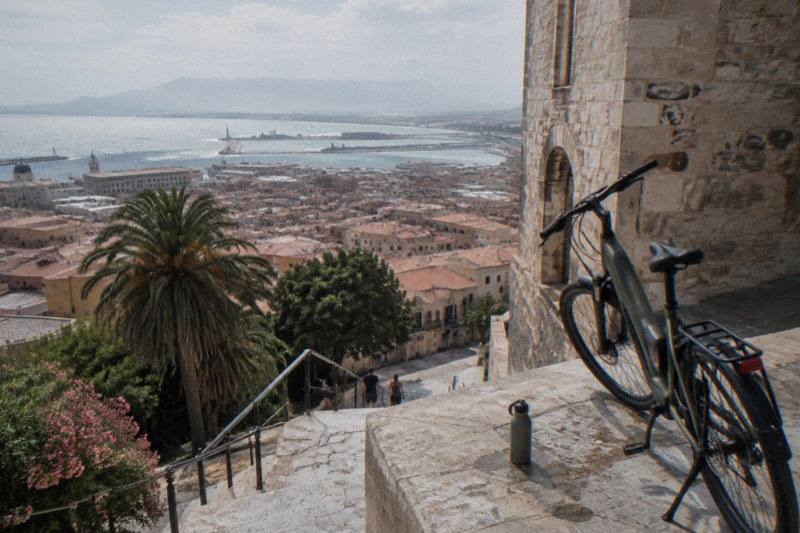
Why Is Cagliari Famous?
What put Sardinia's capital on the map: four medieval districts, city-centre flamingos, an 8 km city beach and a busy cruise port a short ride from the old town.
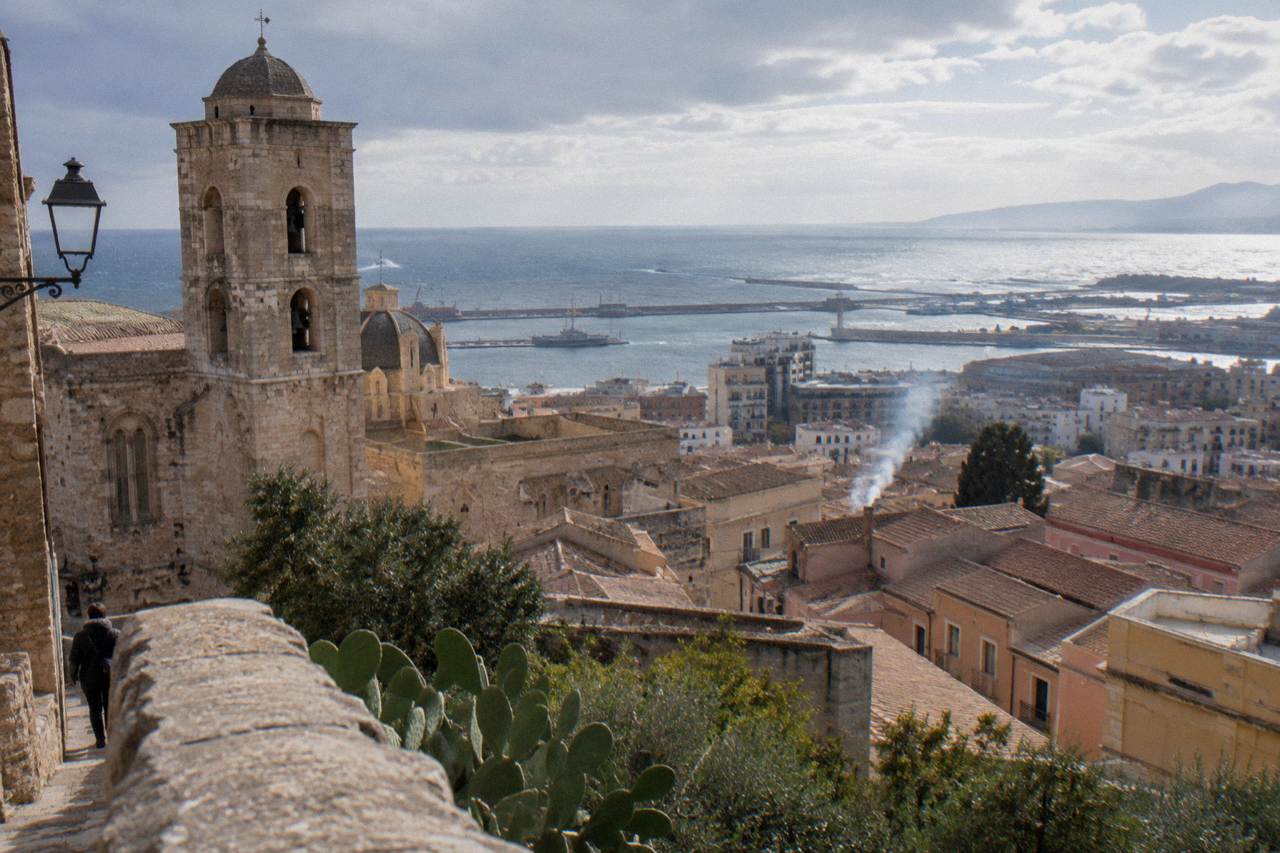
Cagliari is famous for things that rarely share a postcode. A hilltop old town split into four medieval quarters. A lagoon where flamingos have nested every year since 1993, inside the boundary of a regional capital. A beach of 8 kilometres of sand that locals treat as a suburb. And a port whose 2026 cruise season projects 181 calls and more than 600,000 passengers, a 26 percent jump on the year before. The result is a city where a short ride can take you from Pisan towers to a salt lagoon to an espresso on the seafront, which is exactly why so many visitors end up exploring it on two wheels.
Cagliari is famous as Sardinia's capital and historic stronghold, a city layered by Pisans, Aragonese and Savoy rulers across four walled districts, Castello, Stampace, Villanova and Marina. It is equally famous for its setting: pink flamingos nest year-round at Molentargius-Saline inside the city, and the 8 km Poetto beach runs from the Sella del Diavolo headland toward Quartu Sant'Elena. If you're torn between basing yourself in the capital or heading to Sardinia's northeast coast, our Cagliari versus Olbia comparison weighs prices, logistics and cycling options to help you decide.
That density is the short answer, but each layer deserves a sentence of its own. The old town sits on a limestone ridge above the port, and its districts still carry their medieval jobs: Castello as the fortress quarter, Marina as the merchants' and fishermen's quarter at sea level, Stampace and Villanova spreading inland. Above them stand the towers of San Pancrazio and the Elephant, medieval Pisan work that still defines the skyline. The fame of the place has always been strategic; every power that ruled Sardinia wanted this hill over the Gulf of the Angels.
What has changed is how easily visitors now consume all of it. The metropolitan cycle network, expanded by the Biciplan approved in February 2026, now totals 366 km of routes across Cagliari and 17 neighbouring municipalities, up from 243 km. Limited-traffic zone rules in the historic quarters vary by street and by hour, so check the Comune di Cagliari ZTL page before setting off. Even so, a bike remains the one vehicle that can thread the whole famous list together in a single morning: towers, lagoon, beach and back.
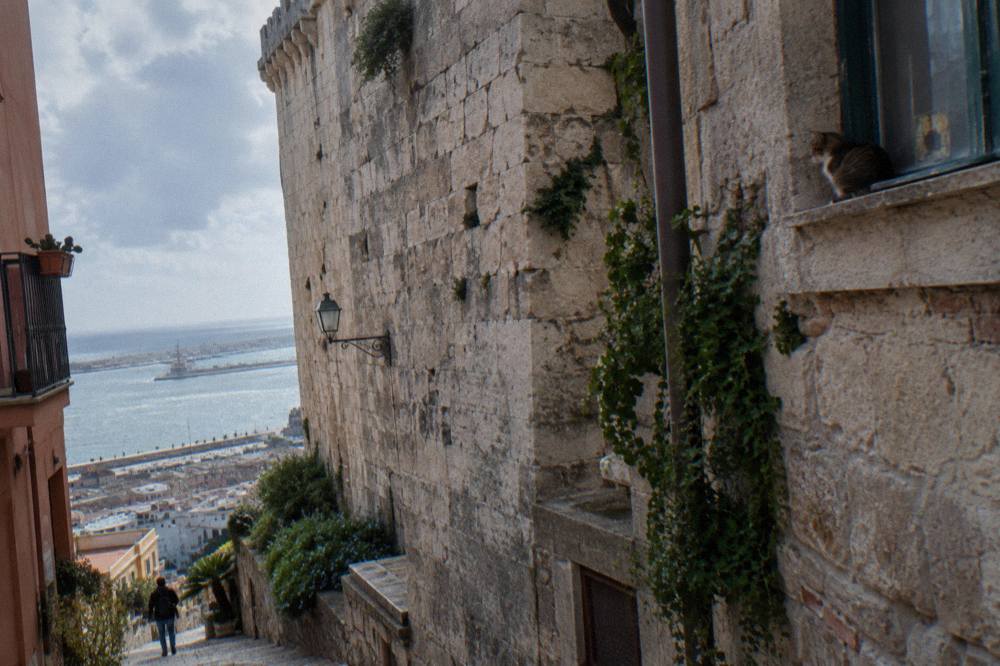
The two most reviewed guided rides through that famous core make an obvious pairing. One is the Old Town E-Bike With Coffee Stop, about two hours, from $53 per person, rated 4.9 across 369 reviews, capped at nine travellers. The other is the Old Town Guided E-Bike Ride, also about two hours and from $56 per person, rated 4.9 across 325 reviews, which the listing describes across Stampace, Castello, Villanova and Marina. There is also a combo option that bolts the flamingo lagoon onto the old town, which is the honest answer to anyone who wants the whole famous city in one booking.
What Is Cagliari Famous For?
Cagliari is famous for five things above all: its four medieval districts led by the walled Castello quarter, the year-round pink flamingo colony at Molentargius-Saline Regional Park, the 8 km Poetto city beach, the protected Sella del Diavolo promontory, and a festival tradition headlined by Sant'Efisio, the great early-May procession whose 371st edition runs 1 to 4 May 2027.
The festival deserves its place on the list. Sant'Efisio is one of Europe's largest religious processions, and the 371st edition runs 1 to 4 May 2027, winding through Stampace and along Via Roma with thousands of participants in traditional dress. For a few days the centre's street rhythm changes completely, and processions affect central routes including the western exits. Visitors planning a spring trip should know the date before they book anything, because it transforms the famous streets rather than closing the famous city.
The checklist below is the short version of what the city is known for, with the one fact most worth knowing about each.
| What Cagliari is famous for | The one fact worth knowing |
|---|---|
| The four districts | Castello, Stampace, Villanova and Marina keep their medieval identities and are all reachable by bike under ZTL rules |
| Molentargius-Saline park | Flamingos present twelve months a year; colonies largest April to September, nesting steadily since 1993 |
| Poetto beach | 8 km of sand from the Sella del Diavolo headland toward Quartu Sant'Elena |
| Sella del Diavolo | A protected Natura 2000 site where bicycles are not allowed on the trails; the famous view is reached on foot |
| Sant'Efisio | 1 to 4 May 2027 for the 371st edition, with processions through Stampace and Via Roma |
| The cruise port | 181 calls and over 600,000 passengers projected for the 2026 season |
Food belongs on the list too, though it travels by word of mouth more than by monument. Cagliari's cucina is famous within Sardinia for its seafood tradition in the Marina quarter and for street foods like panadas and octopus in the markets. The hills around the city grow Cannonau, Vermentino and Carignano grapes, and a winery visit in the countryside roughly 18 km out is described on operators' pages as reachable by bike in about an hour by keen riders. If that pairing appeals, the food and wine by bike guide covers how the tasting side of Cagliari's fame works in practice.
The Old Town: Four Districts, One Ridge
The fame of Cagliari's old town rests on its four medieval districts stacked along one limestone ridge: Castello on top with its towers and cathedral, Stampace with its churches and Roman amphitheatre, Villanova as the old gardener's quarter, and Marina at the base by the port. A guided e-bike circuit of all four takes about two hours.
Castello is the part that photographs travel. You enter through the Bastione di Saint Remy, climb to terraces over the gulf, and move between the Torre di San Pancrazio and the Torre dell'Elefante, the two medieval gate-towers that once sealed the quarter's entrances. The cathedral and the former royal palace sit inside the same walls. Below, the Roman amphitheatre is carved directly into the hillside rock at Stampace, a relic of Roman rule that reminds you the city was famous long before the Pisans arrived. The Bastione itself is one of the free highlights of the city, and it anchors our longer piece on free things to do in Cagliari.
What surprises most first-time visitors is the verticality. Marina sits at sea level beside the port; Castello sits well above it, and the connections between quarters are steep lanes rather than gentle boulevards. This is precisely why the guided old town rides here are e-bike rides rather than ordinary bike tours: the motor flattens the ridge. The Old Town Guided E-Bike Ride, rated 4.9 across 325 reviews and from $56 per person, uses that advantage to cover all four districts in about two hours, meeting at Via Santa Margherita 22 near the port. The listing describes the route through Stampace, Castello, Villanova and Marina with a local guide, bottled water and a coffee or soft drink included. For anyone weighing the two-wheeled option against walking, the e-bike versus city bike question has its own comparison guide elsewhere on this site.
Flamingos Inside A Capital City
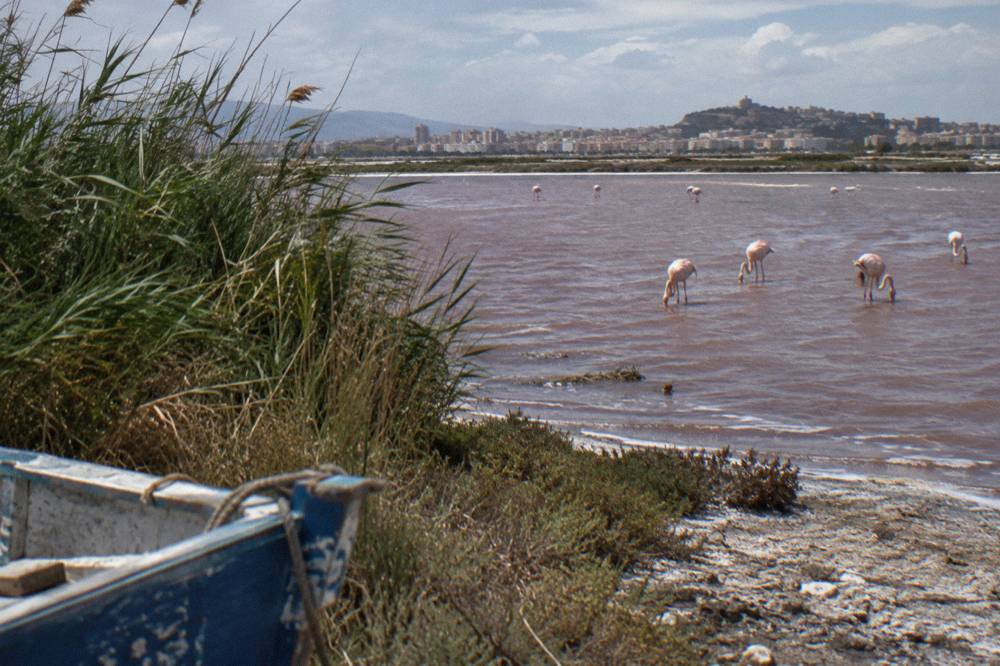
Greater flamingos nest within the city limits at Cagliari, at Molentargius-Saline, a former saltworks turned regional park between the centre and the sea. The colony has nested steadily since 1993. The birds are present twelve months a year, with colonies at their largest from April to September.
A salt lagoon that once fed the city's economy now hosts a bird most people associate with Africa and the Camargue, a short ride from the main streets. The park's own materials set the practical terms: green areas open daily, 1 March to 15 October from 06:30 to 21:00, and 16 October to 28 February from 07:00 to 18:00, with cycling inside them allowed only with your own non-motorised means. An e-bike does not fall under that permission. The rest of the planning sits on Cagliari Bike Tours.
The guided flamingo rides therefore work the edges, which is not a limitation so much as the actual geography. The Old Town and Flamingos Combo, about 2.5 hours, from $56 per person, rated 4.7 across 126 reviews, pairs the historic quarters with the canals and public paths around the park where the listing mentions flamingos; it includes an e-bike and helmet with a local guide. The longer Poetto and Flamingos E-Bike Tour, about four hours and from $80 per person, rated 4.8 across 85 reviews and capped at eight riders, adds the seafront. Neither can promise birds on any given day, and no honest listing would; what the operators report is that the colony is resident, so the odds across a year are good. Weather and wind vary, and the park's own pages are the primary source for opening hours and access rules.
If you would rather go independent, the mechanics change. Ordinary pedal bikes can enter the park's green areas under the non-motorised rule, and the path along Via la Palma by the park's edge is a known flamingo spot on the Poetto side. Rental delivery brings a city or mountain bike to your door from $28 per person, though that product is not electric. The full mechanics of renting versus a guided ride are laid out in the rental versus guided tour guide, and the flamingo-specific routes have their own Molentargius bike page.
Poetto And The Sella Del Diavolo
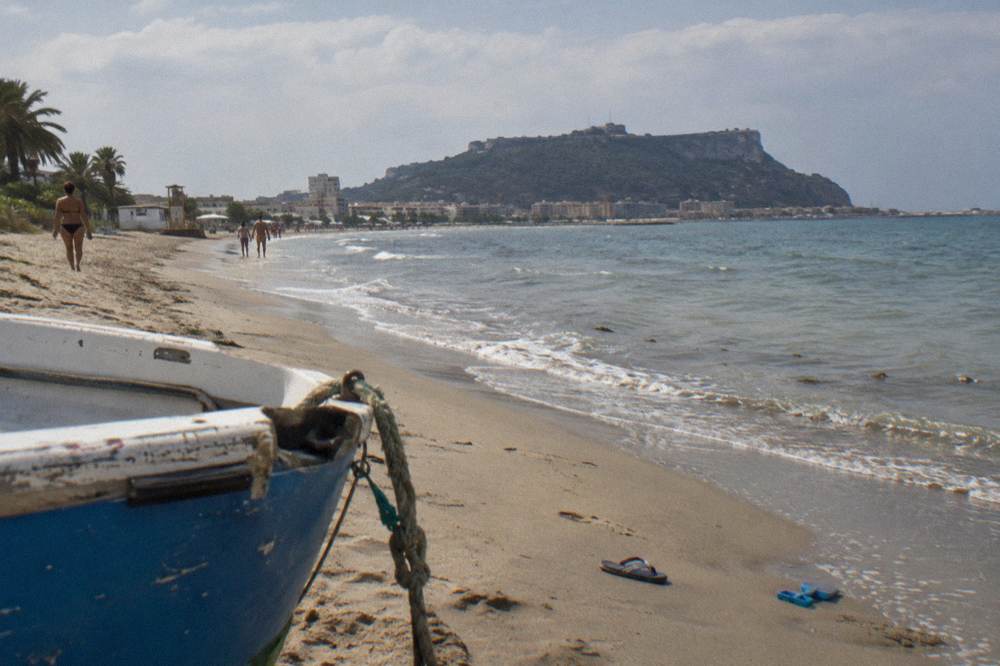
Poetto is Cagliari's famous city beach: 8 km of sand running from the Sella del Diavolo headland toward Quartu Sant'Elena, backed by a cycle and pedestrian promenade that locals walk, run and ride end to end. The Sella del Diavolo itself is a protected Natura 2000 promontory where bicycles are prohibited on the trails, so its famous cliff view is earned on foot.
The pairing is what makes this stretch famous. The beach is one long public room, with licensed stabilimenti renting sun loungers and umbrellas at around EUR 10 to 15 per day in the warm months, most beach bars reducing hours from roughly October to April, and a seafront road with a dedicated mostly asphalt cycle path along it. On the headland at the southern end, the Sella del Diavolo rises over Calamosca with its cliff paths and military history; local press reported in October 2026 that cyclists riding its protected trails drew a formal complaint to the municipal authorities, which tells you how seriously the ban is now enforced. The honest framing, and the one the guided products use, is ride to the Calamosca or Poetto end, then hike the top on foot.
One product does exactly that in a single booking. The Bike and Hike to Devil's Saddle, about four hours and from $78 per person with ten reviews so far, rides e-bikes from the Easycletta shop in the Marina district toward the Molentargius side and Poetto, then walks the Sella del Diavolo viewpoint, with helmet, water and a local guide included. Its rating pool is still too small to quote a rating, but the format matches the terrain's rules precisely. The walk-up-and-back detail, plus what the trails are actually like, is covered in the site's Sella del Diavolo guide.
Sun, Wind And Season: The Climate Behind The Fame
Cagliari is famous for its climate as much as its sights: July and August average highs of 31.6 and 32 degrees with barely 3 to 10 mm of rain a month, while the shoulder months of March to May and September to October offer milder highs of roughly 17 to 28 degrees with more rain days. The city's dominant wind, the maestrale, blows strongest from May to September.
Those numbers explain the rhythm of the famous city. In deep summer the old town's stone lanes hold heat late into the evening and the sensible riding windows are morning and dusk; the maestrale can make the exposed Poetto stretch hard work on a plain bike in the afternoon, which is one more quiet argument for pedal assistance. In the shoulder seasons, which is when the flamingo colonies are also at their largest, conditions are close to ideal for covering towers, lagoon and beach in one day. October still supports beach time, as the site's piece on swimming in Sardinia in October explains, and the city's season now runs later than it once did.
The cruise calendar leans on the same climate. The port's 2026 season projects 181 calls and more than 600,000 passengers, and on 28 October 2026 four ships called on a single day with more than 11,000 passengers aboard. For visitors arriving that way, the fame has a practical edge: the old town ridge and its meeting points sit close to the port, which is why several guided rides meet at Via Santa Margherita 22, minutes from the cruise terminal. The full logistics are in the cruise port guide.
Seeing The Famous City By Bike
Seeing Cagliari by bike works because the city's famous sights compress into one rideable corridor: the port-side Marina quarter, the Castello ridge above it, the Molentargius canals behind, and the Poetto promenade beyond, all linked by a cycle network that grew to 366 km under the Biciplan approved in February 2026. Guided e-bike tours from $50 to $80 per person cover it in two to four hours.
The price range is honest and narrow. At the accessible end, the Two-Hour E-Bike Tour With Coffee runs from $50 per person, rated 4.7 across 281 reviews, meeting at NewWaySardinia with one coffee included. The most reviewed old town ride, the Old Town E-Bike With Coffee Stop, costs from $53 per person, rated 4.9 across 369 reviews, group capped at nine, meeting at Via Santa Margherita 22 with water and coffee or tea included. At the fuller end, the four-hour Poetto and Flamingos ride costs from $80 per person. All of the guided options listed carry free cancellation. Every one of these is a way to consume the famous city rather than the reason it is famous, but they explain why so many visitors experience it on two wheels: the geography rewards covering ground.
Independent riders have real infrastructure too. The municipal CaBuBi bike-share runs 60 bicycles, 50 classic, 6 pedal-assist, 3 tandems and 1 cargo bike, across 10 one-way stations, with expansion announced. Trenitalia regional trains carry one bike or e-bike per traveller for a EUR 3.50 daily supplement, which extends the same logic to the wider region, and the site's day trips by bike and train guide builds on exactly that. For the planning detail, the Biciplan network map is the primary source for the 366 km figure.
For a final orientation, three rides cover the famous list between them. The Old Town E-Bike With Coffee Stop, run by NewWaySardinia, takes the ridge and the districts. The Old Town Guided E-Bike Ride, run by Viva Cagliari Tour, does the same four quarters, with a coffee stop of its own. The Old Town and Flamingos Combo adds the lagoon, the piece of Cagliari's fame that no walking tour of the centre can reach in the time. Whichever you choose, book the one whose shape matches your day: Check availability on the operator's listing before the port crowds do.
Common Questions About Cagliari
Why Is Cagliari Famous?
Cagliari is famous as Sardinia's capital, a hilltop city of four medieval districts, Castello, Stampace, Villanova and Marina, with Pisan towers above the Gulf of the Angels. It is equally known for pink flamingos nesting year-round inside the city at Molentargius-Saline, the 8 km Poetto city beach and a fast-growing cruise port projecting over 600,000 passengers in 2026.
What Is Cagliari Famous For?
Its walled Castello quarter and towers, the Roman amphitheatre at Stampace, flamingos inside the city limits, the 8 km Poetto beach, the protected Sella del Diavolo promontory, the Sant'Efisio procession of 1 to 4 May, and a seafood and Cannonau wine tradition in the surrounding hills.
Can You See Flamingos In Cagliari?
Yes. Flamingos are present at Molentargius-Saline twelve months a year, with colonies largest April to September. Sightings are never promised, but the colony has nested steadily since 1993, and guided rides work the canals and Poetto-side paths around the park.
How Many Days Do You Need In Cagliari?
One full day covers the old town districts and a short flamingo-side ride; two days add Poetto, the Sella del Diavolo walk and a slower food pace. Cruise passengers with a single morning fit the two-hour guided old town e-bike rides, several of which meet near the port.
Is Cagliari Good For Cycling?
Yes. The main sights compress into one rideable corridor from the Castello ridge down to the Poetto waterfront. ZTL rules vary by street and hour, so check the Comune di Cagliari ZTL page before setting off. E-bikes help most on the steep climbs and windy beach stretches.