Can You Walk From Cagliari To Poetto Beach?
Yes, you can walk from Cagliari to Poetto Beach, but it is a long, mostly unshaded haul through city streets before the sand starts. Here is what the route involves and when a bike or bus is the better call.
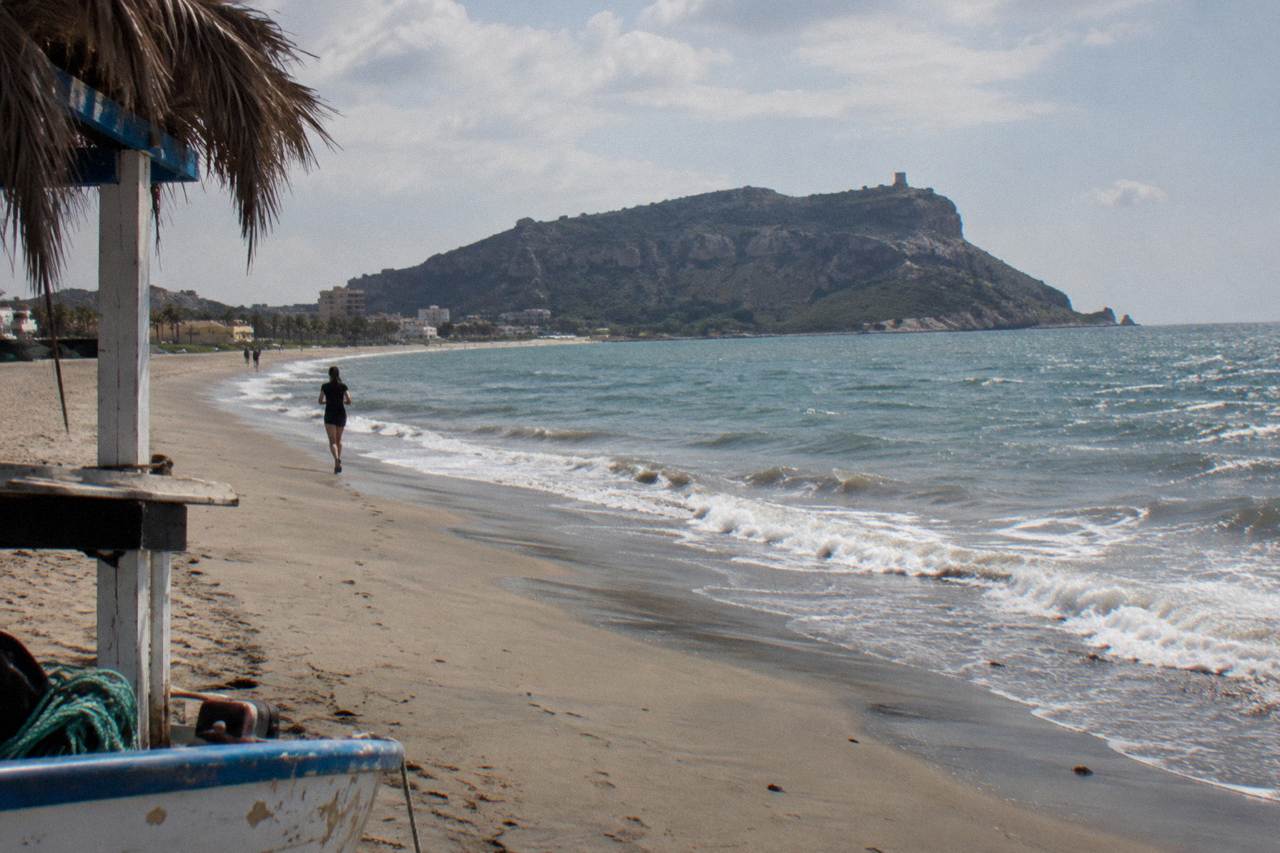
Yes, you can walk from Cagliari to Poetto Beach, and plenty of locals do some version of it every weekend. But the honest answer is that the beach itself runs for 8 km of sand from the Sella del Diavolo headland toward Quartu Sant'Elena, and the city streets between your hotel and the start of that sand are a long, mostly flat, largely unshaded stretch. In summer heat, with the maestrale wind or without it, the walk is more of a commitment than a stroll.
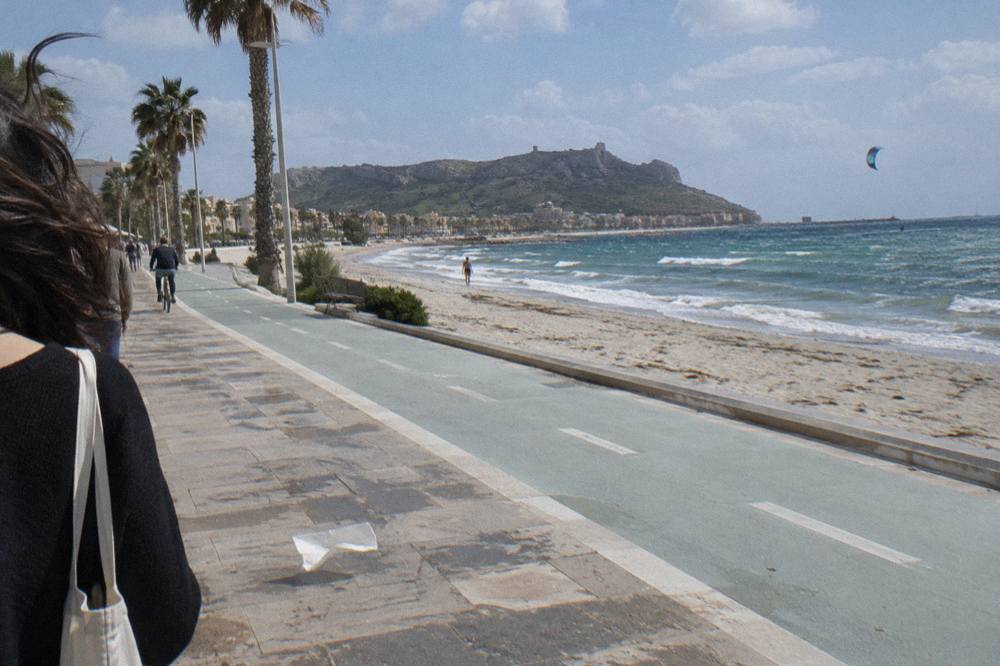
Yes, the walk is possible and there is a continuous route, but it is a real distance on city pavement before you ever touch sand. Poetto's beach stretches 8 km from the Sella del Diavolo end toward Quartu Sant'Elena, and the promenade beside it is described by local guides as a place people walk, run and cycle. The catch is getting from the historic centre to the western end of the beach, which crosses busy districts with little shade.
The geography matters here. Cagliari's old quarters, Castello, Stampace, Villanova and Marina, sit on a compact hill mass near the port. Poetto lies to the southeast, beyond the Molentargius-Saline wetlands and the residential districts that grew up along Via Roma and the Poetto axis. There is no river crossing or motorway in the way, which is why the walk works at all, but the route passes through ordinary city neighbourhoods rather than a scenic coastal path.
No official walking distance is published for the walk from central Cagliari to the sand. Judge it by scale instead. The promenade runs about 8 km along the full length of the beach, and the CTM bus covers that same stretch from the centre, so imagine every bit of it underfoot. Once there, the seafront has a dedicated pedestrian and cycle path, mostly asphalt, with some shared sections where pedestrians, runners and cyclists mix.
Who actually walks it? Locals walking the promenade itself, runners doing the seafront end to end, and hardy visitors staying in the Poetto district already. For a tourist based in the centre with a beach bag and a full day, the walk out and back eats hours that could go to the water. That trade-off, time on hot pavement versus time on sand, is the whole decision.
This is also why the bike pairing is natural. A guided ride such as the Poetto and flamingos e-bike tour reaches the canals and the beach in one loop, from $80 per person, with the e-bike, helmet and bottled water included. It is rated 4.8 across 85 reviews and caps groups at 8. If the walk sounds like too much, the alternatives below are not just fallbacks; several are genuinely better ways to see the same coastline.
What Does The Route From The Centre To The Sand Look Like?
In plain terms, you leave the old quarters downhill toward Via Roma, follow the city's southeast axis through the Marina and Poetto-side districts, and meet the beach at its western end near the Sella del Diavolo headland and Marina Piccola. From there the sand runs 8 km toward Quartu Sant'Elena. The first half is city walking, the second half is seafront.
The early stretch is the pleasant part. Leaving Castello or the Marina district, you pass through streets the old town e-bike tours themselves use, the same Stampace, Castello, Villanova and Marina quarters named on the Old Town Guided E-Bike Tour listing. Traffic limits in the centre shift street by street and hour by hour, a matter for drivers rather than anyone on foot, and the Comune di Cagliari ZTL page has the specifics. The walking is straightforward, downhill, and full of things to look at.
Past Via Roma the character changes. You move into flatter, busier residential and commercial districts that sit between the centre and the wetland. Shade is patchy, traffic is real, and there is no continuous promenade until you actually reach the seafront. This middle portion is where most walkers regret the decision, particularly between June and September when average highs run 30 to 32 degrees and rainfall is almost nonexistent, just 3 mm on average in July and 10 mm in August.
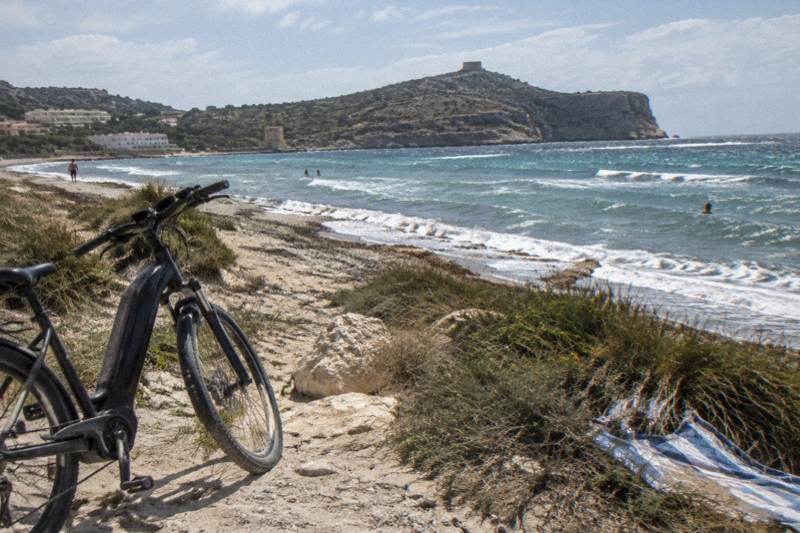
Once you reach the western end of Poetto, near the Sella del Diavolo headland, the promenade takes over. This is the part worth walking: a long stretch of sand with an asphalt cycle and pedestrian path beside it, beach bars, and the headland rising at one end. One rule is firm, though. The Sella del Diavolo promontory is a protected Natura 2000 site and bicycles are not allowed on its trails, so riders park at the Calamosca or Poetto end and hike to the top on foot. For walkers that changes little, since the trail up is a hiking trail anyway.
Is The Middle Stretch Safe To Walk?
The districts between the centre and the beach are ordinary working neighbourhoods rather than areas that give travellers cause for concern. As the safety guide for cycling in Cagliari explains, people who ride in the city tend to worry about traffic and road layout, not crime. On foot the same logic applies: crossings, roundabouts and the busier arterial roads deserve more of your attention than the time of day.
When Does Walking To Poetto Actually Make Sense?
Walking works best in the shoulder months, roughly March to May and late September to October, when highs sit in a milder 17 to 28 degree band and the sun is not punishing. It also makes sense if you plan to walk one way only and take the bus back, or if you are staying halfway along the route already. In July and August it is a hot, exposed haul that most people should not attempt at midday.
The climate numbers back this up. Cagliari's July and August normals show average highs around 31.6 and 32 degrees, lows near 20, and almost no rain. The maestrale, the northwest wind that dominates the region year-round, is most frequent and strongest from May through September, with summer gusts often strong along exposed coastal stretches. On the beach that wind is a feature; on a long pavement walk it either pushes you along or stops you dead, depending on direction.
Timing matters as much as season. Early morning and late afternoon walks are a local ritual, and the beach bars along Poetto reduce their hours roughly from October to April, so a winter evening walk ends quieter than a summer one. If your heart is set on walking part of the way, the smart version is to walk the promenade portion, where the sea is on one side the whole time, and use transport for the city half.
One more seasonal note for spring walkers: the Sant'Efisio procession on 1 to 4 May fills central streets including Stampace and Via Roma, which can reshape a walking route through the centre on those days. Plan around it rather than through it.
What Is At Poetto Once You Get There?
Poetto is a full beach resort strip, not just sand: 8 km of beach with licensed stabilimenti renting sun loungers and umbrellas for about EUR 10 to 15 per day, beach bars, and a promenade used for walking, running and cycling. At its western end the Sella del Diavolo headland offers a hiking trail, and just inland the Molentargius-Saline park holds flamingos year-round.
The beach itself divides into numbered bathing establishments, the classic Sardinian city-beach setup. Lounger-and-umbrella rates are set by each operator, so expect variation and check prices on the day before committing to a spot. Free stretches of sand run between the establishments. Behind the sand, the promenade works as the city's social spine: locals walk, run and cycle it, and the dedicated cycle path is mostly asphalt with some shared sections.
The headland end deserves more attention than most visitors give it. Sella del Diavolo, the Devil's Saddle, rises over the western tip of the beach, and its summit trail is reached on foot from the Calamosca side. Bikes are prohibited on its Natura 2000 trails; local press reported in October 2026 that cyclists riding there drew a formal complaint to the Corpo Forestale and municipal police. Hike it, do not ride it.
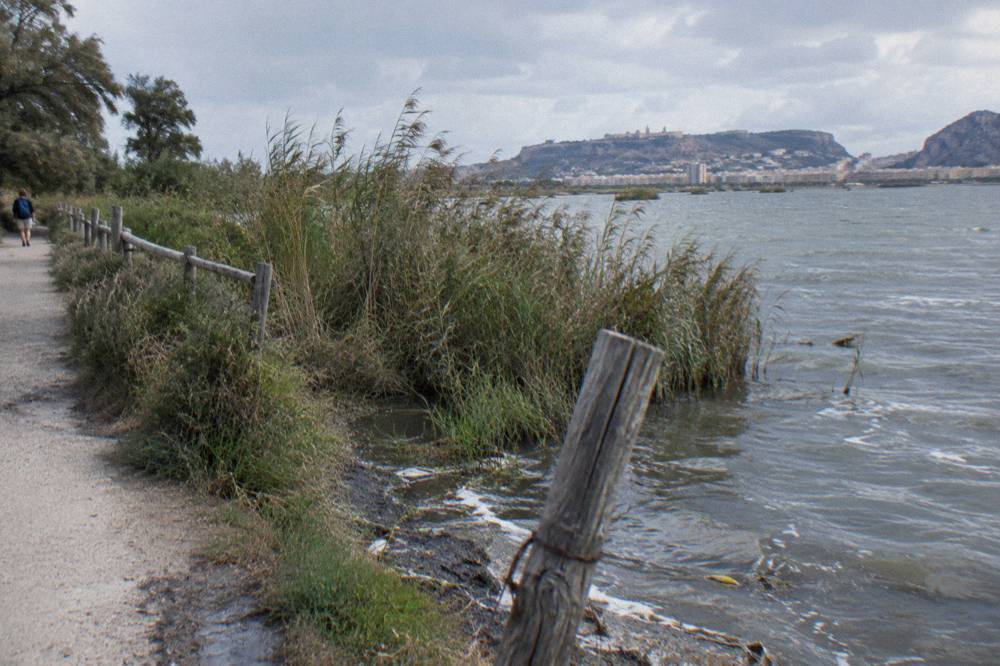
Inland sits the surprise. The Molentargius-Saline Regional Natural Park, the wetland that separates Poetto from the city, holds pink flamingos twelve months a year, with colonies largest and nesting from April to September and the first weeks of June the most photogenic. The park's green areas are open 1 March to 15 October from 06:30 to 21:00, and 16 October to 28 February from 07:00 to 18:00. Cycling inside the park's managed green areas is limited to non-motorised bikes under the park's own wording, so guided e-bike tours ride the surrounding canals, public paths and the Poetto side rather than through the park itself.
A useful flamingo-watching detail: the cycle path along Via la Palma is a good spot for flamingos. A bike gets there comfortably. A walk from the centre rarely manages that in one day.
How Does A Bike Or E-Bike Ride Compare With Walking?
A bike collapses the city half of the trip to minutes and turns the whole outing into a loop: old town, canals, flamingo lagoon, beachfront. Guided options run from about $50 to $80 per person for tours between two and four hours, and a delivered rental bike starts from $28 per person for roughly a full day without a guide. The trade is cost and saddle time against the walk's price of sweat and hours.
The strongest match for this question is the Poetto and Flamingos E-Bike Tour. It lasts about 4 hours, costs from $80 per person, includes the e-bike, helmet and bottled water, is rated 4.8 across 85 reviews, and caps the group at 8. It meets at Easycletta in the Marina district, which puts the start within walking distance of most central hotels. There is no hotel pickup, and free cancellation applies. It is precisely the ride a walker balks at: canals, flamingos and beach in one circuit.
If your interest narrows to the flamingos, the Flamingo Oasis Bike Tour runs about 2 hours from $56 per person with bike and helmet rental included, rated 4.6 across 158 reviews, meeting at NewWaySardinia. It is a shorter, cheaper, bird-focused alternative.
Prefer to go alone? The delivered rental is worth understanding properly. Bike Rental Delivered to You costs from $28 per person for about 7 hours and brings a city or mountain bike, note: not electric, to your location. It has no guide, and with around 9 reviews it is too lightly reviewed for a rating claim. What it buys is freedom: ride the Poetto promenade at your own pace, stop where the flamingos are, come back when the light is right.
| Option | Duration | Price | Guide | What it covers |
|---|---|---|---|---|
| Walk from centre | Half a day round trip | Free | No | City districts, then the 8 km promenade |
| Poetto and Flamingos E-Bike Tour | ~4 hours | From $80 per person | Yes | Molentargius canals, flamingos, Poetto seafront |
| Flamingo Oasis Bike Tour | ~2 hours | From $56 per person | Yes | Flamingo oasis loop with bike and helmet |
| Delivered bike rental | ~7 hours | From $28 per person | No | City or mountain bike brought to you, self-guided |
One legal note if you are riding with teenagers: the minimum age to ride a compliant e-bike on Italian public roads is 14, helmets are mandatory for riders under 18, and standard e-bikes assist only up to 25 km/h with a 250 W motor. Details are in the site's guide to choosing between e-bikes and city bikes.
What About The Bus And Other Ways Back?
The CTM bus links the centre and Poetto in about 20 minutes and is the standard fallback for tired walkers, and local bike-sharing offers short-hop wheels through the CaBuBi scheme, 60 bikes across 10 one-way stations. Trains and regional buses carry bikes too, with rules and small supplements, though those matter more for day trips than the beach run.
The bus is the honest answer for the return leg. The verified figure is about 20 minutes from the centre, frequent in season, and it removes the walk-back problem entirely. Walking out and bussing back is a legitimately good plan. Check the CTM rules if you are carrying a bike: the city operator allows only folding bikes in a bag on board per the reported conditions, so a rented non-folding bike cannot come home on the bus with you.
CaBuBi, the municipal bike-share run with Playcar and CTM, lists 60 one-way bikes, 50 classic, 6 pedal-assist, 3 tandem and 1 cargo, at 10 stations, with more free-flow bikes announced. It suits short hops more than a full beach day, but it is a real option for bridging part of the city stretch.
If your plans stretch beyond Poetto, Trenitalia regional trains take one bike per traveller, e-bikes included up to 2 m length, for a EUR 3.50 daily supplement or the price of a second-class single ticket. The day trips by bike and train guide covers where those lines can take you.
Practical Tips For The Poetto Trip
Plan the walk for morning, carry more water than feels reasonable, and decide your return transport before you leave. Sunscreen, a hat and shoes that handle hot pavement matter more than swimming gear for the outbound half, and the beach establishments take cash for loungers in the EUR 10 to 15 range. If flamingos are on the list, the Via la Palma path and the canal-side routes beat the middle of the beach.
Timing first. An early start gets you to the sand before the sun is high, and in July and August even 09:00 can already feel strong. The beach bars keep fuller hours in summer and reduce them roughly from October to April, so late-season walkers should not count on a waterfront espresso at the far end.
On the walk itself, the city half is the part to respect. Crossings are the main hazard, shade is scarce, and the temptation to shortcut through busier roads is real. Once on the promenade, pick a stretch and commit; with 8 km of beach, aimless wandering wastes the day. The western end near the headland is the most scenic, and the climb up Sella del Diavolo on foot, bikes prohibited, rewards the effort with the best view of the whole arc.
For riders, the site's what to bring on a Cagliari bike tour checklist applies to the walk almost line for line: water, sun protection, and layers for the wind. And if a self-guided day appeals, Cagliari Bike Tours exists exactly for this coastline, with guided rides and delivered rentals that remove the pavement half of the equation.
One closing thought on seasons: October is a genuinely fine month for this outing. The sea is still swimmable and the summer crowds have thinned. The port stays busy, though, with 181 calls and over 600,000 passengers projected for the 2026 cruise season. Midweek mornings still beat port-call days if you want the promenade to yourself.
Common Questions About Walking To Poetto Beach
Can You Walk From Cagliari To Poetto Beach?
Yes. There is a continuous walking route from the historic centre to the western end of Poetto, then an 8 km promenade beside the sand. The city half is long, flat and largely unshaded, so most people prefer the shoulder months, an early start, or walking one way and taking the CTM bus back, which runs about 20 minutes from the centre.
How Long Is Poetto Beach?
Poetto runs about 8 km of sand from the Sella del Diavolo headland toward Quartu Sant'Elena, with a pedestrian and cycle promenade alongside it for the full length.
Can You Cycle To Poetto Instead Of Walking?
Yes, and the seafront has a mostly asphalt cycle path with some shared sections. Guided e-bike tours ride the canals and the Poetto side from around $50 to $80 per person, and a delivered rental city or mountain bike starts from $28 per person for roughly a full day. Note that cycling is not allowed on the Sella del Diavolo trails, and the Molentargius park's green areas cover non-motorised bikes only.
Is There A Bus From Cagliari To Poetto?
Yes, the CTM city bus connects the centre and Poetto in about 20 minutes. Non-folding bikes cannot travel on city buses, so plan the bus for yourself rather than for a rented bike.
Can You See Flamingos On The Way To Poetto?
Often, yes. Flamingos are present at Molentargius-Saline year-round, with the largest colonies from April to September, and the cycle path along Via la Palma is a known viewing spot. Sightings always depend on the birds, the season and the light, so treat any sighting as a bonus rather than a certainty.